

Archive · 14 Sep 2025
ICMR to Expand Wastewater Surveillance for Early Outbreak Alerts
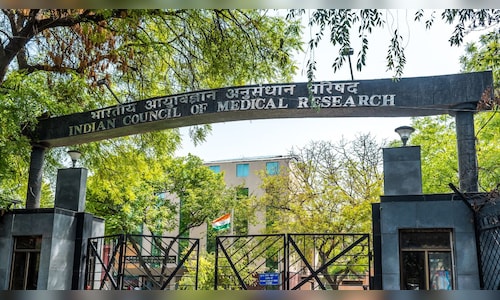
Imagine scientists are like detectives looking for clues about germs in our cities.
The ICMR is like the head detective, and they're checking the water that goes down the drain, called wastewater.
Right now, they're doing this in five cities to learn how it works.
Over the next year, they plan to check the wastewater in 50 cities to find out if any nasty germs are spreading.
This helps them spot problems early, like COVID-19 or polio.
They're also watching for things like the flu in birds and antibiotic-resistant germs.
This way, they can warn everyone if a sickness starts to spread.

ICMR is expanding wastewater surveillance to 50 cities.
The goal is to establish an early warning system for outbreaks.
Currently, surveillance is conducted in 5 cities.
The effort includes pathogens of human and animal origin.
COVID-19 and polio are currently under surveillance.
- Who
- ICMR
- What
- Expanding wastewater surveillance to detect pathogens.
- When
- Over the next year.
- Where
- Across 50 cities in India.
- Why
- To establish an early warning system for outbreaks.
- Organization
- ICMR (Indian Council of Medical Research)
- Surveillance Scope
- Wastewater
- Cities in Pilot
- 5
- Cities in Expansion
- 50
- Surveillance Focus
- Pathogens (human and animal)
- Purpose
- Early warning system for outbreaks