

Archive · 30 Jul 2026
India’s 1986 Amendment, Darjeeling Tensions, and Beirut Bombing
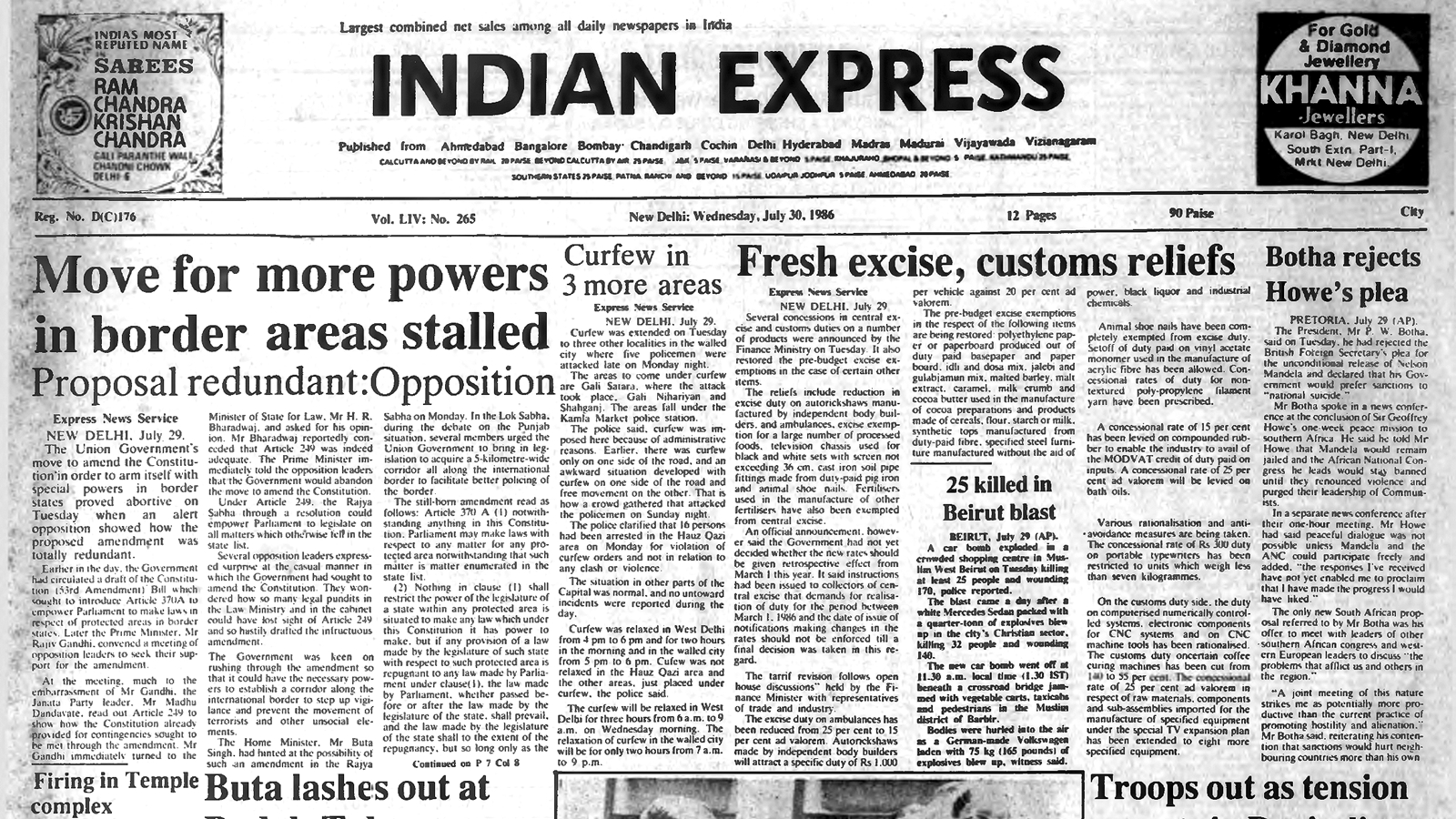
In 1986, the Indian government tried to give itself extra powers in border areas, but opposition leaders showed that the Constitution already covered this, so the plan was dropped.
The Home Minister, Buta Singh, accused two Akali leaders, Parkash Singh Badal and G S Tohra, of helping terrorists.
In Darjeeling, protests caused a 108‑hour shutdown, and a deputy tourism director was taken by GNLF supporters.
Meanwhile, a car bomb in Beirut killed 25 people, following another bomb that killed 32.
These events show how politics and violence can affect many people.

The 1986 amendment to grant special powers in border states was abandoned after opposition leaders cited Article 249.
Home Minister Buta Singh accused Akali leaders Parkash Singh Badal and G S Tohra of colluding with extremists.
A 108‑hour bandh in Darjeeling shut shops and schools, and GNLF supporters abducted the deputy director of tourism.
A car bomb in West Beirut killed at least 25 people and wounded 170, following a previous bomb that killed 32.
The incidents illustrate political tensions in India and ongoing violence in Lebanon.
- Who
- Indian government officials, opposition leaders, Home Minister Buta Singh, Akali leaders Parkash Singh Badal and G S Tohra, GNLF supporters, Lebanese civilians
- What
- Political controversies in India and a car bomb attack in Beirut
- When
- July 30, 1986 for the amendment; July 27-29, 1986 for the Darjeeling bandh; recent date for the Beirut bomb
- Where
- India (various states) and Beirut, Lebanon
- Why
- To address security concerns and political tensions; the bomb was part of ongoing violence in Beirut
- Key Events
- 1986 amendment, Darjeeling bandh, Beirut car bomb
- Key Figures
- Rajiv Gandhi, Buta Singh, Parkash Singh Badal, G S Tohra
- Casualties (Beirut)
- 25 killed, 170 wounded
- Previous Beirut Bomb
- 32 killed, 140 wounded
- Locations
- India (various states), Beirut, Lebanon
- Political Context
- Special powers debate, Akali leaders' alleged collusion