

Archive · 2 Jan 2026
Voyager 1 to Reach One Light-Day from Earth in 2026
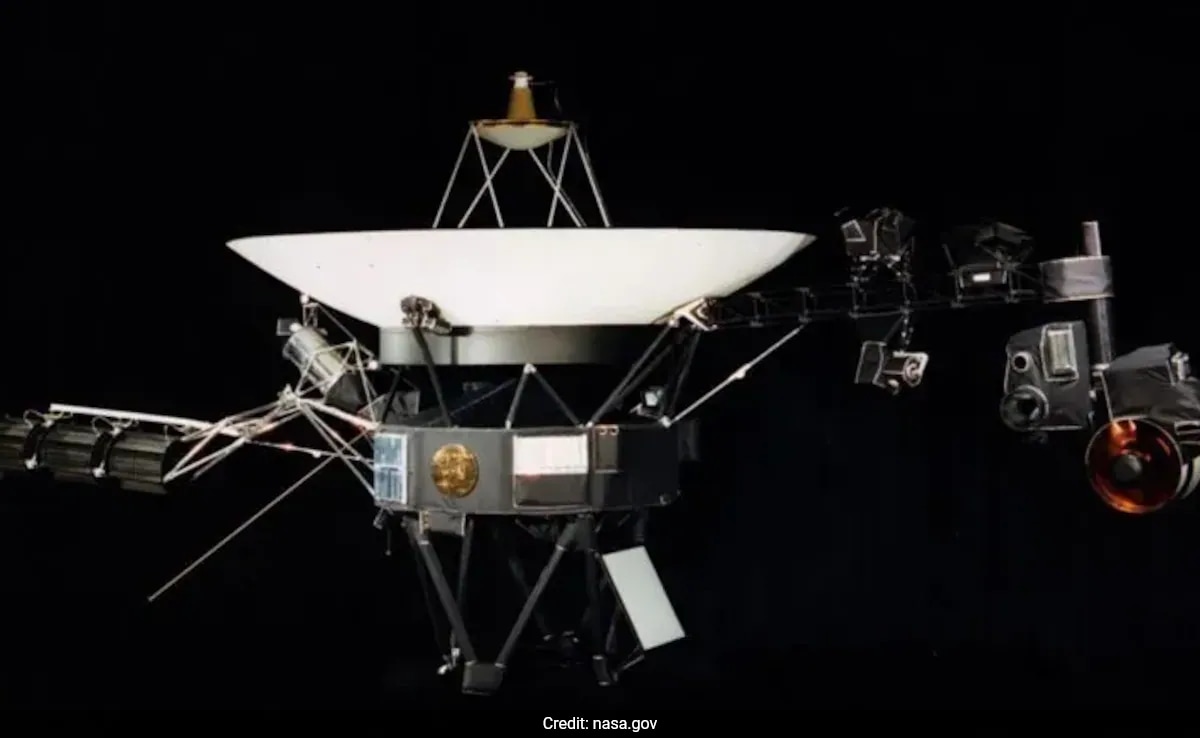
Voyager 1 is a spacecraft launched by NASA in 1977.
It's been traveling through space for over 48 years and is now more than 25 billion kilometers away from Earth.
In November 2026, it will reach a distance of one light-day from Earth, which means a signal from Earth will take a full day to reach it.
Voyager 1 has made many important discoveries, like finding new moons around Jupiter and Saturn.
It's powered by a nuclear battery that loses a little power each year.
Scientists hope it will keep working until its 50th anniversary in 2027.

Voyager 1 will reach one light-day from Earth in November 2026, making communication signals take a full day to reach it.
Launched in 1977, the spacecraft has been traveling through interstellar space for over 48 years, currently over 25 billion kilometers from Earth.
Voyager 1 has made significant discoveries, including new moons and rings around Jupiter and Saturn.
The probe operates on a decaying nuclear battery, losing about 4 watts of power annually.
Scientists hope Voyager 1 will reach its 50th anniversary in 2027 after achieving the November 2026 milestone.
- Who
- NASA's Voyager 1 spacecraft
- What
- Reaching one light-day from Earth
- When
- November 2026
- Where
- Interstellar space
- Why
- Continuing its mission beyond initial design
- Launch Year
- 1977
- Current Distance from Earth
- 25 billion kilometres
- Speed
- 16.99 kilometres per second
- Data Transmission Rate
- 160 bits per second
- Power Source
- Radioisotope thermoelectric generator
- Annual Power Loss
- 4 watts
- First Interstellar Space Probe
- Yes
- Significant Discoveries
- Thin ring around Jupiter, two new Jovian moons, five Saturn moons, G-Ring