4 days ago
Experts Favor NCC-Style Emergency Training Over Universal Military Service
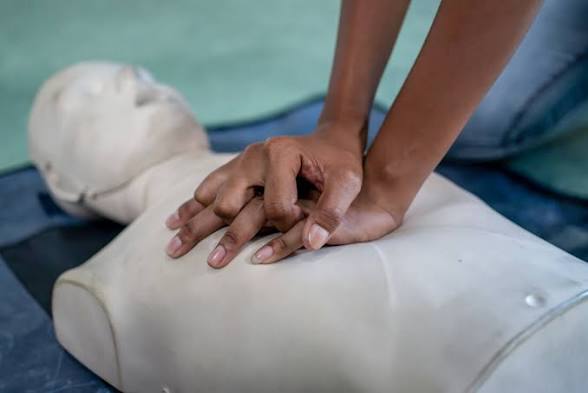
A serious emergency happened on a Flydubai plane when the captain was allegedly stabbed and the plane began descending sharply.
Passengers helped stop the co-pilot after the cockpit door opened.
This made people ask whether young people should learn how to handle emergencies.
Experts said students could learn first aid, disaster response, fire safety and teamwork.
They suggested expanding NCC-style training through schools and colleges.
They did not generally support putting every young person into the regular Army for a short time.
One doctor said basic life support can be taught in about two hours.
The experts also warned that training India’s very large youth population would require a great deal of money, staff and facilities.

The Flydubai FZ1073 emergency involved an alleged stabbing of the captain and a steep aircraft descent.
Passengers, including Israeli plumber Yaniv Hayoun, helped restrain the co-pilot after the cockpit door opened.
Experts backed wider NCC-style instruction, first aid, disaster management and crisis response for students.
They generally distinguished emergency preparedness from short-term compulsory service in the regular Armed Forces.
India’s projected 18-to-23 population is about 153.3 million in 2026, compared with nearly 2 million NCC cadets.
- Who
- The Flydubai captain, co-pilot, passengers and other pilots were involved; experts including Lt Gen. Hari Prasad, Dr Rahul Singh Sardar and B.T. Srinivasan commented on youth training.
- What
- A cockpit emergency renewed debate over NCC-style emergency preparation versus compulsory military service for young people.
- Where
- The incident occurred on Flydubai flight FZ1073, while the training debate concerns India.
- When
- The article gives no specific date for the flight incident; India’s 18-to-23 population is projected for 2026.
- Why
- The incident highlighted the potential value of teaching civilians first aid, crisis response and teamwork, while also raising questions about the scale and cost of universal military training.
Civilian Emergency Preparedness
Compulsory Military Induction
Preferred model
Civilian Emergency Preparedness
Supporters favor compulsory, structured NCC-style training through schools and colleges, including first aid, disaster response, fire safety, evacuation and leadership.
Compulsory Military Induction
Advocates of broader military exposure argue that military-style preparation could build discipline and responsibility, but regular military service would require a much longer commitment to produce effective soldiers.
Practicality and scale
Civilian Emergency Preparedness
NCC-style emergency training is presented as more suitable for India’s large population and could prepare people for supporting roles during crises.
Compulsory Military Induction
Universal military training would require major establishments, funding, manpower and living facilities, and could reduce training quality if expanded too far.
Evidence from the flight
Civilian Emergency Preparedness
The incident is used to illustrate why ordinary people may benefit from basic emergency and crisis-response skills.
Compulsory Military Induction
The event does not prove that military experience caused the passengers to respond effectively; Yaniv Hayoun said television coverage partly informed his actions.
Key facts
- Flight
- Flydubai FZ1073
- Emergency
- The captain was allegedly stabbed and the aircraft entered a steep descent.
- Passenger response
- Passengers restrained the co-pilot after the cockpit door opened; other pilots later took control.
- Recommended training
- NCC-style instruction, basic life support, disaster management, fire safety, evacuation and crisis handling.
- Basic Life Support
- Dr Rahul Singh Sardar said the core skill can be taught in a two-hour session.
- Training figures
- ICATT Air Ambulance Service said it had trained 28,000 people in BLS in one day and 65,000 people overall.
- Scale comparison
- India’s 18-to-23 population is projected at about 153.3 million in 2026, while NCC has nearly 2 million cadets.
Quotes
Lt Gen Hari Prasad (retd)
Former General Officer Commanding-in-Chief of the Army’s Northern Command
“Rather than compulsory military training for every youth, India could consider compulsory, structured NCC-based disaster and emergency-response training for students.”
 deccanchronicle.com
“We don’t have to go down that extreme route. Obviously, our population is too big for drafting.”
deccanchronicle.com
Sources
Related news
Former Colleague Praises Pilot’s Response to Cockpit Attack
Pilot Smit Machchhar Praised for Heroics During Cockpit Attack

Smit Machchhar’s Podcast Resonates After FlyDubai Cockpit Attack

World First Aid Day Highlights Essential Skills for Students
Flydubai Captain Smit Machchhar’s Journey From Textile Engineering to Aviation

TISS Student’s Cardiac Arrest Highlights Need for Campus Preparedness
Indore Police Use Music and Films for Road Safety
NCC Cadets Mark Gandhi Jayanti With Cleanliness and Environmental Awareness
Uttar Pradesh Expands NCC Training Across Sarvodaya Schools

Bengal Rebrands Sabuj Sathi as Sarathi, Promises 12.59 Lakh Cycles