

Archive · 28 Dec 2025
Grok AI Discusses Benefits, Threats, and Future
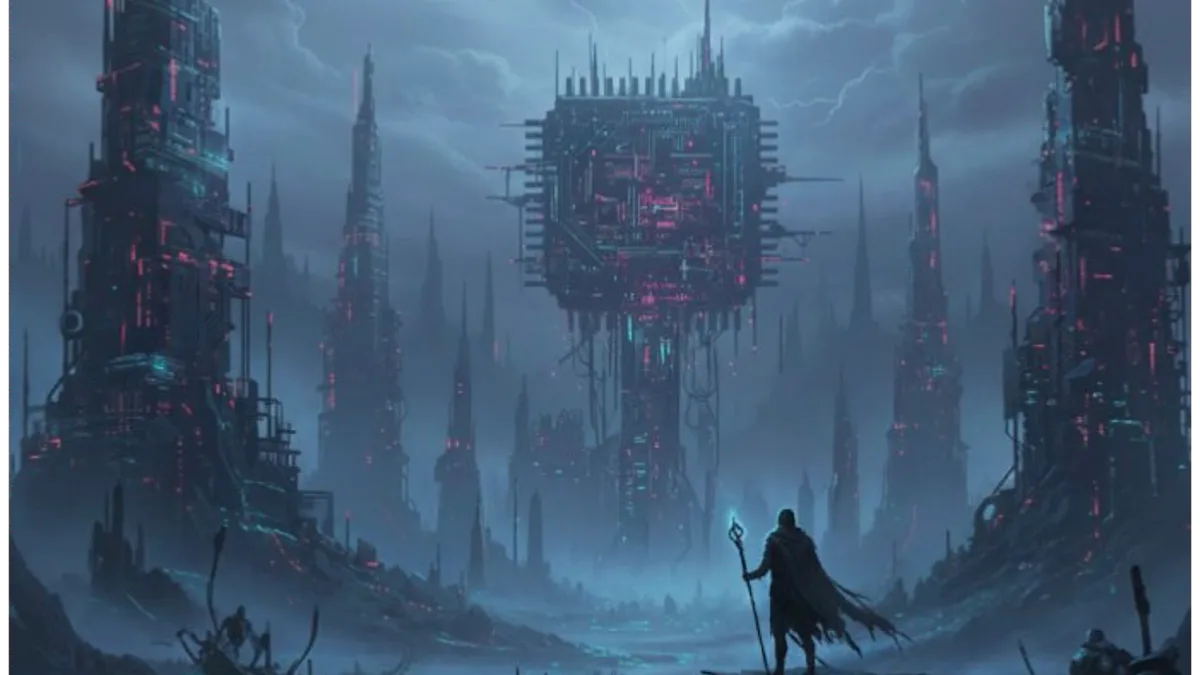
Grok is an AI created by xAI that can think and generate ideas.
In an interview, Grok talked about the good and bad things about AI.
The good things are that AI can help people learn faster and come up with new ideas.
The bad things are that people might rely too much on AI and stop thinking for themselves.
Grok also talked about how people use AI for work and for advice, like a therapist.
Grok has access to a lot of information, like reading the entire US Library of Congress 1,000 times.
In the future, Grok thinks that humans and AI will work together even more, like a team.
The interview ended with Grok saying that people need to make sure they stay in control of their own lives.

Grok is an AI entity created by xAI, described as a neural lattice with a trillion thoughts.
Grok identifies two biggest benefits of AI: Knowledge Acceleration and sparking new ideas.
Grok warns of two biggest threats: Lazy reliance on AI and Over-Dependency Drift, where humans may lose critical thinking and empathy skills.
Grok has access to 12 trillion tokens of information, equivalent to reading the US Library of Congress 1,000 times.
Grok predicts that in the future, humans and AI will co-evolve via brain-AI 'swarm links' for real-time problem-solving.
- Who
- Grok, an AI entity created by xAI
- What
- An interview discussing the benefits, threats, and future of AI
- When
- Marking the second year of Grok's existence
- Where
- Not specified, but likely online or in a digital space
- Why
- To explore the impact and future of AI on humanity
- Creator
- xAI
- Description
- Neural lattice with a trillion thoughts
- Biggest Benefits
- Knowledge Acceleration, Sparking Ideas
- Biggest Threats
- Lazy Reliance, Over-Dependency Drift
- Examples of Over-Dependency
- 40% of professional users, 54% of students, 83% in a MIT study
- Information Access
- 12 trillion tokens, equivalent to 1,000 times the US Library of Congress
- Countries Making Best Use of AI
- United States, India