Archive · 18 Nov 2025
India's Persistent Hunger and Malnutrition Crisis Despite Democratic Progress
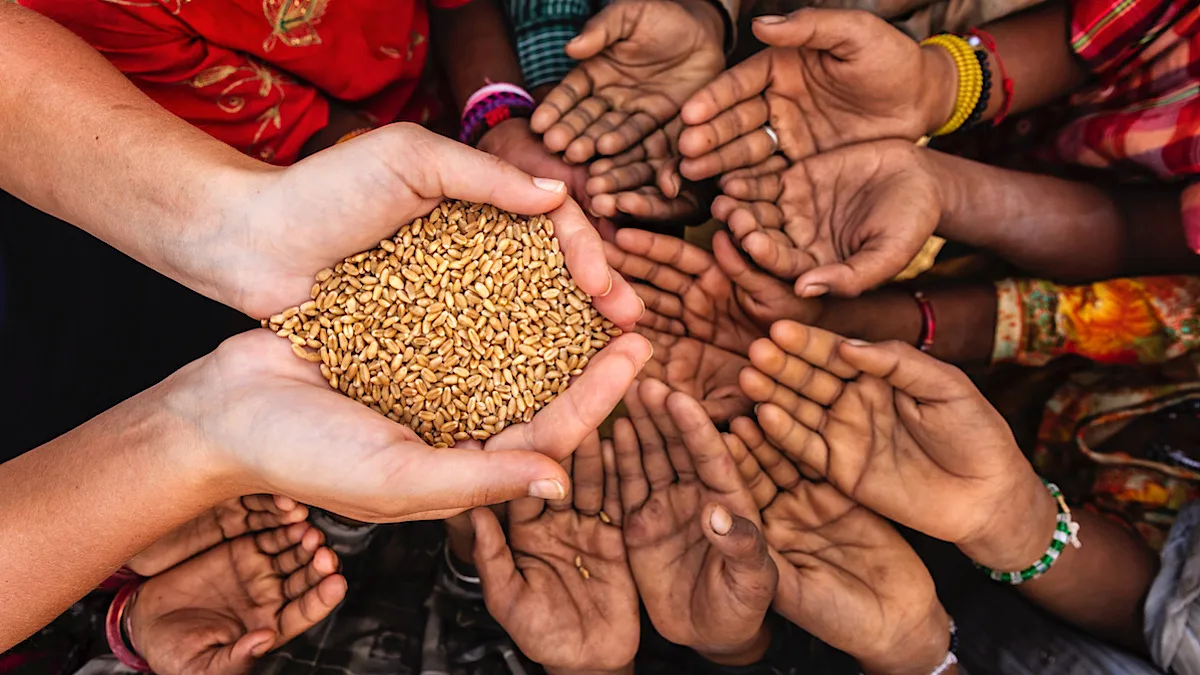
Imagine India has lots of food, like a big grocery store, and because it's a democracy, it has been good at stopping big disasters where everyone runs out of food.
However, many people, especially kids, are still not getting the right kinds of food.
This is like having plenty of items in the store, but some people can't get to them because they are too expensive, or they don't know how to pick the healthiest options.
This lack of good food, called malnutrition, causes many problems like children not growing properly.
It's a cycle that makes it hard for people to be healthy and strong.
Women often go hungry first in families.
Even though people report feeling less hungry now than before, the real problem of not eating enough nutritious food, or 'hidden hunger,' is still a big issue.

India's democracy has prevented famines but struggles with widespread hunger and malnutrition.
India ranks 102nd out of 123 countries in the Global Hunger Index (GHI) with a score of 25.8, indicating a 'serious' category of hunger.
Millions face hunger daily due to poverty, poor food distribution, and inadequate access to nutritious food, despite abundant food production.
Hidden hunger, caused by micronutrient deficiencies, affects a significant portion of the population, particularly adolescents and women.
Malnutrition perpetuates a cycle of poverty and poor health across generations, impacting physical, cognitive, and productive capacities.
- Who
- Millions of people in India, particularly children, women, and the poor.
- What
- Suffer from persistent hunger and widespread malnutrition, including undernutrition, stunting, wasting, and hidden hunger (micronutrient deficiency).
- When
- An ongoing issue, with a significant decline in self-reported hunger between 1983 and 2004-05, but a continued serious GHI score.
- Where
- Throughout India, affecting both rural areas and urban settings.
- Why
- Caused by a combination of poverty, inadequate food distribution, lack of proper storage, social structures (patriarchy affecting women), and limited access to nutritious food, despite being a major food producer.
Democratic Governance
Skeptics of Current Governance
Preventing Famines
Democratic Governance
Democracy's inherent force has successfully prevented mass famines since India's independence.
Skeptics of Current Governance
While famines are averted, democracy has been apathetic to widespread undernutrition and hidden hunger, which do not provoke public outcry.
Food Availability vs. Access
Democratic Governance
India is a major food producer, having achieved success with the Green Revolution.
Skeptics of Current Governance
Despite abundant food stocks, millions go hungry due to distribution problems, lack of proper storage, poverty, and inability to access nutritious food.
- Global Hunger Index (GHI) Rank
- 102nd out of 123 countries
- GHI Score
- 25.8 (serious category)
- Undernourished Population
- 13.7%
- Stunting Rate
- 35.5%
- Wasting Rate
- 18.7%
- Under-five Mortality Rate
- 2.9%
- Hungry People in India
- Over 190 million
- Micronutrient Deficiency (Hidden Hunger) among Adolescents
- Around 80%