Archive · 4 Sep 2026
ISRO Says Private Sector Needed To Meet India’s Space Needs
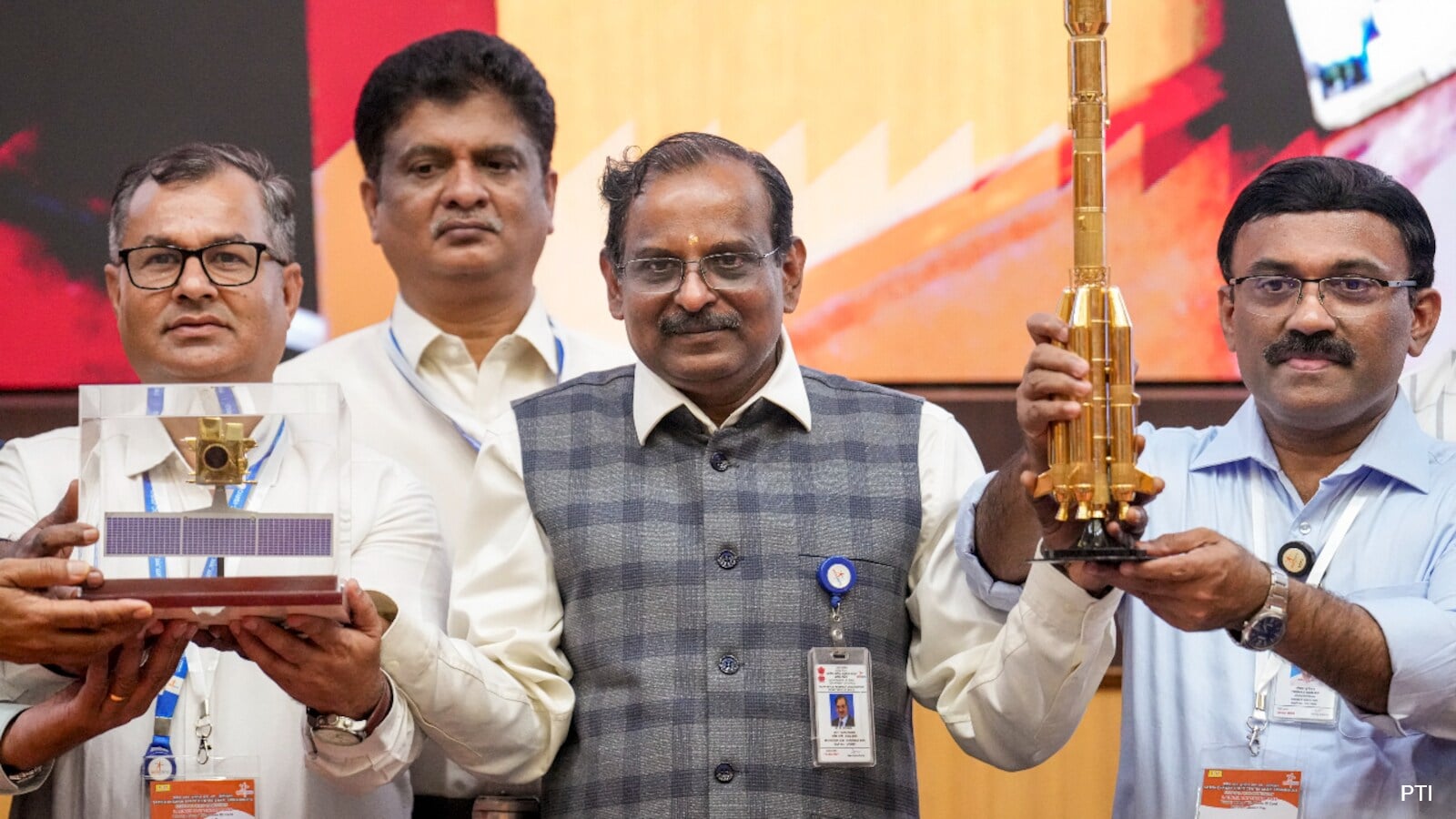
India needs many more satellites for its growing needs.
ISRO’s chairman said ISRO cannot build and manage all of them alone.
He said private companies should also help develop the country’s space industry.
Government reforms are intended to support that participation.
Narayanan said a larger space industry could create jobs and help the economy grow.
On Friday, an Indian rocket successfully carried the EOS-05 satellite into space.
The rocket was a GSLV Mark II, whose carrying ability has improved by almost 40 percent from its original 1,536-kilogram capability.
India’s new spaceport and the Gaganyaan programme are also progressing as planned.

ISRO Chairman V Narayanan said ISRO alone cannot meet India’s growing space requirements.
India currently has 56 satellites, while national demand is expected to require hundreds.
Narayanan defended government reforms intended to expand private participation in the space sector.
The GSLV-F17 successfully launched the EOS-05 Earth observation satellite from Sriharikota at 2:55 a.m. on Friday.
The Kulasekarapattinam spaceport remains on schedule for completion by March, while Gaganyaan’s first uncrewed mission is targeted for this year.
- Who
- ISRO Chairman Dr V Narayanan, the Indian Space Research Organisation, and private space-sector participants.
- What
- Narayanan defended greater private participation in India’s space sector and discussed the EOS-05 launch and upcoming space projects.
- When
- Narayanan’s comments and the GSLV-F17 launch occurred on Friday; the first uncrewed Gaganyaan mission is targeted for this year.
- Where
- The launch took place at the Satish Dhawan Space Centre in Sriharikota; the new spaceport is being built at Kulasekarapattinam.
- Why
- India’s demand for satellites and related services is growing beyond what ISRO alone can provide.
Supporters of Greater Private Participation
Critics of an Expanded Private Role
Role of Private Companies
Supporters of Greater Private Participation
Narayanan said private participation is necessary because ISRO alone cannot meet India’s growing need for satellites and related services.
Critics of an Expanded Private Role
The article says the increasing role of private players has drawn criticism, but it does not detail the critics’ specific arguments.
Expected Effects
Supporters of Greater Private Participation
Narayanan said a larger space ecosystem would produce more satellites, create job opportunities, and support economic growth.
Critics of an Expanded Private Role
Critics questioned the expansion of private participation, while the article provides no specific alternative assessment of its economic or industrial effects.
- Current satellites
- India currently has 56 satellites, according to Narayanan.
- Projected requirement
- The country’s requirement is for hundreds of satellites.
- Launch vehicle
- GSLV-F17, using the GSLV Mark II vehicle.
- Payload
- EOS-05 Earth observation satellite.
- Launch time
- 2:55 a.m. on Friday.
- Vehicle capability
- The GSLV Mark II’s capability increased from 1,536 kilograms by almost 40 percent, according to Narayanan.
- Project timelines
- The Kulasekarapattinam spaceport is expected to be completed by March, and Gaganyaan’s first uncrewed mission is targeted for this year.