11 months ago
Book Reviews: Amy Coney Barrett and Christopher Marlowe
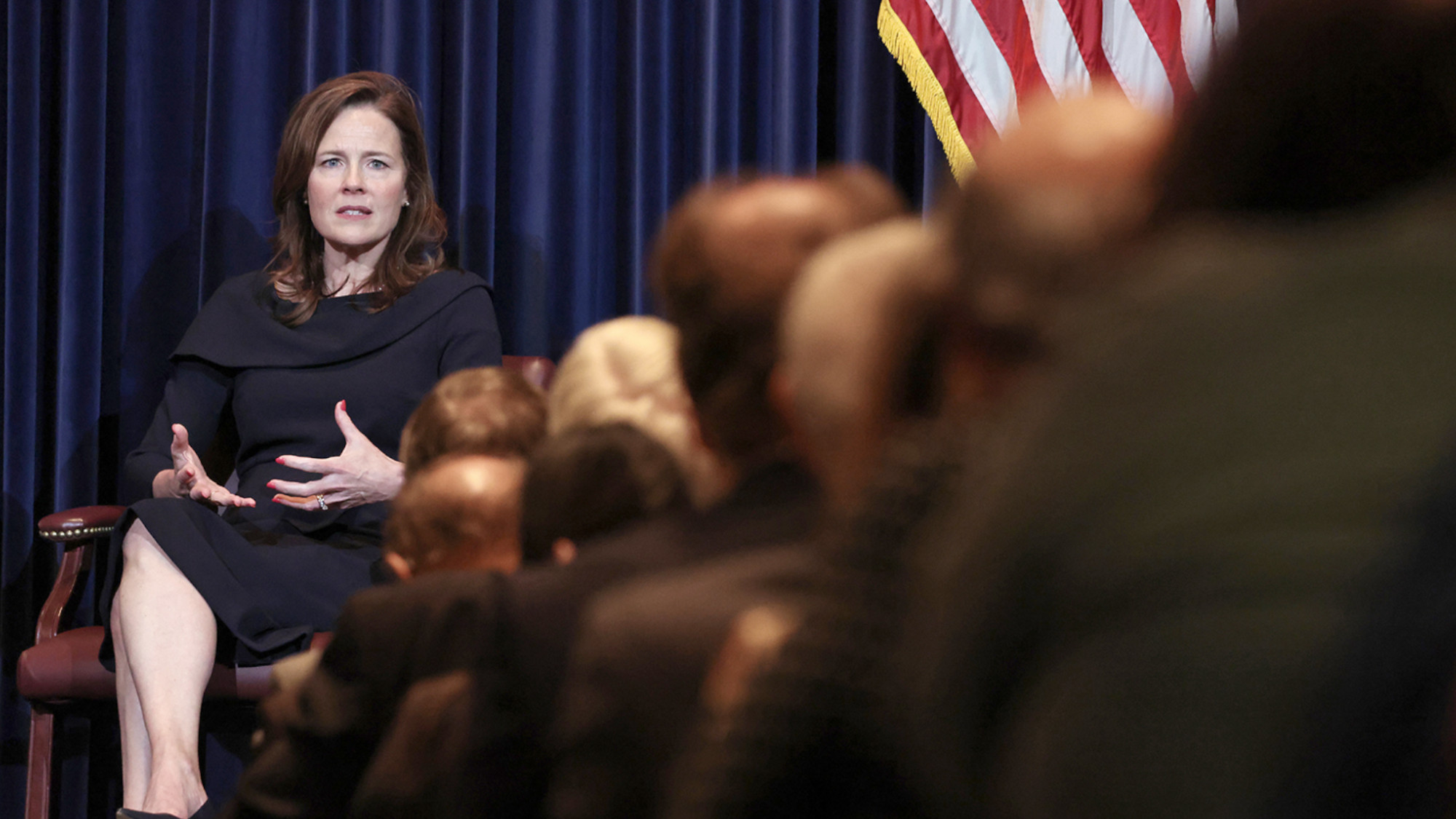
Two new books are getting attention: one about Supreme Court Justice Amy Coney Barrett and another about the Renaissance writer Christopher Marlowe.
Barrett's book discusses her legal ideas and how the court works, trying to explain legal concepts in a way the average person can understand.
Reviewers note she takes a middle ground, emphasizing following the law.
The book about Marlowe explores his life and work as a rival to Shakespeare, looking at his rebellious spirit and potential role as a spy.
Both books offer insights into important historical figures and their impact.

Amy Coney Barrett's book on judicial philosophy is reviewed.
Barrett's book emphasizes understanding the court's operations.
Barrett’s judicial philosophy is discussed in the context of Trump’s impact on the court.
Stephen Greenblatt's book discusses Christopher Marlowe’s life and work.
Marlowe is examined in the context of Renaissance culture and as a possible spy.
- Who
- Amy Coney Barrett, Christopher Marlowe
- What
- Books reviewed examining judicial philosophy and Renaissance literature, respectively.
- Where
- N/A
- When
- Current events in the context of historical literature.
- Why
- To assess the impact of Amy Coney Barrett’s judicial philosophy and explore the life and work of Christopher Marlowe.
Key facts
- Authors Discussed
- Amy Coney Barrett, Stephen Greenblatt
- Subject
- Legal Philosophy, Renaissance Literature
- Barrett's Book Title
- Listening to the Law: Reflections on the Court and Constitution
- Marlowe's Book Title
- Dark Renaissance: The Dangerous Times and Fatal Genius of Shakespeare’s Greatest Rival
Quotes
Barton Swaim
in The Wall Street Journal
“My own conclusions from it are, first, that she has a sharp and well-organized mind, and, second, that she is a very nice person.”
 theweek.com
“seems genuinely burdened by the reality that most Americans know little about the Supreme Court”
theweek.com
The reviewer
The reviewer
“takes seriously Scalia’s personal aspiration to decide cases purely on the basis of what the law says, not what she thinks it should be.”
theweek.com
“frighteningly modern in his relish for shocking audiences in his portrayals of violence, vice, and religious bigotry”
theweek.com

Noah Feldman
in The Washington Post
“Amy Coney Barrett is the most important justice on the Supreme Court”
theweek.com
Anthony Lane
in The New Yorker
“Christopher Marlowe was, is, and will doubtless remain a troublemaker”
theweek.com
Hamilton Cain
in The Boston Globe
“Greenblatt argues, at best, a circumstantial case for the playwright’s espionage role, yet these speculations season his narrative, lending crucial context”
theweek.com
Heller McAlpin
in The Christian Science Monitor
“Oh, to be a student in one of Greenblatt’s Harvard classes!”
theweek.com