Archive · 5 Sep 2026
What Pickaxe Mountain Is and Why Trump Threatens It
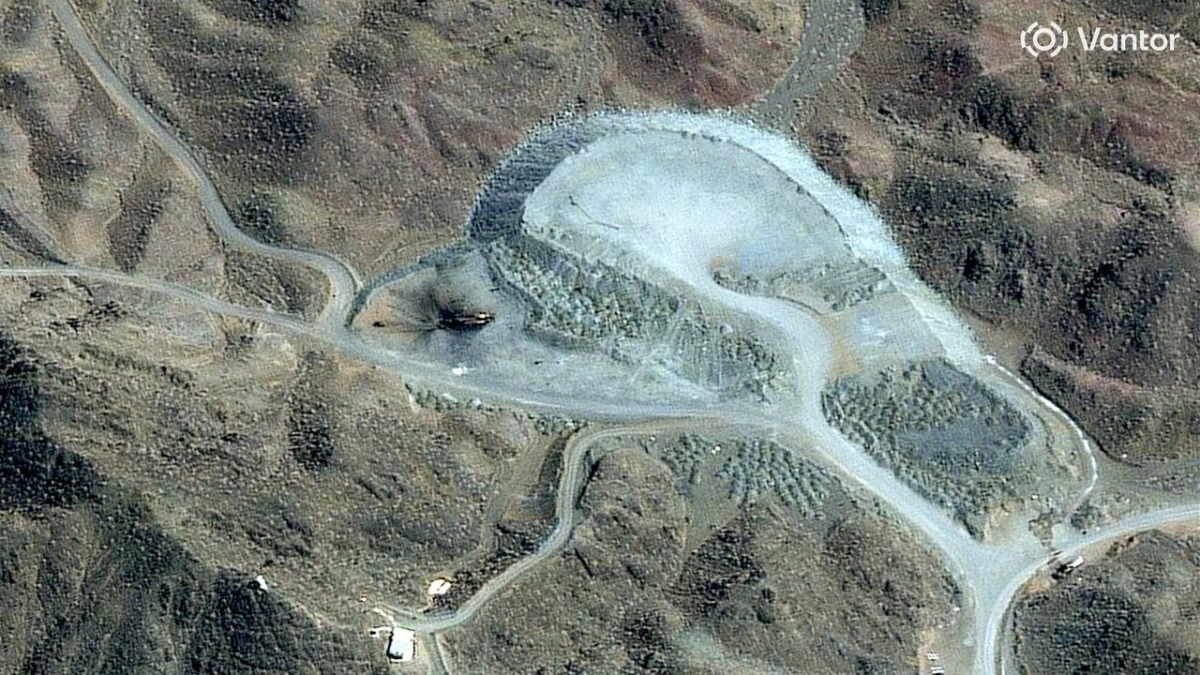
Pickaxe Mountain is a large underground facility inside a mountain in Iran.
It is close to, but separate from, the Natanz nuclear complex.
Iran began building it after explosions damaged a centrifuge facility at Natanz.
Iran says the tunnels are for peaceful technical work.
Some Western and Israeli officials worry that the tunnels could hide nuclear equipment or materials.
No one outside Iran has independently confirmed exactly what is inside.
The tunnels are buried more than 300 feet deep, making them difficult to attack.
Donald Trump has said the United States might strike the site soon.
Iranian officials have warned that such an attack would lead to strong retaliation.
A separate report also said Iran accused the United States of firing four missiles at a tanker near Kharg Island, though neither US Central Command nor Iranian authorities immediately confirmed the incident.

Pickaxe Mountain, also called Kūh-e Kolang or Kuh-e Kolang Gaz La, is about 1.5 kilometers south of Iran’s Natanz complex.
Iran began excavating two deeply buried tunnel complexes in the granite mountain in late 2020 after sabotage damaged Natanz’s centrifuge assembly plant.
Iran says the facility is for legitimate technical work, while Western and Israeli officials suspect it could hold centrifuges, enriched uranium, or support covert enrichment.
The site is more than 300 feet underground and has not been struck in previous US or allied attacks, although entrances, ventilation, and power systems could be vulnerable.
Donald Trump said on September 4 that the United States could strike the site “very soon”; Iran has warned that an attack would bring heavy retaliation.
- Who
- Donald Trump, Iran, Western and Israeli intelligence officials, the International Atomic Energy Agency, and the Institute for Science and International Security are central to the dispute.
- What
- The United States has threatened a possible strike on Pickaxe Mountain, an underground Iranian facility suspected by some officials of having a centrifuge-related or concealed nuclear role.
- When
- Excavation began in late 2020. Trump issued his reported warning on September 4, after saying on Friday that the site could be hit “very soon.”
- Where
- Pickaxe Mountain is approximately 1.5 kilometers south of Natanz in Iran’s Isfahan province. A separate reported missile incident involving a tanker occurred near Kharg Island.
- Why
- The site is heavily fortified and deep underground, while uncertainty about Iran’s nuclear equipment and enriched-uranium inventories has increased after attacks disrupted international inspections.
Iranian Position
Western and Israeli Concerns
Purpose of the facility
Iranian Position
Iran says Pickaxe Mountain is intended for legitimate technical work and is not being used for nuclear activities.
Western and Israeli Concerns
Western and Israeli intelligence officials suspect the tunnels could house centrifuges or enriched-uranium stockpiles, or support enrichment beyond inspectors’ view.
Evidence about what is inside
Iranian Position
Iran has not publicly accepted the intelligence claims described in the reports.
Western and Israeli Concerns
A Wall Street Journal report citing US and Israeli officials said Israeli intelligence assessed that Iran had moved thousands of centrifuges there, but the IAEA has not verified that claim and satellite imagery cannot establish the facility’s contents.
Effect of a possible attack
Iranian Position
Iranian defense officials describe the complex as highly fortified and warn that an attack would trigger heavy retaliation.
Western and Israeli Concerns
Defense analysts disagree over whether bunker-busting weapons, including the 30,000-pound GBU-57 Massive Ordnance Penetrator, could collapse tunnels this deep; researchers say attacks on access, ventilation, or power could still disable the site.
- Local names
- Kūh-e Kolang and Kuh-e Kolang Gaz La
- Location
- Approximately 1.5 kilometers south of the Natanz uranium-enrichment complex in Isfahan province, Iran
- Construction
- Excavation began in late 2020; satellite imagery reportedly showed continued construction in July
- Structure
- Two deeply buried tunnel complexes with fortified entrances
- Depth
- More than 300 feet beneath solid granite
- Nuclear uncertainty
- The IAEA has not independently verified what equipment or nuclear material is currently inside
- Potential vulnerabilities
- Tunnel entrances, ventilation infrastructure, and electrical supplies could be targeted even if underground halls withstand a direct blast
- Reported tanker incident
- Iran accused the United States of firing four missiles at a tanker near Kharg Island; immediate official confirmation was not reported