

Archive · 23 May 2025
Cheese Science: Scraping Creates Flower Shapes
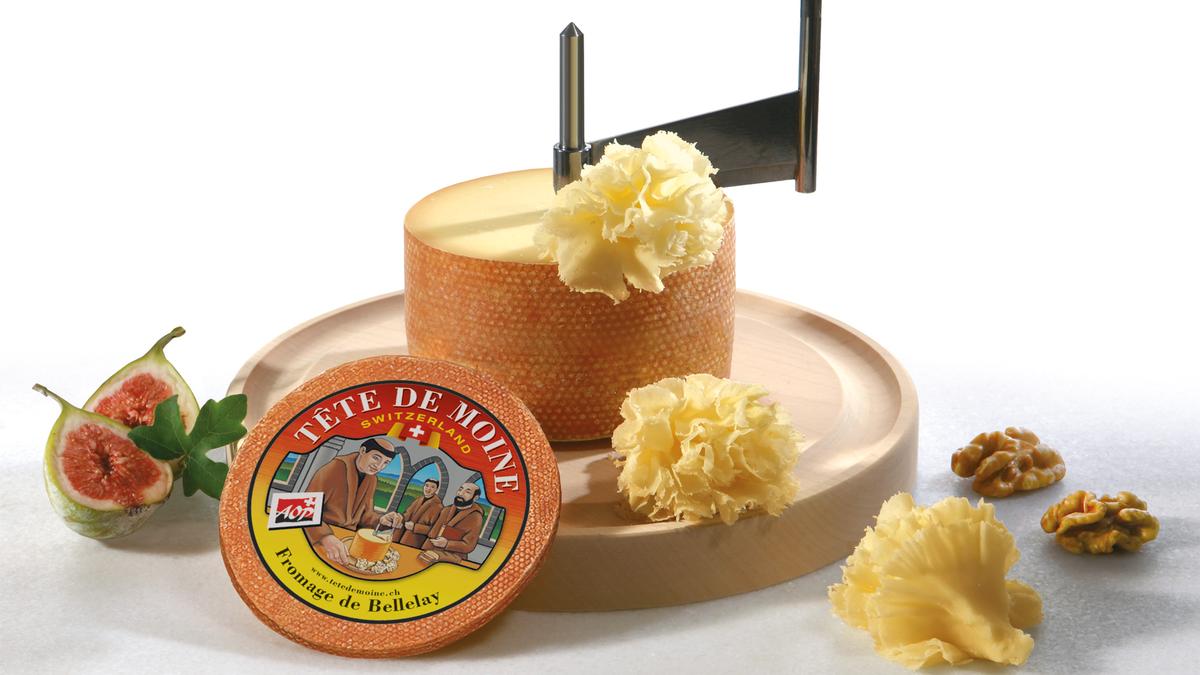
Have you ever seen a cheese that looks like a flower?
It's called Tête de Moine cheese, and it's special because you don't cut it – you scrape it!
Scientists wanted to know why scraping makes these pretty shapes.
They found that when you scrape, the inside of the cheese shrinks more than the outside.
This uneven shrinking makes the cheese bend and wrinkle, just like a rose petal.
The scraping tool creates friction, which is a key factor.
The scraping method also helps the cheese release its flavors better.
It's like the cheese is folding itself into a beautiful shape!

Scientists have studied how the scraping of Tête de Moine cheese creates floral shapes.
The cheese is scraped instead of cut, forming rosettes due to its unique properties.
The study, published in *Physical Review Letters*, focuses on the physics behind the process.
Uneven stretching during scraping causes the cheese to bend and wrinkle into a rosette.
Friction from the blade and plastic shearing contribute to the cheese's transformation.
- Who
- Researchers at the University of Paris studied the phenomenon of cheese scraping.
- What
- Scientists investigated the physics behind how scraping Tête de Moine cheese creates rosette shapes.
- When
- The study's findings are set to be published in *Physical Review Letters*.
- Where
- The research was conducted at the University of Paris, focusing on Tête de Moine cheese from the Bellelay region of Switzerland.
- Why
- The scraping action, influenced by friction and uneven stretching, causes the cheese to wrinkle into a floral shape.
- Cheese Name
- Tête de Moine
- Origin
- Bellelay region of Switzerland
- Serving Method
- Scraping, not cutting
- Tool
- Girolle
- Study Publication
- Physical Review Letters