

Archive · 14 Sep 2026
Scientists Say Young Sun May Have Swallowed Super-Earth
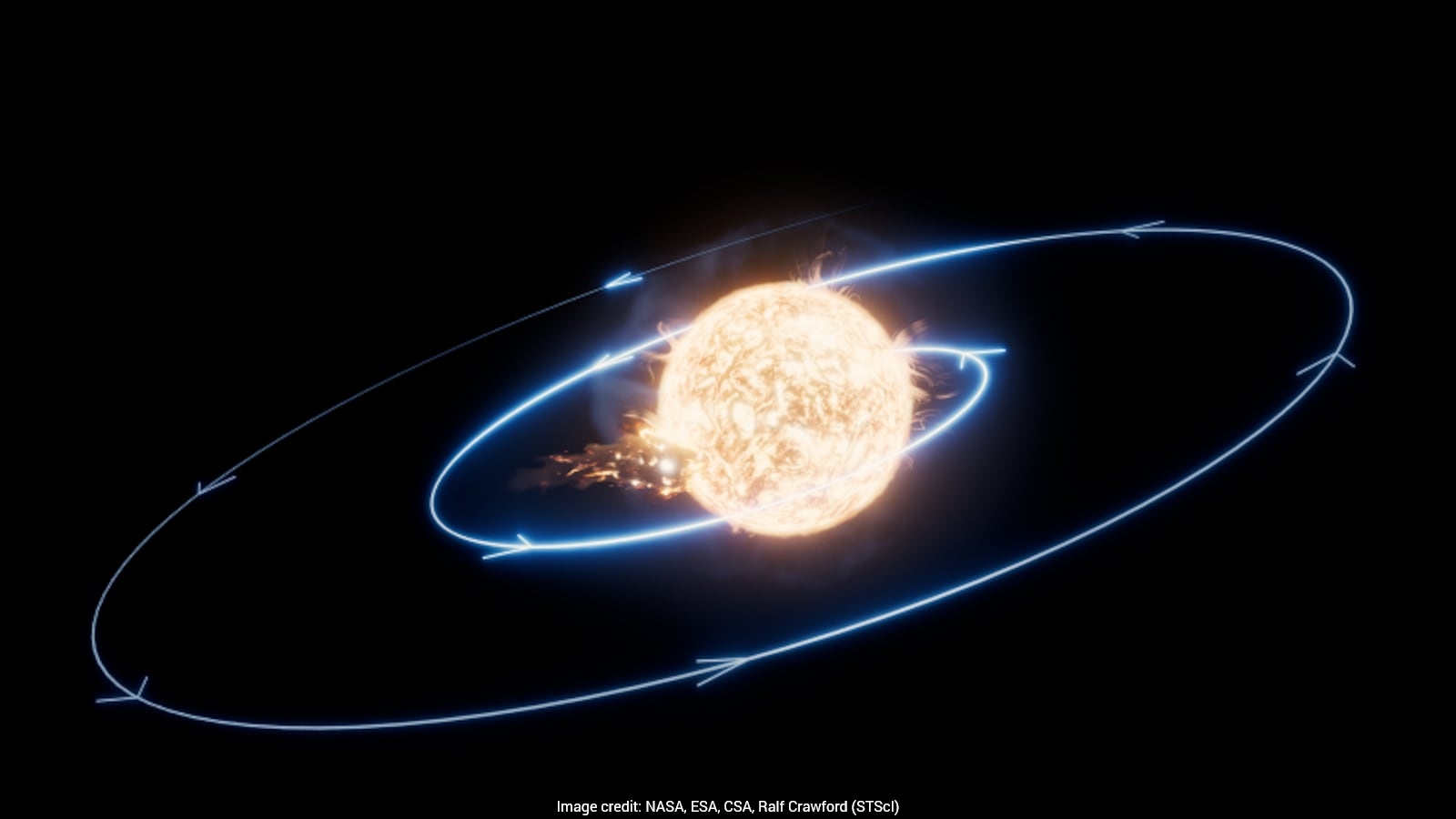
Scientists are trying to understand why the Sun is different from computer models of how stars should work.
They noticed that the Sun has less lithium than expected and that some of its inner features are difficult to explain.
A new study suggests that the young Sun may have swallowed a rocky planet.
This planet may have been five to ten times heavier than Earth.
Long ago, it could have spiraled inward through the disk of gas and dust around the young Sun.
The planet may have passed through the Sun’s outer layers without losing much of its material.
Its remains could have changed the Sun’s chemistry and structure.
Scientists say this idea fits some observations better than standard solar models.
The study suggests that swallowed planets might leave clues inside stars for a very long time.

A study suggests the young Sun may have engulfed a planet five to ten times Earth’s mass.
Researchers say the event could explain puzzling differences between solar models and observations.
The swallowed planet may account for the Sun’s depleted surface lithium and internal structural features.
Simulations indicate the planet could have survived passage through the Sun’s outer layers while losing little mass.
The research, led by Mutlu Yildiz of Ege University, was published in Monthly Notices of the Royal Astronomical Society.
- Who
- Astronomer Mutlu Yildiz and researchers at Ege University.
- What
- A study proposes that the young Sun engulfed a super-Earth, leaving chemical and structural effects inside it.
- When
- Billions of years ago, during the early history of the solar system; the study was recently published.
- Where
- Inside the young Sun, in the early solar system.
- Why
- The proposed engulfment could explain differences between standard solar models and observations, including the Sun’s depleted lithium abundance.
Swallowed-Planet Hypothesis
Standard Solar Models
Explaining the Sun’s unusual features
Swallowed-Planet Hypothesis
The study argues that engulfing a planet several times more massive than Earth could explain multiple mismatches between solar models and observations.
Standard Solar Models
Standard solar models have not fully matched observations of the Sun’s outer-layer depth, core sound waves, and low surface lithium, according to the article.
Evidence for a past planet
Swallowed-Planet Hypothesis
Researchers say a swallowed planet could leave a lasting chemical fingerprint inside its host star.
Standard Solar Models
The article describes the planet-engulfment idea as a proposed explanation, rather than reporting direct detection of the missing planet.
- Lead researcher
- Mutlu Yildiz of Ege University in Turkey
- Proposed planet size
- Approximately five to ten times Earth’s mass
- Proposed event
- A super-Earth spiraled into and was engulfed by the young Sun
- Key evidence addressed
- The Sun’s internal structure, outer-layer depth, sound-wave behavior, and low surface lithium
- Publication
- Monthly Notices of the Royal Astronomical Society
- Simulation finding
- The planet could survive passage through the Sun’s outer layers while losing little mass