

3 weeks ago
Dolphin Fraggle Grieves, Carries Dead Calf as Pod Stays Close
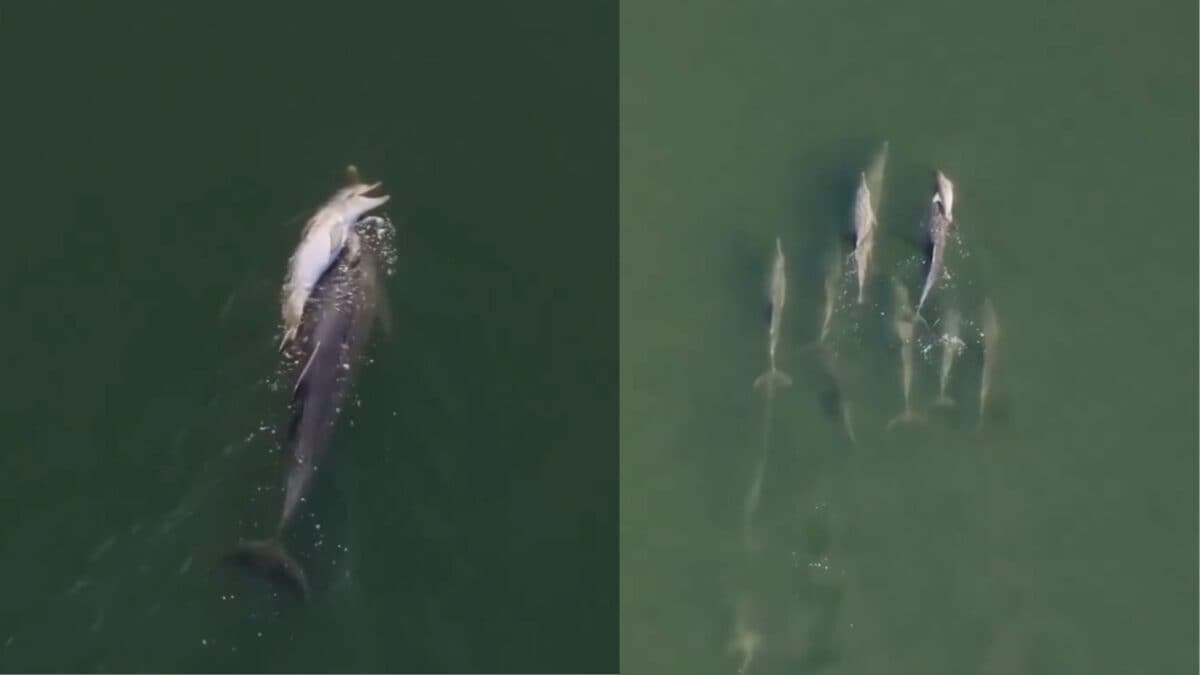
A dolphin named Fraggle had a baby, but the baby died when it was only about two weeks old.
Fraggle was very sad, so she carried her baby's body with her in the water instead of letting it go.
The other dolphins in her group stayed close to her the whole time.
Scientists say animals like dolphins have strong feelings for their families.
When a baby animal dies, its mother sometimes carries the body for many days.
This is a sign that the mother is grieving, just like people do.
Scientists have also seen chimpanzees, gorillas, and baboons carry their dead babies.
One scientist said it is clear that Fraggle was grieving for her child.
Another dolphin called Tahlequah once carried her baby for more than two weeks.
This shows that animals can feel love and sadness too.

A dolphin named Fraggle was filmed carrying the body of her two-week-old calf in waters south of Perth, Australia.
Geographe Marine Research, which posted the footage on July 20, suggested the calf may have died of pneumonia.
Other dolphins in the pod stayed close to Fraggle while she carried the calf, reflecting strong social bonds.
Scientists say carrying dead calves is common among cetaceans and is considered an expression of grief.
In 2018, an orca named Tahlequah carried her dead calf for more than two weeks and over a thousand miles near British Columbia.
- Who
- Fraggle, a dolphin mother, along with her pod, observed near Perth, Australia by Geographe Marine Research.
- What
- Fraggle carried the body of her dead two-week-old calf for days while other pod members stayed close.
- Where
- Waters south of Perth, Australia, in Western Australia's Leschenault Estuary.
- When
- Footage was posted on July 20, 2026, after the calf died during the Southern Hemisphere's winter.
- Why
- Scientists believe mothers carry dead calves out of grief, strongly motivated to maintain physical contact with their offspring.
Key facts
- Dolphin
- Fraggle
- Calf age at death
- About two weeks old
- Location
- Leschenault Estuary, south of Perth, Western Australia
- Footage released by
- Geographe Marine Research (July 20, 2026)
- Suspected cause of death
- Pneumonia (suggested by Geographe Marine Research)
- Notable prior case
- Orca Tahlequah carried her dead calf for over two weeks and 1,000 miles in 2018
- Expert view
- Lori Marino: 'absolutely clear that this is a mother grieving for her child'
Quotes
Dr. Lori Marino
Neuroscientist and founder of the Whale Sanctuary Project
“This makes holding on to the corpse something very difficult and shows a strong motivation on the part of the mother.”
 news18.com
“It’s absolutely clear that this is a mother grieving for her child.”
news18.com
Lauren Brandkamp
Stranding coordinator at Whale and Dolphin Conservation North America
“It’s a natural behavioural response in animals. They form these bonds with their offspring, with other members of their pod or their species. And when a life is lost, they also experience that kind of mourning and sadness.”
news18.com
Sources
Related news
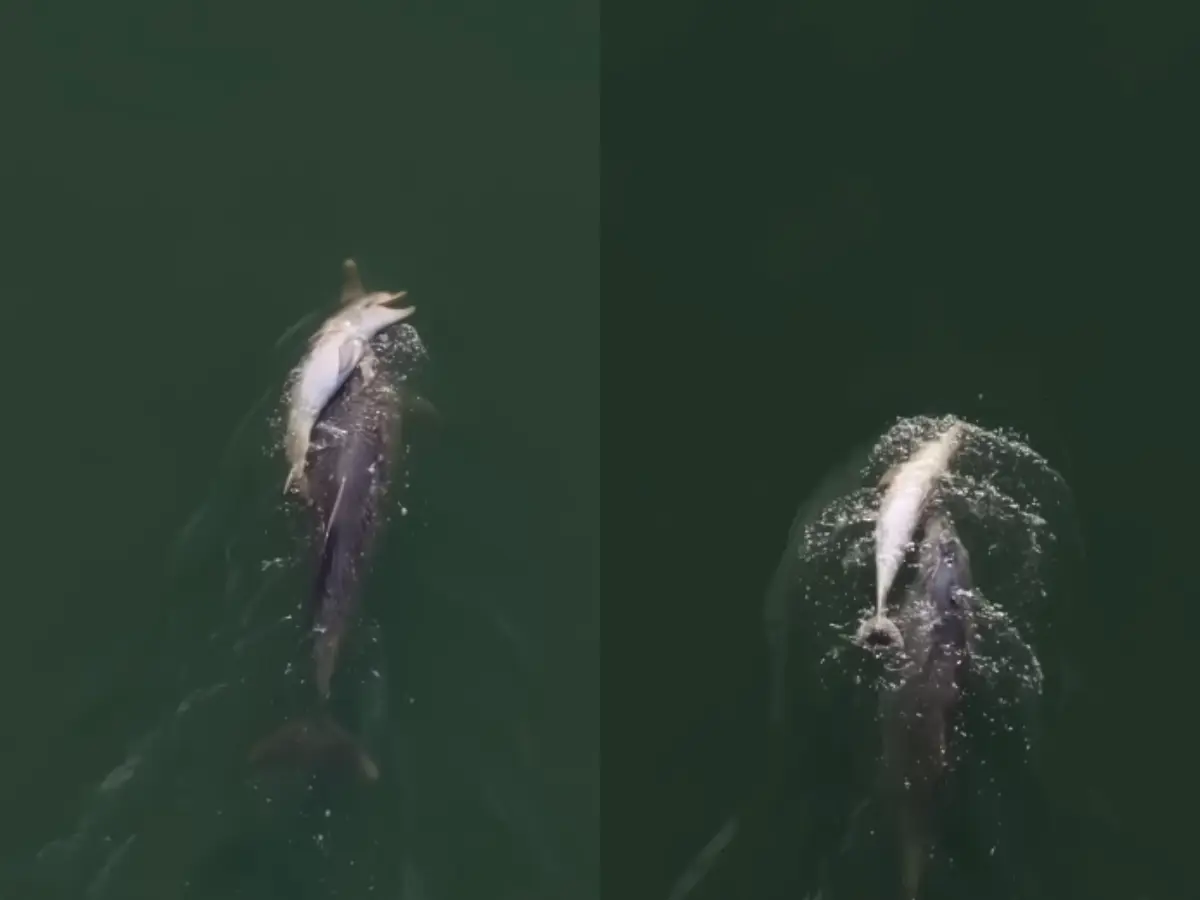
Viral Dolphin Video Sparks Debate on Animal Mourning Behavior

Grieving Dolphin Fraggle Carries Deceased Calf in Viral Video
World Elephant Day: Seven Human-Like Behaviours That Make Elephants Extraordinary

Floods Sweep Five Elephants Toward Barrage in Uttar Pradesh
