

Archive · 23 Jan 2026
Himalayan Griffon Vultures Signal Ecological Health Near Siliguri
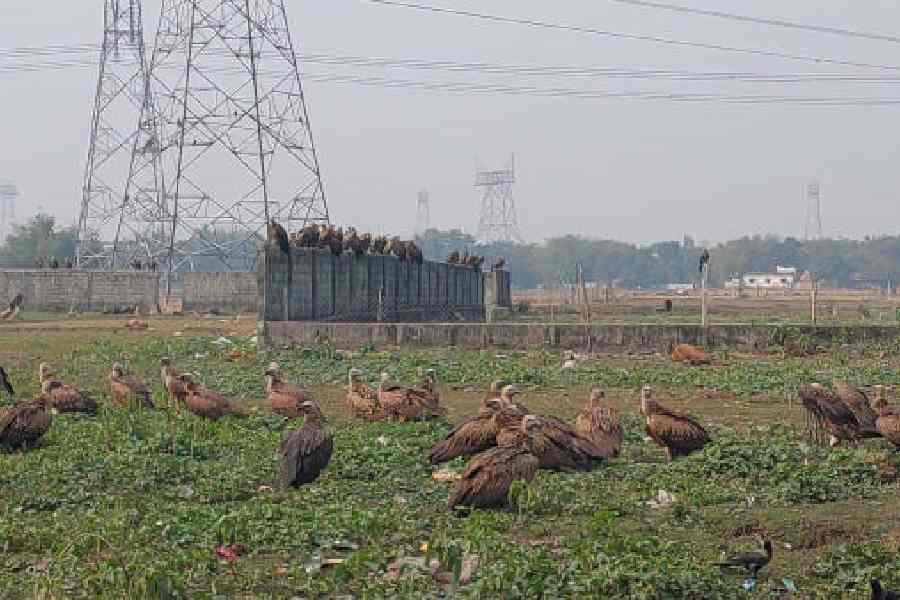
A lot of Himalayan griffon vultures have been seen near Siliguri, which is a good sign for the environment.
These birds eat dead animals and help keep the ecosystem balanced.
Experts say this shows the area is healthy.
They want the local government to make sure the vultures have enough food and are protected.
The vultures are in danger because of a medicine called diclofenac, which is sometimes used illegally on animals.
There is a special place where vultures are being bred to help their numbers grow.

Himalayan griffon vultures spotted in large numbers near Siliguri, indicating improving ecological health.
Conservationists urge steady food supply and protection measures for the endangered vultures.
Vultures play a crucial role in maintaining ecological balance by consuming animal carcasses.
Diclofenac, a banned veterinary medicine, continues to threaten vulture populations.
A captive breeding center for vultures exists in Rajabhatkhawa, Buxa Tiger Reserve, with around 170 vultures.
- Who
- Wildlife conservationists, environmentalists, local bodies, and the state forest department
- What
- Presence of Himalayan griffon vultures near Siliguri
- When
- Recently, with higher numbers observed this winter
- Where
- Jatiakali dumping yard near Siliguri, West Bengal
- Why
- The presence of vultures indicates a healthy ecosystem and improving ecological health
- Species
- Himalayan griffon vultures
- Location
- Jatiakali dumping yard, Siliguri
- Number of Vultures
- More than 100
- Threat to Vultures
- Diclofenac, a painkiller used in veterinary medicine
- Conservation Efforts
- Captive breeding center at Rajabhatkhawa, Buxa Tiger Reserve
- Current Vulture Population at Center
- Around 170 vultures