

3 hrs ago
Economy, Trump Shape Voter Views Ahead of 2026 Midterms
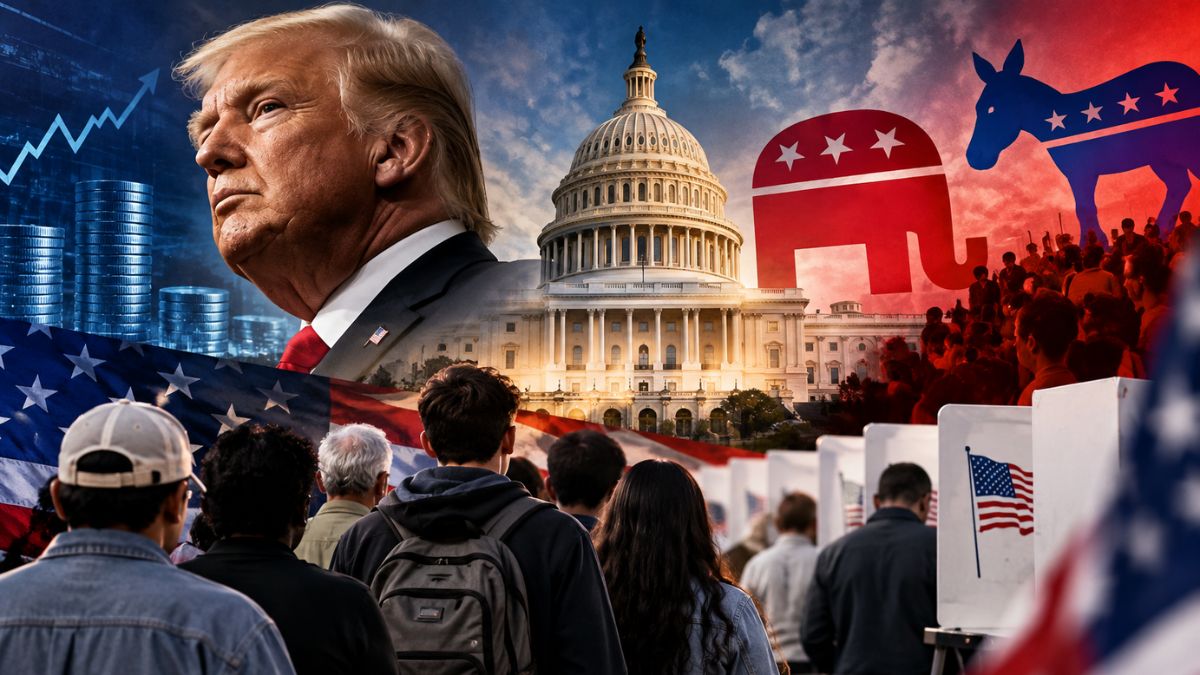
The 2026 midterm elections are coming, and many voters are worried about prices and the cost of living.
More than half of voters want candidates to talk about these economic problems.
Neither the Democratic Party nor the Republican Party has a clear lead on economic issues.
Democrats currently have a small lead when voters are asked which party they would support for Congress.
Democrats are also paying more attention to the election so far.
President Donald Trump is an important part of many voters’ decisions.
More people say their vote would be against Trump than for him.
Congress itself is unpopular, with many Americans viewing it unfavorably.

Prices, affordability and the economy are the issues voters most want congressional candidates to address.
Democrats and Republicans are nearly tied on economic policy, 37% to 36%.
Democrats lead the generic congressional ballot, 43% to 37%, among registered voters.
More voters describe their congressional choice as a vote against Trump than a vote for him, 42% to 22%.
Congress has a 25% favorable rating, while 72% of Americans view it unfavorably.
- Who
- U.S. registered voters, the Democratic Party, the Republican Party, President Donald Trump and Congress.
- What
- A Pew Research Center survey examines voter priorities and party preferences ahead of the 2026 midterm elections.
- Where
- The United States.
- When
- Ahead of the 2026 U.S. midterm elections; the survey also compares views with earlier campaign periods.
- Why
- Voters are focused on prices, affordability and the economy while also considering Trump, the parties and Congress.
Democratic Party
Republican Party
Economic policy
Democratic Party
37% of Americans say they agree more with the Democratic Party on economic policy.
Republican Party
36% say they agree more with the Republican Party, leaving the parties nearly tied.
Congressional preference
Democratic Party
Democratic candidates receive 43% support among registered voters in the generic congressional ballot.
Republican Party
Republican candidates receive 37% support, while 20% are unsure or prefer another candidate.
Policy strengths
Democratic Party
Democrats hold larger advantages on healthcare, environmental policy, abortion and education.
Republican Party
Republicans lead on crime and hold a five-point advantage on immigration.
Key facts
- Survey sample
- 3,554 U.S. adults, including 2,779 registered voters
- Top voter concern
- Prices and affordability, cited by 51% of voters
- Economic policy preference
- 37% agree more with Democrats and 36% with Republicans
- Generic congressional ballot
- 43% favor a Democratic candidate and 37% a Republican candidate
- Trump's role
- 42% view their congressional vote as a vote against Trump; 22% view it as a vote for him
- Congress favorability
- 25% favorable and 72% unfavorable
- Election engagement
- 39% of Democrats and Democratic-leaning independents have thought a lot about the election, compared with 22% of Republicans and Republican-leaning independents
Sources
Related news
Trump Approval Falls to Second-Term Low as Economic Concerns Rise

Indian-American Voters Shift From Trump Toward Democrats Ahead Of Midterms

Trump Approval Falls as Inflation, Iran War Shape Midterms
Prices, Iran War and Approval Trouble Test Republicans

Indian-American Voters Lean Democratic Ahead of US Midterms

Trump’s Convention Puts Midterm Strategy and Succession in Focus

Trump Renews $5,000 Dividend Promise Ahead of Midterms

Forecast Favors Democrats to Retake House in Midterm Elections

Italian Women Politicians Protest Tajani’s Skirt Remarks