Archive · 4 Sep 2026
White House Launches Arcade Games Promoting Trump Immigration Agenda

The White House released online games about some of President Donald Trump’s policies.
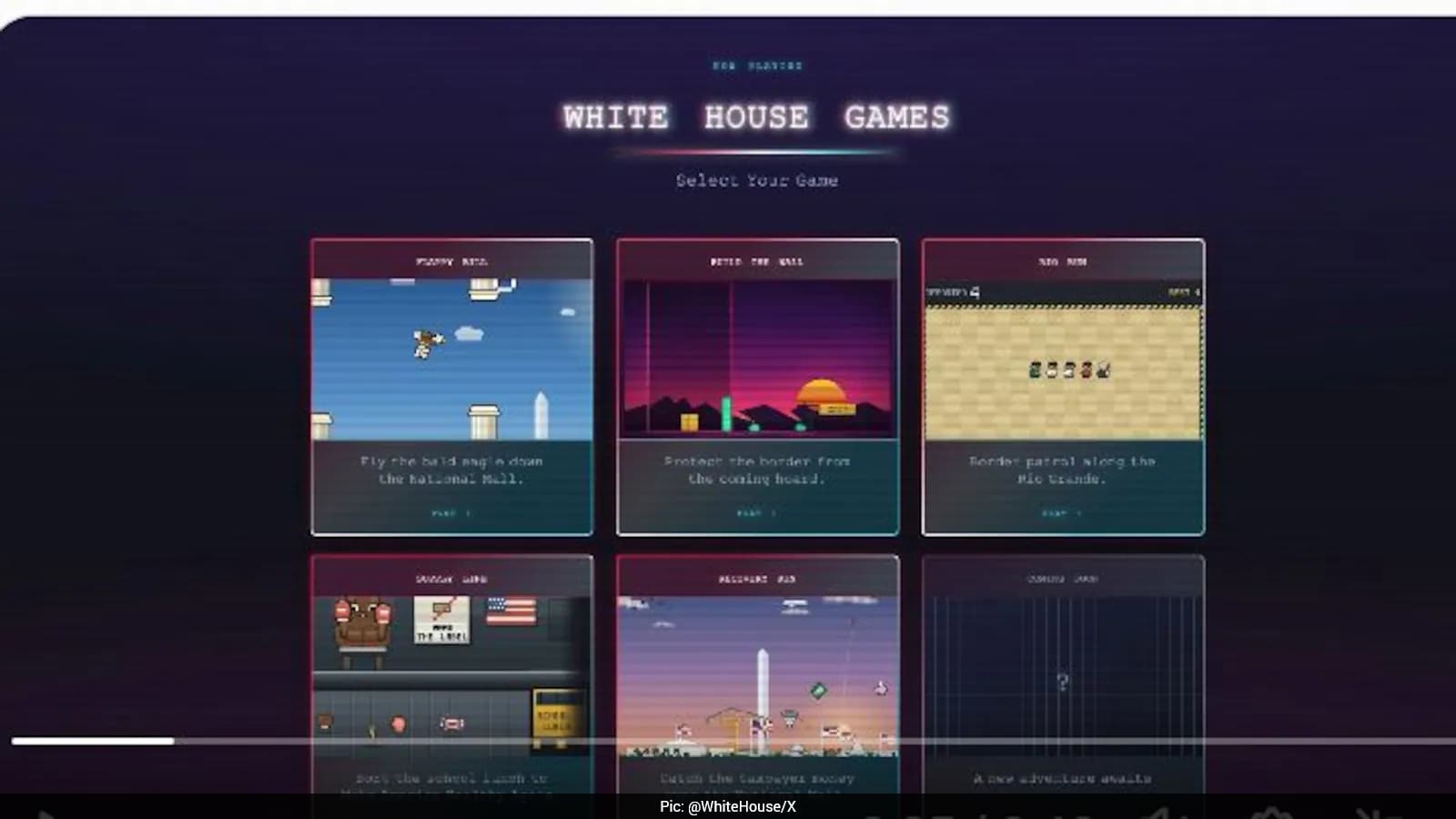
The games look like older arcade games but have themes about immigration and border security.
In one game, a digital Tom Homan chases migrants near the Rio Grande.
Another game asks players to build a border wall using falling blocks.
A third game involves collecting items for Trump Accounts.
These accounts are described as having $1,000 deposits for eligible children born between 2025 and 2028.
The White House said the games help explain the president’s accomplishments in a fun way.
Rights groups said deportation affects real people and should not be treated like entertainment.
One border advocate also said the games ignore the experiences of people living near the border.

The White House unveiled MAGA-themed arcade games tied to President Donald Trump’s immigration agenda.
Rio Run, modeled on Snake, depicts Tom Homan chasing migrants near the Rio Grande.
Build the Wall, based on Tetris, challenges players to construct a border wall and “protect the border from the coming horde.”
Another game involves collecting items for Trump Accounts, which include $1,000 deposits for children born between 2025 and 2028.
The White House called the games an engaging messaging tool, while rights groups said they trivialize deportation and dehumanize migrants.
- Who
- The White House, President Donald Trump, border official Tom Homan, and critics including Amerika Garcia Grewal and Adriana Jasso.
- What
- The White House launched a website featuring MAGA-themed arcade games about deportation, border-wall construction, and Trump Accounts.
- When
- The games were unveiled on Thursday; one syndicated report displayed a September 3, 2026 timestamp.
- Where
- The website was available online, while the games reference the Rio Grande and the United States-Mexico border.
- Why
- The White House said it wanted to present the president’s accomplishments in an engaging way and contrast its message with Democrats’ vision; critics said the games trivialize immigration enforcement.
White House Position
Critics’ Position
Purpose of the games
White House Position
The White House said the games are an innovative and engaging way to communicate President Trump’s accomplishments and contrast its culture of fun and winning with what it called Democrats’ “dark socialist vision.”
Critics’ Position
Rights groups said the games turn serious immigration policies and human suffering into entertainment.
Immigration enforcement
White House Position
The games promote the administration’s priorities of deportation, border-wall construction, and reducing border crossings as campaign and governing achievements.
Critics’ Position
Critics said the games ridicule migrants and present deportation as a harmless game even as the administration increases arrests and deportations.
Impact on border communities
White House Position
The White House’s messaging emphasizes border protection and its broader immigration agenda.
Critics’ Position
Amerika Garcia Grewal said border residents, including United States citizens, are treated with suspicion and violence, while Adriana Jasso said the games show a lack of seriousness about migrants’ experiences.
- Launch organization
- The White House
- Featured game
- Rio Run, a Snake-style game showing a digital Tom Homan chasing migrants near the Rio Grande
- Border-wall game
- Build the Wall, a Tetris-style game challenging players to construct a border wall
- Trump Accounts
- The website describes accounts with $1,000 deposits for children born between 2025 and 2028
- Promotional message
- The White House promoted the games with the phrase: “Build the wall. Deport. Fill a Trump Account.”
- White House rationale
- The administration said the games were designed to communicate President Trump’s accomplishments in a way that resonates with Americans
- Criticism
- Rights groups and border advocates accused the administration of trivializing deportation, dehumanizing migrants, and ignoring border residents’ quality of life