

Archive · 2 Jan 2026
India's 2025 as 8th Warmest Year

India had its 8th warmest year in 2025 since records began in 1901.
The country was 0.28°C warmer than usual.
The winter months were especially warm, with February being the hottest since 1901.
December was also very warm, ranking as the 4th warmest since 1901.
There was less rain than usual, and this trend is expected to continue into January and February 2026.
The weather experts say that climate change is making winters milder and that there will be less snow in the northern mountains.
They also predict that some parts of India will have more cold days, while others will have warmer days.
Farmers might need to use more water to grow their crops because of the expected dry weather.
In 2025, there were 11 cyclonic depressions, which is more than usual, and these extreme weather events caused many deaths.
The experts also think that El Niño might come back during the monsoon season in 2026, which could mean less rain.

2025 was India's 8th warmest year since 1901, with temperatures 0.28°C above the 1991-2020 average.
Winter months saw the highest temperature anomalies, with February being the warmest since 1901 (1.36°C above normal).
December 2025 was the 4th warmest since 1901, with temperatures 0.86°C above normal, and a 68% rainfall deficit.
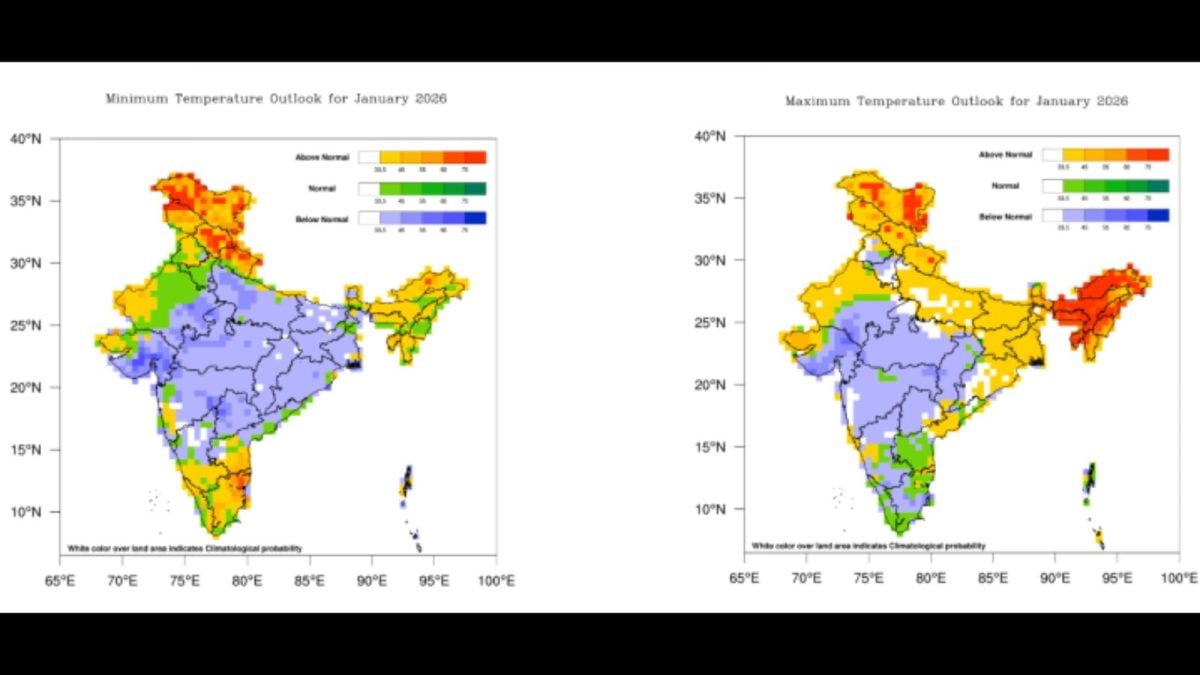
IMD predicts below-normal rainfall (less than 86% of LPA) and below-normal snowfall in Jammu & Kashmir, Himachal Pradesh, and Uttarakhand for January-February 2026.
Northwest India is expected to experience normal to above-normal daytime temperatures, indicating a milder winter, while central and eastern India may have more cold days.
- Who
- India Meteorological Department (IMD), Dr. Mrityunjay Mohapatra (IMD Director General)
- What
- India experienced its 8th warmest year since 1901, with predictions of a milder winter and below-normal rainfall for Northwest India in January-February 2026
- When
- 2025, with specific predictions for January-February 2026
- Where
- India, particularly Northwest India, Jammu & Kashmir, Himachal Pradesh, Uttarakhand, and central/eastern India
- Why
- Climate change and El Niño/La Niña weather patterns are influencing temperature and precipitation trends
Climate Change Impact
Natural Variability
Cause of Warming
Climate Change Impact
The warming trends and extreme weather events are primarily driven by climate change, as evidenced by the increasing frequency of record-breaking temperatures and extreme weather events.
Natural Variability
Some argue that the observed warming and weather patterns could be part of natural climate variability and not solely attributable to human-induced climate change.
- Ranking
- 8th warmest year since 1901
- Temperature Anomaly
- 0.28°C above 1991-2020 average
- Warmest Year
- 2024 (0.65°C above average)
- Warming Rate
- 0.68°C per 100 years (1901-2025)
- Winter Temperature Anomaly
- 1.17°C above normal
- February Temperature Anomaly
- 1.36°C above normal (warmest since 1901)
- December Temperature Anomaly
- 0.86°C above normal (4th warmest since 1901)
- Rainfall Deficit
- 68% deficit in December 2025
- Predicted January-February Rainfall
- Below-normal (less than 86% of LPA)
- Predicted Snowfall
- Below-normal in Jammu & Kashmir, Himachal Pradesh, Uttarakhand
- Coldest December Day
- December 31, 2025, with a maximum temperature of 14.2°C
- Extreme Weather Events
- 11 cyclonic depressions, 2,760 fatalities
- El Niño Prediction
- Potential emergence in July-September 2026
Sources
Emergence of El Nino during monsoon season may affect rainfall
2025 Ends As India’s 8th Warmest Year Since 1901, Milder Winter Ahead For Northwest India
Prolonged fog and dry spell leaves December 5th driest over India : IMD

Cold, dense fog to persist across north India, says IMD

Delhi rings in New Year with chilly weather, 'very poor' air

Cold Days Ahead After Warm 2025

ICAR hopes tide over any weather threat to wheat crop in February
