

Archive · 26 Sep 2026
Ukraine War Recasts the Tank’s Future in Land Warfare
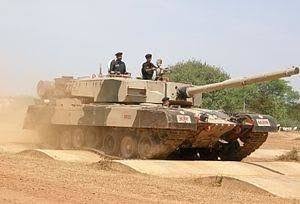
A tank is a heavily protected vehicle with powerful guns.
Many countries still use tanks because they can move, attack, and help soldiers capture or defend land.
But tanks are no longer safe when operating alone.
In recent wars, drones, missiles, mines and artillery have damaged or destroyed tanks.
The wars in Afghanistan and Iraq showed both the strengths and weaknesses of American tanks.
The Russia-Ukraine war has made the tank’s weaknesses especially clear.
The article says tanks should move often, hide better and avoid gathering in large groups.
Tanks will probably remain important, but they must work closely with soldiers, drones, electronic warfare and other weapons.

The number of indigenous main battle tank producers has reportedly fallen to 14.
According to the article, 110 of 173 countries maintain main battle tanks.
Experiences in Afghanistan and Iraq showed tanks remained useful but faced ambushes, suicide bombers and improvised explosive devices.
The Russia-Ukraine war has exposed tanks to FPV drones, Javelin missiles, artillery fire and dense minefields.
The article concludes that tanks remain useful but must operate within combined-arms formations supported by infantry, drones, electronic warfare and logistics.
- Who
- Military forces, tank-producing countries and armies that operate main battle tanks.
- What
- A reassessment of whether main battle tanks remain useful in 21st-century land warfare.
- When
- The discussion compares 20th-century warfare with conflicts from 2001 onward, including the Russia-Ukraine war.
- Where
- The analysis focuses on Afghanistan, Iraq and Ukraine, alongside broader global military trends.
- Why
- New threats including drones, anti-tank missiles, artillery and mines have challenged the tank’s traditional battlefield role.
Tank Supporters
Tank Skeptics
Whether tanks remain relevant
Tank Supporters
Tanks still combine mobility, firepower and armour better than other land platforms and can help seize or hold ground.
Tank Skeptics
Recent battlefield losses and the spread of drones, missiles, artillery and mines have weakened the idea that tanks are invincible.
How tanks should operate
Tank Supporters
Tanks can remain effective if they receive better camouflage, move rapidly, disperse and use long-range firepower.
Tank Skeptics
The article argues that massed armoured formations and standalone tank operations are increasingly vulnerable.
The tank’s strategic status
Tank Supporters
Continued tank inventories in many countries indicate that militaries still expect tanks to play a decisive role in some operations.
Tank Skeptics
The tank should be treated as a tactical component rather than the sole strategic system, requiring infantry, drones, electronic warfare and logistics.
- Current indigenous producers
- The article identifies 14: the United States, Russia, China, North Korea, South Korea, France, the United Kingdom, Japan, India, Iran, Israel, Turkey and Pakistan.
- Countries with MBTs
- The article says 110 of 173 armed forces have main battle tanks.
- Countries without MBTs
- The article says 63 countries do not have a single tank.
- Main gun range
- Main battle tank guns are described as generally ranging from 105 mm to 125 mm.
- Afghanistan conflict
- The article describes the United States-led war as lasting from 2001 to 2021.
- Iraq conflict
- The article describes the United States occupation of Iraq as lasting from 2003 to 2011.
- Key battlefield threats
- FPV kamikaze drones, Javelin anti-tank guided missiles, concentrated artillery fire and minefields.