

Archive · 9 Oct 2026
UP Election Chief Rejects Claims of Arbitrary Voter Deletions
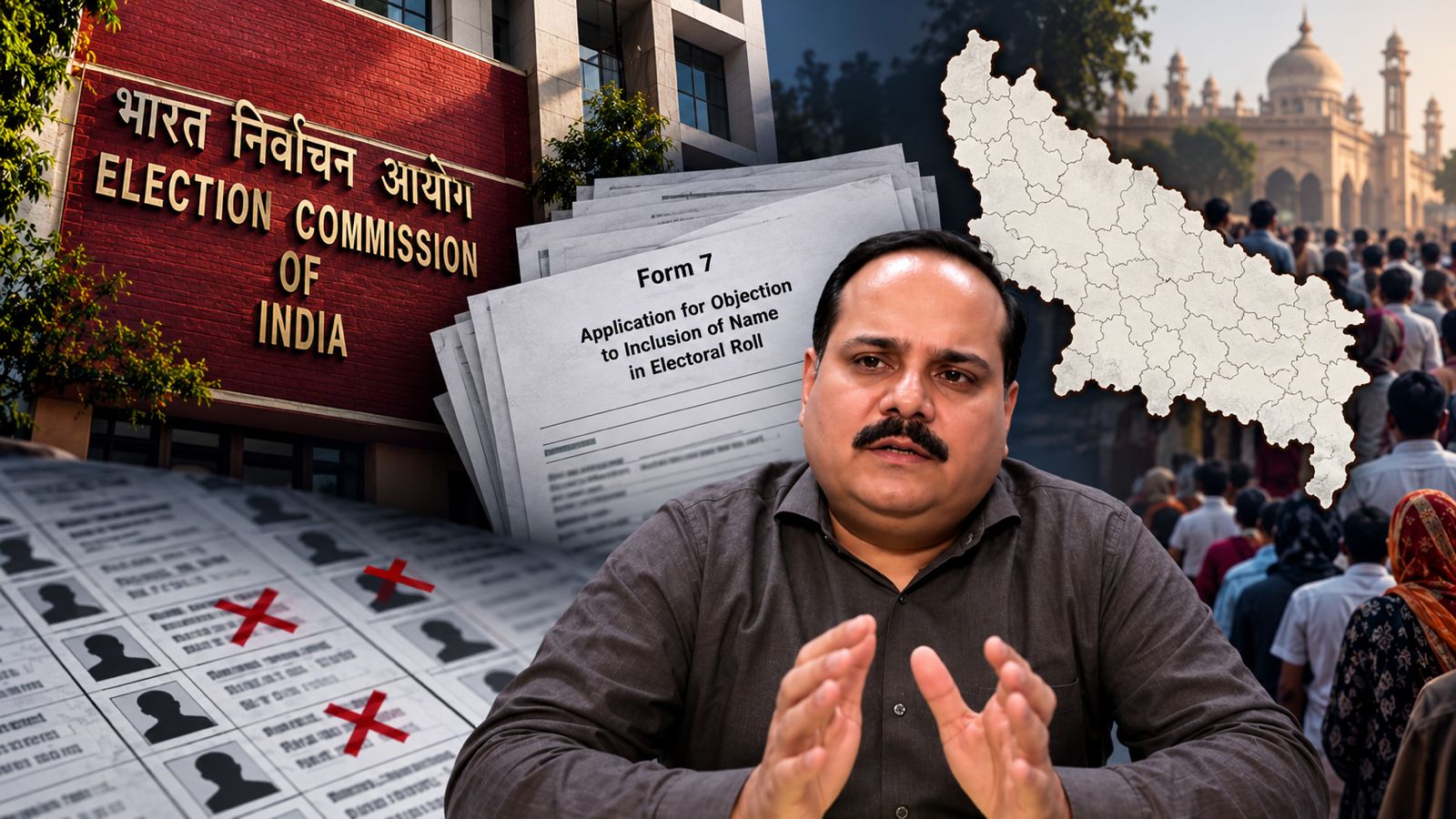
A news investigation questioned whether election software helped remove voters unfairly in Uttar Pradesh.
The state’s chief election officer, Navdeep Rinwa, rejected that claim.
He said the software entries recorded decisions made by election officers after they checked cases and held hearings.
He said voters were notified and could provide documents.
The investigation also questioned why entries appeared after the deadline for filing objections.
Rinwa said hearings and decisions already in progress could continue after that deadline.
He said officials rejected all 188 objections filed under one name in Tarabganj.
The investigation raised concerns about possible targeting of minority voters, while Rinwa said the figures did not show a widespread campaign.
The accounts differ on whether the records point to procedural problems or lawful decisions.

Uttar Pradesh Chief Electoral Officer Navdeep Rinwa disputed The Reporters’ Collective’s claims that ERONET facilitated arbitrary voter deletions.
The investigation alleged that ERONET generated 85,854 Form 7 entries and questioned their grounds, timing, bulk submissions, and possible effects on minority voters.
Rinwa said the entries recorded decisions made by electoral officers after notices, verification, hearings, and reasoned orders—not new objections or automatic removals.
He said hearings continued after the March 6, 2026, deadline for filing claims and objections, with final orders issued later in March.
Rinwa said all 188 objections filed under the name “Reshma” in Tarabganj were rejected, and denied that the reported figures showed a widespread targeting campaign.
- Who
- Uttar Pradesh Chief Electoral Officer Navdeep Rinwa and The Reporters’ Collective.
- What
- Rinwa rejected allegations that ERONET was used to arbitrarily delete voters during Uttar Pradesh’s Special Intensive Revision.
- When
- The disputed revision involved events in 2026; Rinwa’s clarification was posted on October 9, 2026.
- Where
- Uttar Pradesh, India.
- Why
- The Reporters’ Collective questioned the circumstances and safeguards around voter-deletion entries; Rinwa said they reflected decisions made after required inquiries and hearings.
The Reporters’ Collective’s concerns
The CEO’s response
ERONET-generated entries
The Reporters’ Collective’s concerns
The investigation alleged that ERONET generated 85,854 Form 7 applications bearing election officials’ digital signatures without specifying deletion grounds.
The CEO’s response
Rinwa said the entries recorded decisions already made by electoral officers after verification, hearings, and reasoned orders; he said the grounds were in notices and orders.
Entries after the filing deadline
The Reporters’ Collective’s concerns
The investigation questioned deletion requests and submissions recorded after March 6, 2026, the claims and objections deadline.
The CEO’s response
Rinwa said the deadline applied to filing fresh objections, while hearings and decisions on cases already under consideration could continue afterward.
Bulk objections and possible targeting
The Reporters’ Collective’s concerns
The investigation raised concerns about safeguards against mass objections and possible targeting of minority voters.
The CEO’s response
Rinwa cited the limited number of people making 10 or more applications and said all 188 Tarabganj objections filed under “Reshma” were rejected; the article notes he did not provide a separate demographic analysis.
- Disputed entries
- 85,854 Form 7 entries, according to the investigation and the CEO’s response.
- Draft roll publication
- January 6, 2026; it contained approximately 12.55 crore electors.
- Cases requiring verification
- Nearly 3.26 crore entries, including 2.22 crore with logical discrepancies and 1.04 crore that could not be mapped.
- Claims and objections deadline
- March 6, 2026; Rinwa said hearings continued until approximately March 15.
- Tarabganj objections
- All 188 objections filed under the name “Reshma” were rejected, according to Rinwa.
- Bulk submissions cited
- Rinwa said 198 individuals submitted 10 or more Form 7 applications, involving approximately 4,700 voters.
- Legal framework cited
- The Constitution of India, the Representation of the People Act, 1950, the Registration of Electors Rules, 1960, and the Electoral Roll Manual.