Archive · 2 Sep 2026
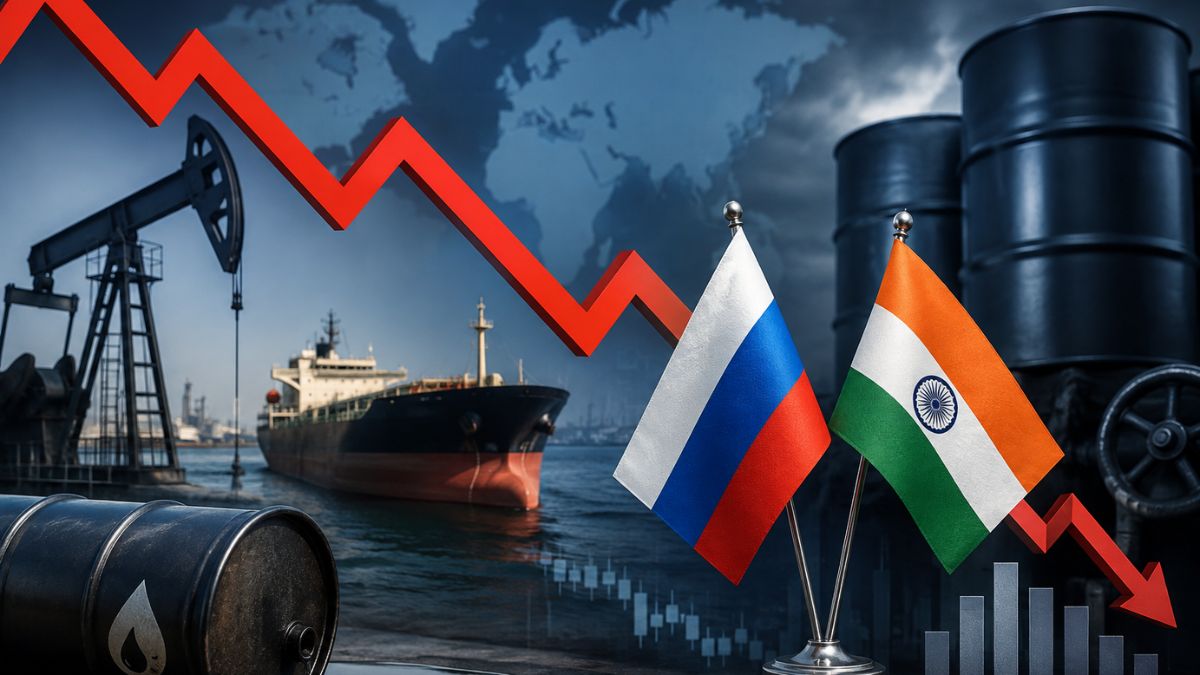
India’s Russian Oil Imports Fall Amid Supply Pressure
India bought much less Russian oil in August than it bought in July.
Russian oil imports fell by about one-quarter.
India also bought less oil overall during the month.
Russia had fewer barrels available to export, and China competed more strongly for the remaining shipments.
Ukrainian attacks and other dangers made some shipping routes more expensive and risky.
India therefore looked for more oil from places such as Venezuela, the United Arab Emirates, Iraq, Kuwait and African suppliers.
Russian oil was still expected to remain India’s largest source of crude.
Experts disagreed about whether the August drop was temporary or the start of longer-lasting supply pressure.

India imported 2.08 million barrels per day of Russian crude in August, down 26.3% from July’s record 2.82 million barrels per day.
Russia’s share of India’s crude imports fell to 45% in August from 55.9% in July, while total imports declined 8.4% to 4.62 million barrels per day.
Lower Russian exports, dangerous and more expensive Black Sea shipping, and stronger Chinese competition reduced the availability of Russian cargoes for India.
India’s Venezuelan oil imports rose 60.2% to about 350,000 barrels per day, their highest monthly level since 2020.
Kpler described the decline as possible market normalization, while analyst Natalia Katona warned Russian crude could become scarcer, costlier and harder to secure.
- Who
- India, Russia and China were the main countries involved; Kpler supplied provisional tanker data, and analyst Natalia Katona assessed the market.
- What
- India’s Russian crude imports fell 26.3% in August, while total crude imports declined and Venezuelan imports increased.
- When
- The figures compare August with July; the articles also discuss developments since 2022 and projections through 2028-29.
- Where
- The crude was shipped to India from Russia, Venezuela and other suppliers, with risks affecting routes through the Black Sea, Baltic Sea, Strait of Hormuz and Northern Sea Route.
- Why
- Russian export constraints, Chinese competition, shipping risks, refinery-related factors and disruptions to alternative supply routes affected India’s import patterns.
Market Normalization View
Prolonged Supply Pressure View
Meaning of the August decline
Market Normalization View
Kpler characterized the fall as possible market normalization rather than a structural retreat from Russian crude, with flows expected to stabilize between 2.0 million and 2.5 million barrels per day.
Prolonged Supply Pressure View
Natalia Katona said Russia is exporting less while China is competing more aggressively, raising the possibility that Russian barrels will become scarcer, more expensive and harder for India to obtain.
Future role of Russian oil
Market Normalization View
Russian crude is expected to remain the mainstay of India’s imports and its biggest source of oil despite the August decline.
Prolonged Supply Pressure View
Higher freight and insurance costs, attacks on energy infrastructure, route risks and stronger Chinese demand could further reduce the cost advantage and availability of Russian crude.
Role of refinery maintenance
Market Normalization View
The articles identify maintenance shutdowns at some Indian refineries as a possible contributor to lower August crude intake.
Prolonged Supply Pressure View
Another account says strong refined-product margins encouraged most Indian refiners to postpone monsoon maintenance, suggesting maintenance was not the main explanation for the decline.
- Russian crude imports
- 2.08 million barrels per day in August, down from 2.82 million barrels per day in July.
- India’s total crude imports
- 4.62 million barrels per day in August, compared with 5.04 million barrels per day in July.
- Russia’s share
- 45% of India’s crude imports in August, down from 55.9% in July.
- Venezuelan imports
- About 350,000 barrels per day in August, up 60.2% from 218,416 barrels per day in July.
- Russian seaborne exports
- An analyst cited in the articles estimated that Russian seaborne crude exports fell to 3.7 million barrels per day in August from 4.1 million in July.
- Shipping costs
- A Novorossiysk-to-India Suezmax voyage was estimated at roughly $20 per barrel, compared with about $13 per barrel from Baltic ports.
- Competing Chinese demand
- China’s crude purchases reportedly rose to 7.4 million barrels per day in August from 6.9 million in July, while its Russian imports rose to 1.7 million from 1.4 million.