

Archive · 16 Jan 2026
2025 Confirmed as Third-Hottest Year
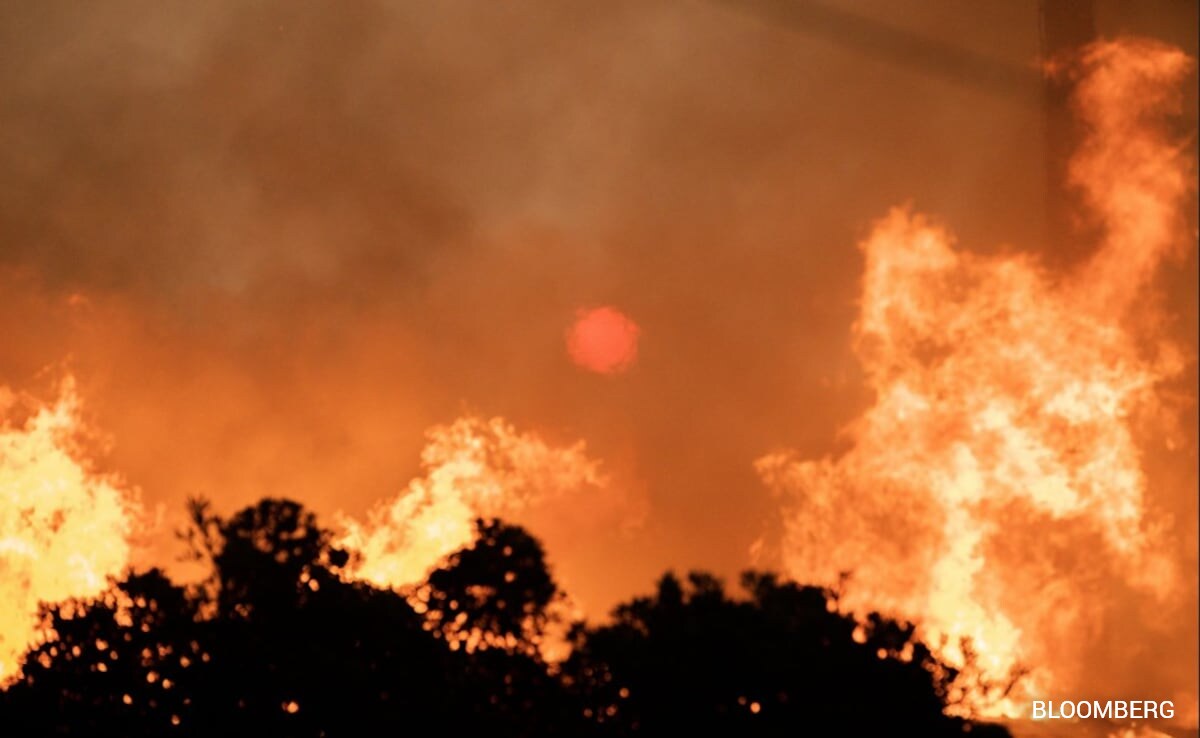
Scientists have confirmed that 2025 was the third-hottest year on record, just behind 2024 and 2023.
This is surprising because 2025 had a cooling phase called La Niña, which usually lowers temperatures.
The heat from greenhouse gases was so strong that it overpowered this cooling effect.
This shows that human-caused warming is now much stronger than natural weather changes.
The world is getting warmer faster, and we have already passed a important temperature limit set by the Paris Agreement.
This warming is causing more extreme weather like wildfires, floods, and powerful hurricanes.
Despite advances in clean energy, greenhouse gas emissions are still very high, putting us on a dangerous climate path.
The US has also decided to step back from global climate efforts, which scientists say is not a good idea.

2025 was the third-hottest year on record, following 2024 and 2023, despite a cooling La Niña phase.
Human-caused greenhouse gas emissions are overwhelming natural climate variability, accelerating global warming.
The three-year average temperature is now above the 1.5C threshold set by the 2015 Paris Agreement.
Extreme weather events, including wildfires, floods, and powerful hurricanes, were exacerbated by the record heat.
The US has scaled back its climate science and diplomacy efforts, which scientists criticize as detrimental.
- Who
- Scientists from Copernicus, UK Met Office, Berkeley Earth, NASA, NOAA
- What
- 2025 confirmed as third-hottest year, acceleration in global warming
- When
- Data released in 2026, covering 2025
- Where
- Global analysis, with notable impacts in Greenland, Los Angeles, Texas, Pakistan, Sri Lanka, Indonesia, Malaysia, Vietnam, Thailand, Jamaica, Haiti, Dominican Republic, Cuba
- Why
- Human-caused greenhouse gas emissions, declines in reflective clouds and sulfur pollution
- Temperature Increase
- 1.41C - 1.47C above 1850-1900 average
- Paris Agreement Threshold
- 1.5C average breached for the first time
- Projected Full Breach
- Mid-2029
- Heat-Stress Days
- At least half the globe's land faced higher-than-average
- Greenland Warming
- More than 12C above average in May
- Wildfires in Los Angeles
- 30+ deaths, $40 billion in insured losses
- Melissa Hurricane
- $8.8 billion damage, 100+ lives lost
- US Climate Science
- Dismantling of climate science and diplomacy efforts