

Archive · 2 Sep 2025
Scientists Discover Mathematical Patterns in Earth's History
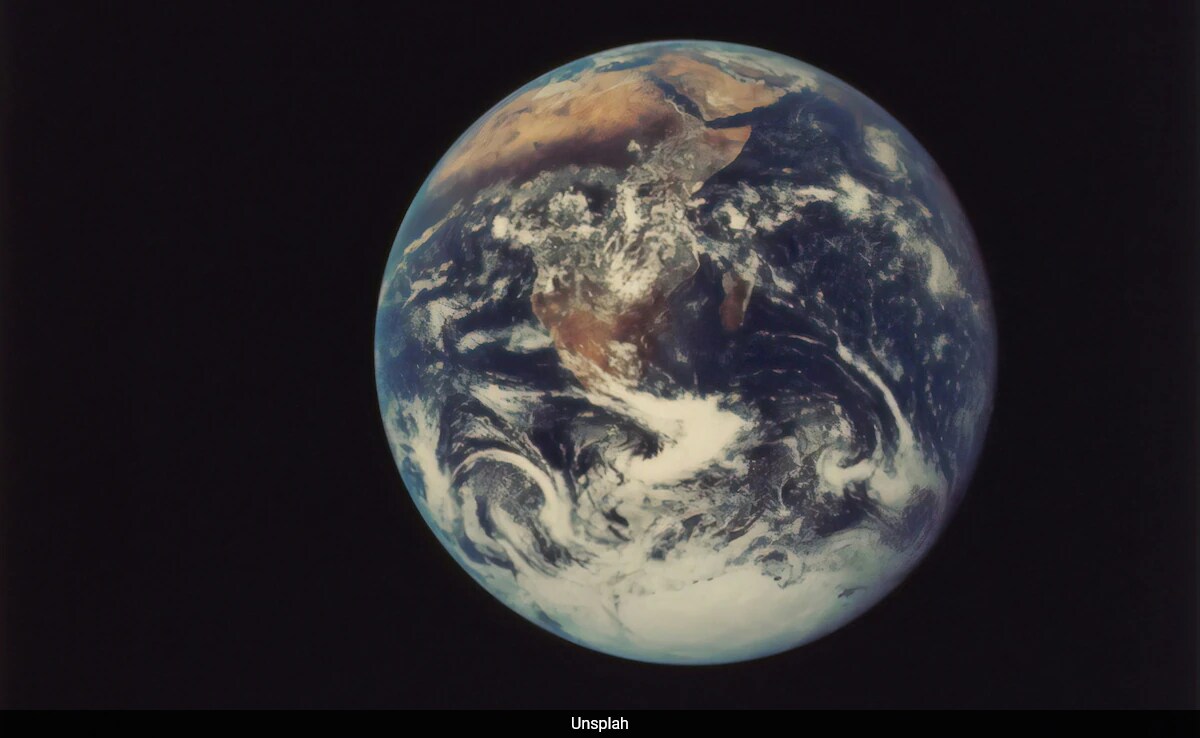
Imagine Earth's history is a long story.
Scientists looked at the pages to see if there's a pattern.
They found that big events, like when many animals died or when new ones appeared, followed a special math pattern, like things clustering together.
This pattern is called a multifractal system, showing that Earth's changes aren't random.
Instead, they're organized across time.
To explain this pattern, they created a new model.
This model helps us understand the past and might help us predict what could happen in the future on our planet.
It also tells us that we need to look at a very long time to see the full picture of how Earth changes.

Study reveals mathematical patterns in Earth's geological timeline.
Researchers analyzed the Phanerozoic Eon, the last 540 million years.
Boundaries of geological time follow a multifractal system.
Key events like mass extinctions cluster across time.
A new mathematical model helps understand planetary changes.
- Who
- Researchers including Shaun Lovejoy and Spiridonov
- What
- Identified mathematical patterns in Earth's geological timeline.
- When
- The study was recently published.
- Where
- Focusing on the Earth's geological history.
- Why
- To understand past and predict future planetary changes.
- Study Focus
- Geological timeline events in the Phanerozoic Eon
- Time Period Analyzed
- Last 540 million years
- Key Events Examined
- Mass extinctions, evolutionary bursts
- Model Used
- Compound multifractal-Poisson process
- Authors
- Shaun Lovejoy, Rhisiart Davies, Fabrice Lambert, Raphael Hebert, Spiridonov
- Outer Time Scale Estimate
- 500 million years or more