1 month ago
Turbulence Injures 17 on Air India Flight, Sparks Online Backlash
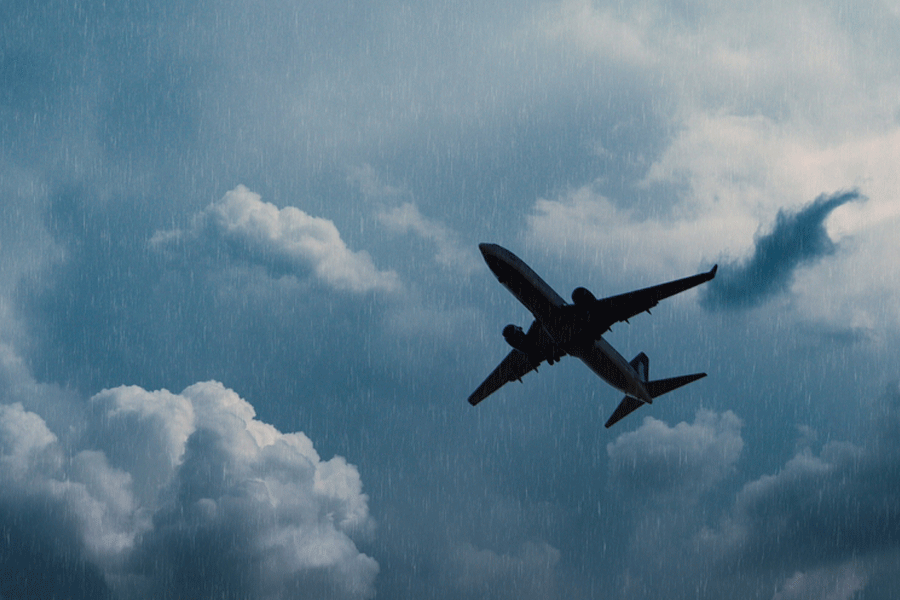
Airplanes fly through the sky, and sometimes the air gets very bumpy.
That bumpiness is called turbulence, like waves on a bumpy road in the sky.
A plane flying from a place called Phuket hit some very bumpy air.
Because of those bumps, 17 people on the plane got hurt.
Many people on the internet blamed the airline, saying it was the pilot's fault.
But experts who study flying say turbulence is caused by the weather, not by the airline.
The pilot cannot see turbulence on radar, so it is very hard to avoid.
The best way to stay safe is to keep your seat belt on, even when the seat belt sign is off.
The pilot and crew landed the plane safely, and some people thanked them for doing so.
So even though the ride was scary, it was the weather — not the airline — that caused the bumps.

Seventeen passengers were injured when an Air India flight from Phuket hit turbulence.
Social media users blamed Air India, with some calling for a boycott and others questioning flight safety and maintenance.
Aviation experts said turbulence is a weather phenomenon beyond the control of airlines or pilots and is not visible on radar.
A video by digital creator Ansh Mehra, which said the plane lost 300 feet in altitude, drew over four lakh views.
Former Air Marshal Sanjeev Kapoor urged passengers to keep seat belts fastened whenever the sign is on, saying the most seriously hurt are often those not wearing belts.
- Who
- 17 passengers on an Air India flight from Phuket, Air India, aviation experts including Venu Ganapuram, social media critics, and former Air Marshal Sanjeev Kapoor.
- What
- Severe turbulence on an Air India flight from Phuket injured 17 passengers and triggered criticism of the airline on social media, which aviation experts said was misplaced since turbulence is a weather phenomenon.
- Where
- On an Air India flight from Phuket; the PTI report was filed from New Delhi.
- When
- Recently; the PTI report was published on August 8, with the exact date of the incident not stated.
- Why
- Turbulence occurred due to differences in air pressure and dynamic movements of air masses, with climate change seen as a key factor in more frequent mid-air turbulence incidents.
Critics blame Air India
Experts and supporters defend the airline
Responsibility for the injuries
Critics blame Air India
Air India should be held accountable, and the DGCA must establish whether weather intelligence, seat-belt protocols and crew response were adequate and publish its findings.
Experts and supporters defend the airline
Turbulence can occur unexpectedly and is a weather phenomenon not in the control of the airline or pilots; completely avoiding it may not be possible.
Fleet condition and safety record
Critics blame Air India
Air India uses old, poorly maintained aircraft and was seen as safer when it was government-owned; some called for it to be rebranded.
Experts and supporters defend the airline
No evidence of poor maintenance is cited, modern aircraft can fly through storms, and the crew safely landed the aircraft despite the turbulence.
Pilot conduct during the flight
Critics blame Air India
The incident could have been avoided if the pilot had informed passengers about bad weather or diverted around it.
Experts and supporters defend the airline
Turbulence is not visible on radar and can emerge dynamically mid-flight; pilots do deviate around intense storms but cannot always avoid turbulence.
Key facts
- Airline
- Air India
- Passengers injured
- 17
- Flight origin
- Phuket
- Reported altitude loss
- 300 feet (per a social media video)
- Expert explanation
- Turbulence is a weather phenomenon not visible on radar and beyond airline/pilot control
- Report date
- August 8, PTI (New Delhi)
- Social media response
- Boycott calls and criticism on X and Instagram, alongside posts defending the crew
- Safety advice
- Keep seat belts fastened whenever the Fasten Seat Belt sign is on
Quotes
Unspecified social media user on X
An unnamed user critical of Air India’s handling of the incident
“Air India plane lost 300 feet in altitude... Just to set some context, Qutub Minar is 238 feet. Now in such cases, the pilot has to activate his sharpest reflexes and literally behave like a fighter pilot. And you know what, in so many flights, I see people not wearing a seat belt even when the sign is on. I see so many people walking in the aisles as if they have come to a park. And the cabin crew always requests them to please sit down. That training that you all ignore is specifically for…”
 telegraphindia.com
 theprint.in
“Accountability requires more than a routine statement. The DGCA must establish whether weather intelligence, seat‑belt protocols and crew response were adequate—and publish its findings. Passengers are not cargo. Safety cannot be managed through PR.”
telegraphindia.com
Venu Ganapuram
Aviation scientist explaining turbulence mechanics
“For a flight to be stable, it is important that the distribution of air pressure in a region is uniform. Differences in air pressure locally can cause air turbulence. A flight will experience ups and downs and passengers might feel jerks. If turbulence is heavy, pilots can face difficulty managing the flight and passengers not wearing seat belts may bump into the front seat.”
telegraphindia.com
theprint.in
Sources

Related news
AAIB Reports Positive Pilot Substance Test After Air India Incident
Air India Starts Voluntary Pilot Testing After Phuket Flight Incident
Air India pilot tests positive for marijuana after mid-air drop
Air India Sacks Pilot After Non-Negative Drug Test
Air India Terminates Phuket-Delhi Pilot After Psychoactive Test
Air India A320 Loses Three Hydraulics, Injuring 24 Passengers

CCPL Season 2 Begins in Hyderabad October 17

DGCA Orders One-Time Drug Tests for All Airline Pilots