

Archive · 2 Dec 2025
Algorithm Extends Pacemaker Battery Life
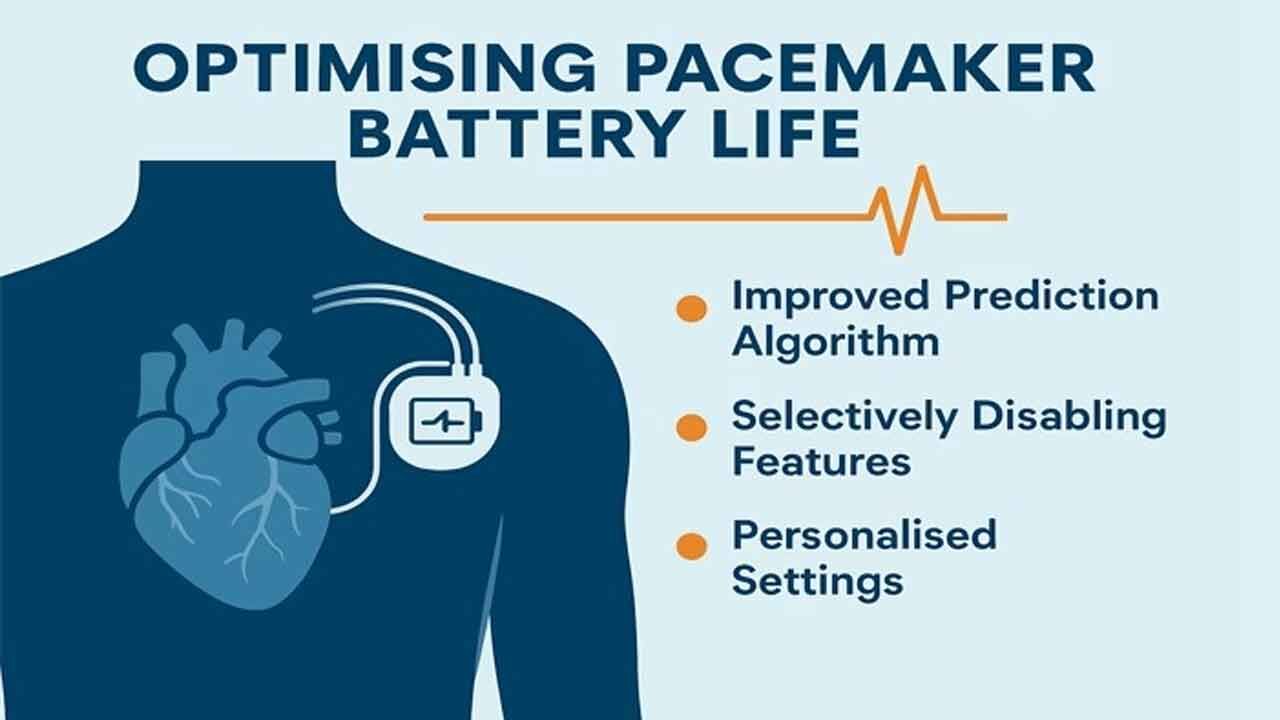
Scientists have created a special computer program that helps doctors figure out which parts of a pacemaker use the most battery power.
Pacemakers are small devices that help hearts beat properly.
By turning off parts that a patient doesn't need, the battery can last much longer.
This means fewer operations for patients and saves money for hospitals.
The researchers used real data to make this program work for different types of pacemakers.
They shared their findings for free so doctors all over the world can use it.
Pacemakers usually last between 7 to 14 years, but this new program might make them last even longer.

Researchers developed an algorithm to identify pacemaker functions that consume the most battery power.
Disabling unnecessary functions can extend pacemaker lifespan, reducing the need for surgeries and lowering costs.
The research was published in PLOS One and is open access for global use.
Pacemakers help regulate heart rhythm and can last between 7 to 14 years depending on usage.
The algorithm uses real-world data to compare different pacemaker devices and features.
- Who
- Researchers from University of Leeds, Université Grenoble Alpes, and University Hospital of Grenoble-Alpes
- What
- Developed an algorithm to optimize pacemaker battery life
- When
- Research published in PLOS One
- Where
- Research conducted in the UK and France
- Why
- To extend pacemaker lifespan, reduce surgeries, and lower costs
- Researchers
- University of Leeds, Université Grenoble Alpes, University Hospital of Grenoble-Alpes
- Algorithm Purpose
- Identify high-battery-consumption pacemaker functions
- Potential Benefit
- Fewer surgeries, reduced NHS costs
- Research Paper
- Published in PLOS One, open access
- Pacemaker Lifespan
- 7-14 years, depending on functions used
- Pacemaker Function
- Uses electrical pulses to regulate heart rhythm
- Pacemaker Placement
- Under the skin near the collarbone
- Pacemaker Features
- Corrects slow heart rate, coordinates contractions, increases heart rate during activity, remote monitoring, records activity patterns