Archive · 13 Nov 2025
UN Warns of Doubled Cooling Emissions by 2050 Amidst Rising Heat in Indian Cities

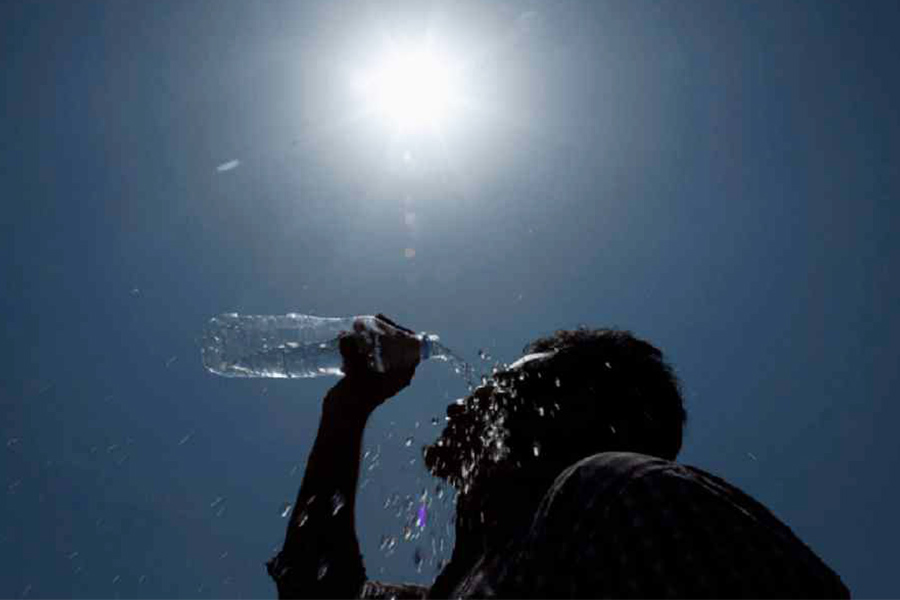
Imagine the world is getting very hot, like a super-hot summer day that lasts for a long time.
Because of this, more and more people need air conditioners and fans to stay cool, especially in places like India.
A big UN report says that if we keep using cooling devices the way we do now, the pollution they create will get twice as bad by the year 2050.
This extra pollution makes the Earth even hotter!
It's also a big problem for people who don't have much money, as they might not be able to afford to stay cool and could get sick or lose work.
Cities like Delhi and Kolkata are already experiencing dangerous heatwaves, leading to deaths and making it harder for people to do their jobs.
Experts suggest we need to find smarter ways to cool down, like using more energy-efficient machines and designing buildings that stay cooler naturally.
This would help protect people and the planet.

A UN report warns that global cooling demand could triple by 2050, potentially doubling related greenhouse gas emissions to 7.2 billion tonnes of CO2 equivalent.
Rising heat in Indian cities like Delhi and Kolkata is leading to increased heat-related morbidity, mortality, and reduced labor productivity.
Delhi has reported 275 heatwave-related deaths in May-June 2024, with heat stress exacerbated by air pollution impacting vulnerable populations.
Kolkata is projected to experience extreme heat, with average temperatures rising and the city facing significant heat vulnerability.
The report advocates for a Sustainable Cooling Pathway to reduce emissions and expand affordable cooling solutions, contrasting with the current trajectory of increasing emissions.
- Who
- United Nations Environment Programme (UNEP)
- What
- Released a report warning that rising global cooling demand could double related greenhouse gas emissions to 7.2 billion tonnes by 2050 if deep emission cuts are not achieved. The report also highlighted severe heat-related challenges in cities like Delhi and Kolkata.
- When
- Tuesday, during the COP30 climate summit.
- Where
- Belem, Brazil (COP30 location); Delhi and Kolkata, India (cities facing heat issues).
- Why
- Rising global temperatures and increased population and wealth are driving up the demand for cooling devices, which contributes significantly to greenhouse gas emissions.
Sustainable Cooling Pathway
Current Trajectory
Greenhouse Gas Emissions
Sustainable Cooling Pathway
A Sustainable Cooling Pathway aims to reduce emissions significantly, moving towards a future with lower greenhouse gas impact from cooling.
Current Trajectory
Without intervention, global cooling demand could triple by 2050, leading to a doubling of cooling-related greenhouse gas emissions to approximately 7.2 billion tonnes of CO2 equivalent. This includes emissions from refrigerant leaks and energy consumption.
Impact on Vulnerable Populations
Sustainable Cooling Pathway
Sustainable cooling solutions aim to expand affordable and accessible cooling options for adaptation, safeguarding people and economies.
Current Trajectory
Rising heat and increased reliance on inefficient cooling disproportionately affect low-income households, potentially pushing them into poverty due to high costs and reduced labor productivity. In Delhi, children in poverty facing heat and air pollution may experience reduced life expectancy.
Urban Heat Stress
Sustainable Cooling Pathway
Focus on sustainable methods to manage increasing temperatures.
Current Trajectory
Cities like Delhi and Kolkata face severe heat-related challenges, including increased mortality, reduced labor productivity (4% loss in Delhi, projected to reach 5% by 2050), and strained water systems. Kolkata is projected to reach 50°C by 2080 with over 150 days exceeding 35°C annually.
- Report Name
- Global Cooling Watch Report 2025
- Issuing Organization
- United Nations Environment Programme (UNEP)
- Event Context
- COP30 climate summit
- Projected Global Cooling Demand by 2050
- Triple
- Projected Cooling Emissions by 2050
- 7.2 billion tonnes of CO2 equivalent (double 2022 levels)
- Cooling Emissions in 2022
- 4.1 billion tonnes of CO2 equivalent
- Delhi Heatwave Deaths (May-June 2024)
- 275
- Kolkata Average Temperature Rise (1958-2018)
- 2.67°C