Archive · 17 Sep 2026
Supreme Court Rejects Ganja Accused’s Bail, Cites Liberal Approach
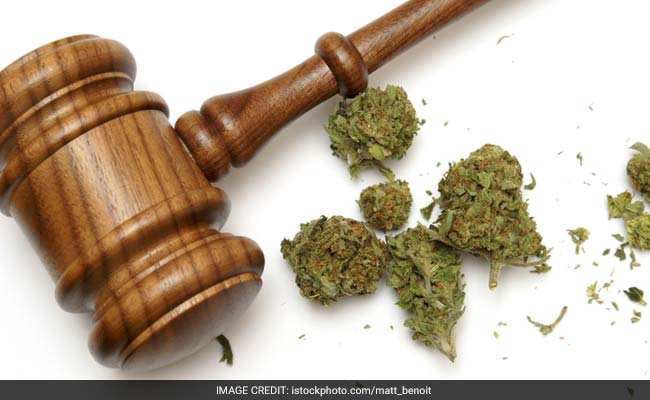
The Supreme Court heard Biswanath Mandal’s request to avoid arrest in a ganja case.
The Court said it is usually very liberal when deciding bail applications involving ganja.
However, it did not give Mandal protection from arrest.
The case involves a large amount of ganja allegedly found in a house in West Bengal.
Mandal said he was not at the house during the search.
He also said the house did not belong to him and that nothing was found on him.
The High Court had said he could not completely separate himself from the house and had refused bail.
The Supreme Court told him to surrender and apply for regular bail instead.

The Supreme Court said it generally takes a “very liberal” approach to bail pleas involving ganja.
A Bench of Justices MM Sundresh and PB Varale rejected Biswanath Mandal’s anticipatory bail plea.
The case concerns the alleged seizure of 252.330 kg of ganja from 15 packets at a house in Rajpur, Bairati.
Mandal said he was absent during the search, did not own the house and had no contraband recovered from him.
The Court advised Mandal to surrender and seek regular bail, while leaving the ownership issue for investigation.
- Who
- The Supreme Court, Biswanath Mandal, Mandal’s wife, and a Bench comprising Justices MM Sundresh and PB Varale.
- What
- The Supreme Court rejected Mandal’s anticipatory bail plea in an NDPS case involving the alleged recovery of 252.330 kg of ganja.
- When
- Wednesday; the Calcutta High Court order challenged by Mandal was dated February 13, 2026.
- Where
- The alleged seizure occurred at a house in Rajpur, Bairati, in connection with a case registered at Kotwali Police Station in Cooch Behar, West Bengal.
- Why
- The High Court cited the alleged large quantity of contraband, Mandal’s connection to the premises and restrictions under Section 37 of the NDPS Act; Mandal disputed those findings.
Mandal’s Arguments
Courts’ Reasoning
Mandal’s individual role
Mandal’s Arguments
Mandal argued that he was absent during the seizure, that nothing was recovered from him and that there was no independent evidence linking him to conscious possession or narcotics activity.
Courts’ Reasoning
The Calcutta High Court relied on the alleged recovery from a house where Mandal’s wife resided and held that he could not completely disassociate himself from the premises.
Ownership and control of the house
Mandal’s Arguments
Mandal disputed owning the house and said the prosecution had produced no title deed, public record, utility bill, rent receipt or other independent proof of his ownership or control.
Courts’ Reasoning
The High Court treated Mandal as the owner of the premises, while the Supreme Court said the ownership issue could be examined during the investigation.
Section 37 and bail
Mandal’s Arguments
Mandal argued that Section 37 of the NDPS Act is not an absolute bar to bail and that the statutory conditions must be assessed based on the facts of his case.
Courts’ Reasoning
The Supreme Court declined anticipatory bail but said Mandal could surrender and seek regular bail, and could approach it again if lower courts rejected that application.
- Applicant
- Biswanath Mandal
- Alleged contraband
- 252.330 kg of ganja in 15 packets
- Location of alleged seizure
- A house at Rajpur, Bairati
- Supreme Court Bench
- Justices MM Sundresh and PB Varale
- Supreme Court outcome
- Anticipatory bail plea rejected and appeal dismissed
- Court’s direction
- Mandal was advised to surrender and seek regular bail
- Relevant law
- Sections 20(b)(ii)(C) and 29 of the NDPS Act; the parties also relied on Section 37