

Archive · 30 Jul 2026
APAC Growth Slows 2026‑27 Amid Commodity, Inflation, El Nino Risks
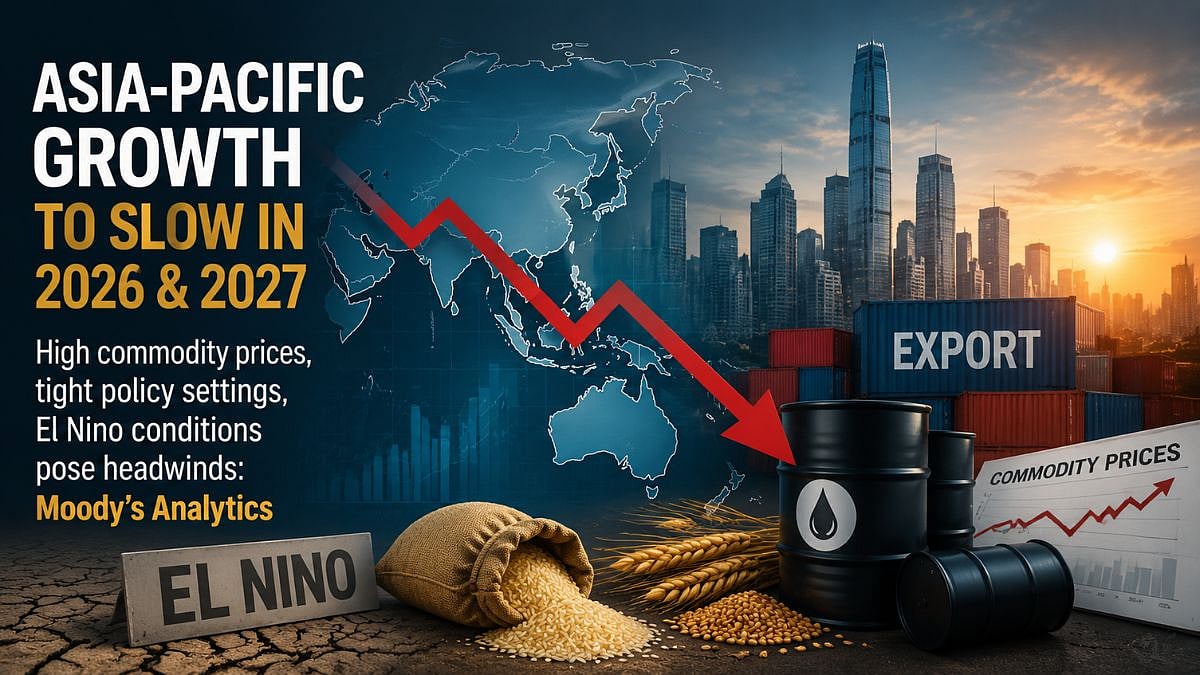
Moody's Analytics says the Asia‑Pacific economy will grow a little slower next year and the year after because of a few big problems.
Prices for things like oil and other raw materials are high, which makes everything more expensive.
A weather pattern called El Nino is expected to make the region hotter and drier, hurting crops.
The AI boom has helped a lot of countries export and invest, but the West Asia conflict and higher oil prices are still a worry.
Central banks in many countries are keeping interest rates high to stop prices from rising too fast.

Moody's Analytics projects APAC growth to slow to 4.1% in 2026 and 3.6% in 2027.
High commodity prices, inflation, and El Nino risks are the main headwinds.
The AI boom has supported export and investment growth, offsetting earlier slowdown fears.
Rising oil prices and renewed fighting in the Strait of Hormuz keep inflation high across Asia.
Central banks in Indonesia, the Philippines, Singapore, Australia, New Zealand, Japan and South Korea have tightened or signaled further tightening.
- Who
- Moody's Analytics
- What
- Forecasted slower APAC growth due to commodity prices, inflation, and El Nino risks
- When
- 2026‑2027
- Where
- Asia‑Pacific region
- Why
- Headwinds from high commodity prices, tighter policy, West Asia conflict, and El Nino
- Projected APAC growth 2026
- 4.1%
- Projected APAC growth 2027
- 3.6%
- Key headwinds
- High commodity prices, inflation, El Nino, West Asia conflict
- AI boom impact
- Supported export and investment growth
- Central banks tightening
- Indonesia, Philippines, Singapore, Australia, New Zealand, Japan, South Korea