

Archive · 25 Dec 2025
Nanobots Target Cancer with Precision
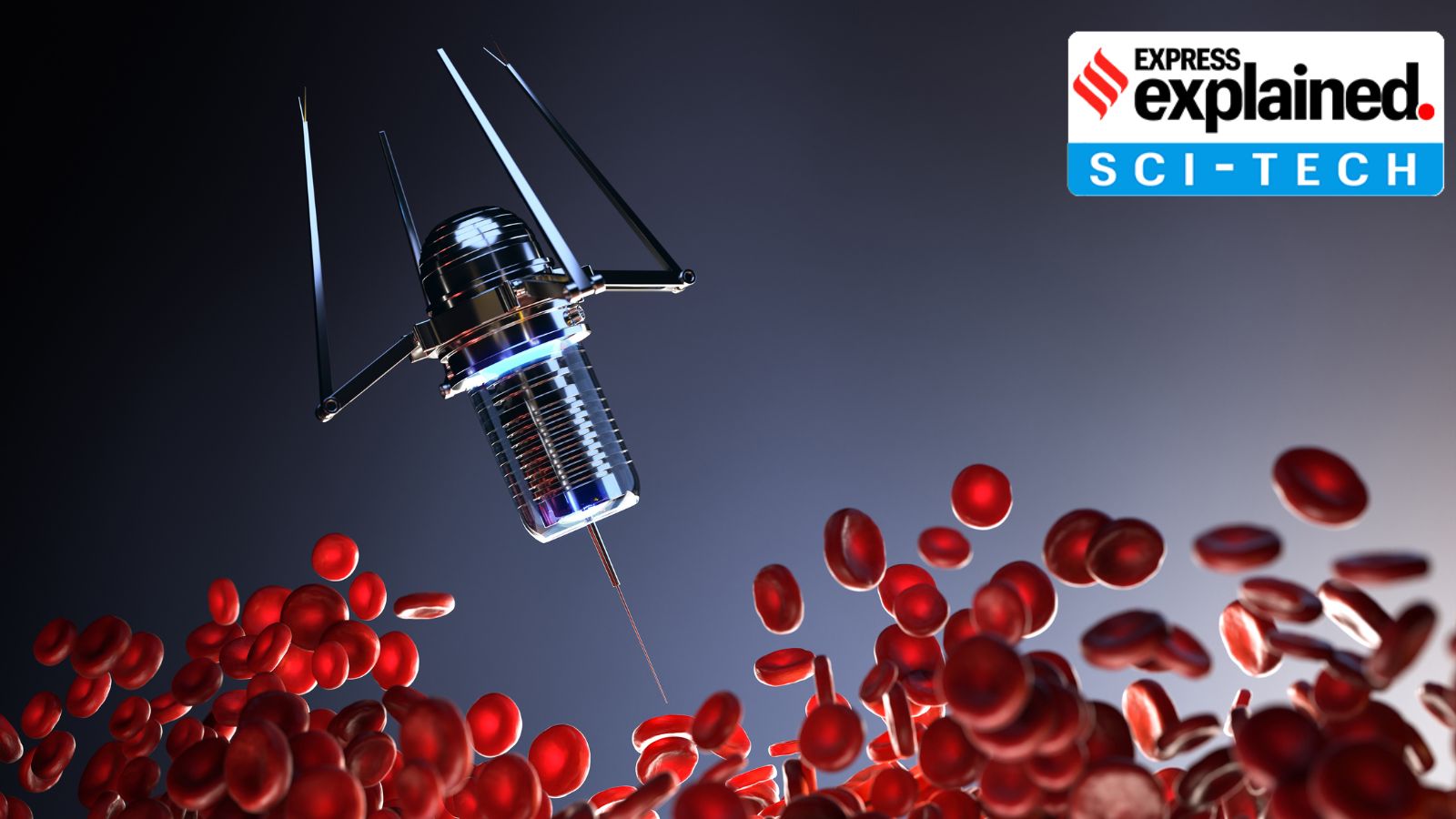
Scientists have created tiny robots called nanobots that can swim through the body using a magnetic field.
These nanobots are designed to deliver medicine directly to cancer cells, avoiding healthy tissue.
They can also generate heat to kill cancer cells and light up during an MRI to help doctors see tumors more clearly.
The nanobots have been successful in treating cancer cells in lab tests and could also be used in dentistry to fight infections and even help rebuild teeth.
The technology is still being tested and is not yet available for clinical use, but it shows great promise for more effective and less painful treatments in the future.

Magnetic nanorobots developed by Dr. Ambarish Ghosh can navigate through blood and tissue to deliver drugs directly to cancer cells.
The nanobots use a helical tail to move like a corkscrew and are coated with drugs for targeted therapy.
They can generate localized heat to destroy cancer cells and act as beacons during MRI scans to help pinpoint tumors.
Effective against ovarian and breast cancer cells, as well as certain bacteria, with potential applications in dentistry.
Currently in cell culture testing, awaiting animal experiments and clinical trials for broader medical use.
- Who
- Dr. Ambarish Ghosh, professor at the Indian Institute of Science (IISc) Bangalore
- What
- Development of magnetic nanorobots for targeted cancer treatment and other medical applications
- When
- Currently in cell culture testing, awaiting clinical trials
- Where
- Developed at IISc Bangalore, with potential global applications
- Why
- To overcome the challenge of delivering medicines deep inside tumors while sparing healthy tissue, aiming for targeted and personalized medicine
- Developer
- Dr. Ambarish Ghosh, IISc Bangalore
- Technology
- Magnetic nanorobots
- Function
- Targeted drug delivery, imaging, and localized heating
- Materials
- Silica body, iron magnetic component
- Effectiveness
- Tested on ovarian and breast cancer cells, bacteria, and dental applications
- Current Stage
- Cell cultures, awaiting clinical trials
- Potential Applications
- Cancer treatment, dentistry, and bacterial infections
- Award
- 2025 New York Academy of Sciences and Tata Sons’ Transformation Prize