

Archive · 4 Nov 2025
British Humiliated by Mughal Navy in 1690
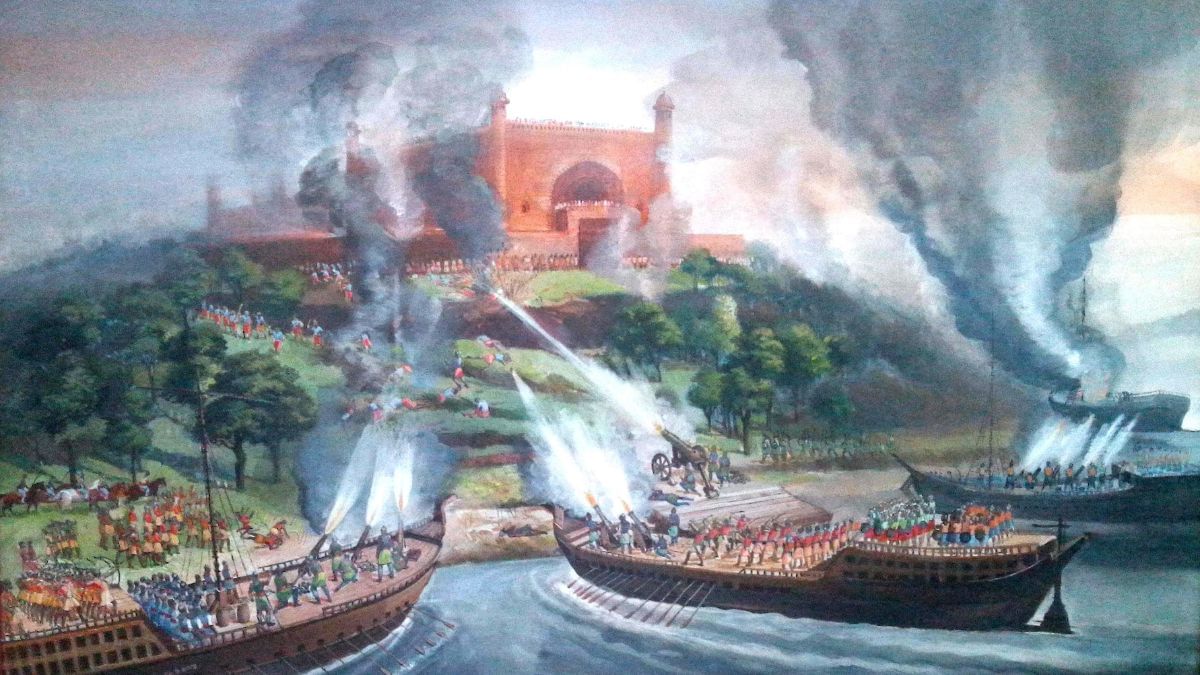
Imagine two big companies, the British East India Company and the Mughal Empire, were trying to trade in India a long time ago.
The British company took some ships that belonged to the Mughals.
This made the Mughals very angry, and they captured the British traders and even surrounded the British city of Bombay.
The British realized they were in trouble and had to surrender.
They had to say sorry, pay a lot of money, and even get rid of their boss, John Child, to make peace.
This was a big embarrassment for the British.

The Anglo-Mughal war of 1686-1690 involved the British East India Company (EIC) and the Mughal Empire.
The conflict began when the EIC seized Mughal vessels, leading to the imprisonment of EIC factors in Surat.
In retaliation, John Child of the EIC captured richly freighted ships.
The Mughal forces then besieged Bombay until 1690.
The war ended with a humiliating submission by the English, involving the payment of a considerable sum and the dismissal of John Child.
- Who
- The British East India Company (EIC) and the Mughal Empire
- What
- A war and subsequent humiliating submission by the British following the seizure of Mughal vessels and retaliation.
- When
- Towards the end of 1688 and concluding in 1690.
- Where
- Primarily involving Bombay and Surat.
- Why
- The war began after the EIC seized Mughal vessels, leading to retaliation from the Mughals, including the siege of Bombay.
- Event
- Anglo-Mughal War
- War Years
- 1686-1690
- Key Figures
- John Child (EIC), Aurangzeb (Mughal Empire)
- Cause of Rupture
- Seizure of Mughal vessels by EIC
- Outcome
- Humiliating submission by the English, payment of a sum, imprisonment of factors
- Peace Condition
- Dismissal of John Child