

Archive · 12 Oct 2026
India’s Space Startups Build on ISRO’s Blueprint
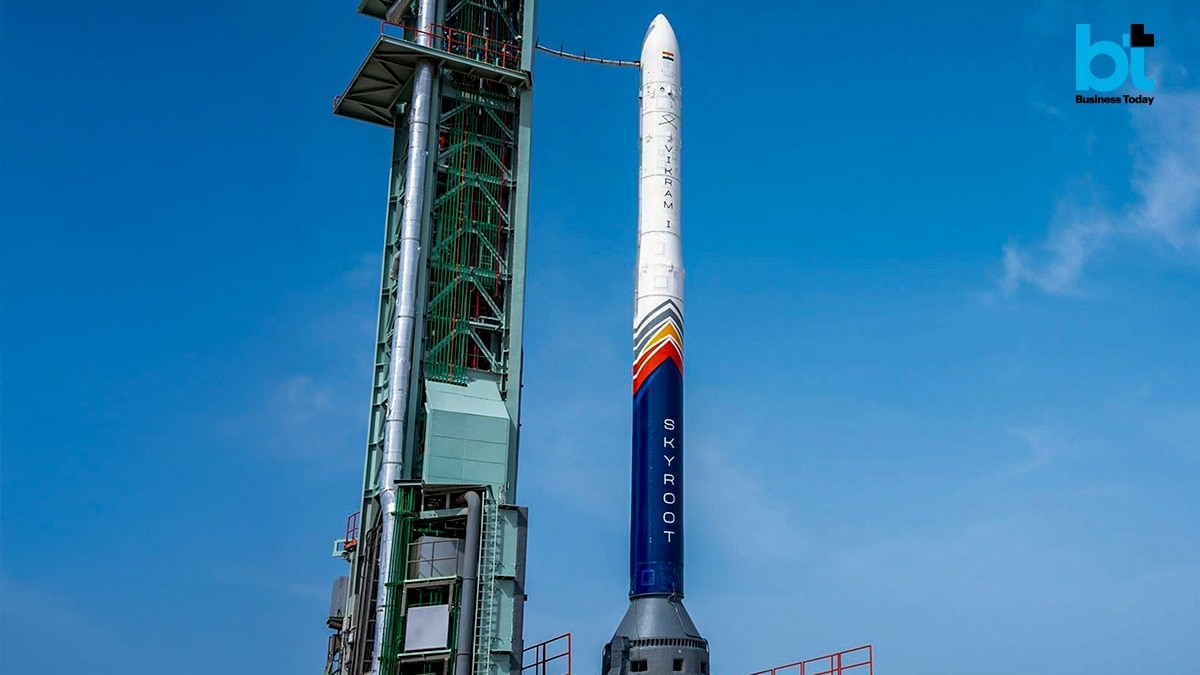
India’s space agency, ISRO, spent many years learning how to build rockets and satellites.
Private companies are now using some of that knowledge, equipment, and experience to build their own space businesses.
Skyroot’s Vikram-1 rocket reached orbit on its first flight, an important step for these companies.
The countdown briefly stopped because of a software problem, but engineers fixed it and launched the rocket.
New government rules have made it possible for private companies to own and operate space missions.
Many companies can use India’s existing factories, but some special parts and skills are still hard to find locally.
So they are developing new technology themselves or buying parts from other countries.
Their next challenge is to build reliably and compete around the world.

Skyroot Aerospace’s Vikram-1 reached low-Earth orbit on its first flight, becoming the first privately developed Indian orbital launch vehicle to fly from Indian soil.
The launch followed a brief software glitch and countdown restart; the rocket lifted off from Sriharikota at 12:05 p.m.
India’s private space firms draw on ISRO’s decades of engineering knowhow, experienced personnel, infrastructure, reputation and network of roughly 500 suppliers.
Policy reforms beginning in 2020, followed by the 2023 Indian Space Policy and eased foreign investment rules in 2024, allowed private firms to own and operate space missions.
Startups still face gaps in specialised components, aerospace qualification and supply chains, and must develop some technologies in-house or import them.
- Who
- Skyroot Aerospace and other Indian space startups, building on the Indian Space Research Organisation’s experience.
- What
- Skyroot’s Vikram-1 reached low-Earth orbit on its maiden flight, while the article examines how Indian space startups use and extend ISRO’s capabilities.
- When
- Vikram-1 lifted off at 12:05 p.m.; the article does not specify the launch date.
- Where
- From Sriharikota, India; Skyroot’s launch control centre is at its Infinity Campus in Hyderabad.
- Why
- The launch demonstrated that an Indian private company could put its own orbital launch vehicle into space, following policy reforms that enabled private participation.
Strengths inherited from ISRO
Capabilities still to build
Existing industrial base
Strengths inherited from ISRO
India’s established aerospace and defence manufacturers can produce many components to specification, giving startups a substantial manufacturing base.
Capabilities still to build
The supplier network is less equipped to design, qualify and repeatedly manufacture specialised aerospace components; companies may need to build these capabilities in-house or import parts.
ISRO’s experience and legacy
Strengths inherited from ISRO
Startups benefit from ISRO’s engineering knowhow, experienced people, infrastructure and reputation, which can help them earn trust.
Capabilities still to build
ISRO’s legacy does not provide every capability startups need, especially in newer areas such as private propulsion products, specialised payloads and space-based satellite tracking.
Reaching commercial scale
Strengths inherited from ISRO
Vikram-1’s successful first flight signals that India’s private sector can develop and fly an orbital launch vehicle.
Capabilities still to build
The article says reliable access to orbit, industrialising technology, building specialised supply chains and competing globally remain challenges.
- Rocket
- Vikram-1, developed by Skyroot Aerospace
- Launch time
- 12:05 p.m.
- Launch site
- Sriharikota, India
- Countdown issue
- A software glitch in the automatic launch sequence was corrected; the sequence restarted from T-20.
- Supplier network
- ISRO estimates around 80–85% of launch-vehicle inputs come from a network of roughly 500 industries.
- Policy milestones
- Private-sector reforms were announced in 2020; the Indian Space Policy followed in 2023, and FDI rules were eased in 2024.
- Space economy target
- IN-SPACe aims to grow India’s space economy from about $8.4 billion to $44 billion by 2033.