

Archive · 15 Nov 2025
Oldest Mammoth RNA Found, Pushing Limits of Ancient Molecule Survival
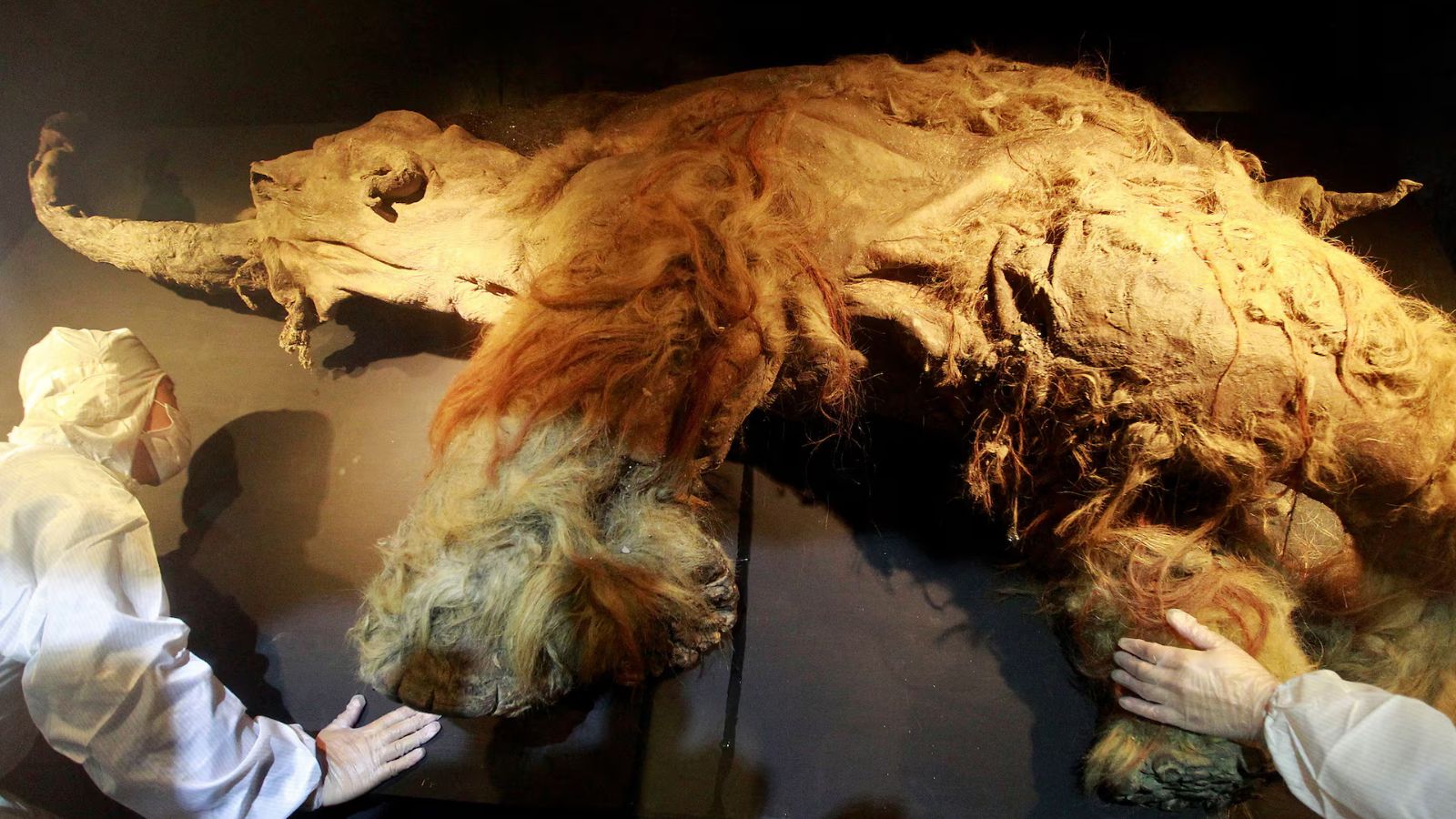
Imagine scientists found a super old, frozen elephant called a mammoth.
This mammoth died a really, really long time ago, about 39,000 years ago!
Inside its frozen body, scientists found a tiny molecule called RNA.
Usually, scientists thought this RNA would disappear very quickly after the mammoth died.
But this RNA was still there, which is like finding a secret message from the past!
This tells scientists that things can last much longer when they are frozen.
The RNA helps them understand what the mammoth's body was doing right before it died, like how its muscles worked or if it was feeling stressed.
It's like getting a peek into the mammoth's life, which is much cooler than just finding old bones.

Scientists have sequenced RNA from a woolly mammoth that lived approximately 39,000 years ago in Siberia.
This discovery challenges the belief that RNA rapidly degrades after an organism's death.
The RNA was extracted from the exceptionally preserved carcass of a juvenile male mammoth named Yuka, found in Siberian permafrost.
The analysis provides insights into the mammoth's gene activity and metabolic functions at the time of its death.
This finding pushes the record for the oldest known RNA significantly beyond the previous 14,000-year limit.
- Who
- Scientists studying a woolly mammoth named Yuka
- What
- Recovered and sequenced the oldest known RNA from a 39,000-year-old woolly mammoth, challenging previous understanding of RNA decay.
- When
- Around 39,000 years ago (mammoth's life); recently (RNA recovery and analysis)
- Where
- Siberia, found in permafrost near the Oyogos Yar coast by the Laptev Sea
- Why
- To study ancient organisms' biological functions and genetic activity in unprecedented depth.
Scientific Consensus
New Findings
RNA Stability
Scientific Consensus
Researchers previously believed RNA degraded within minutes or hours after death.
New Findings
The discovery of 39,000-year-old mammoth RNA suggests it can persist far longer than previously thought, especially in frozen environments.
Information from Ancient Specimens
Scientific Consensus
Prehistoric life was largely understood through skeletal remains, offering limited information on biological functions.
New Findings
Advances in retrieving biomolecules like RNA allow for studying genetic activity and metabolic functions, providing unprecedented depth.
- Age of RNA
- Approximately 39,000 years old
- Specimen Name
- Yuka
- Mammoth Age
- Juvenile male, estimated 5-10 years old at death
- Discovery Location
- Siberia, permafrost near the Oyogos Yar coast by the Laptev Sea
- Oldest Previous RNA Record
- Around 14,000 years old
- Oldest DNA Record
- Roughly 2 million years old (plants, animals, microbes)
- Oldest Protein Record
- Around 23 million years old (rhinoceros)