

Archive · 16 Nov 2025
Maharashtra Government Waives Individual Consent for Large-Scale Slum Redevelopment
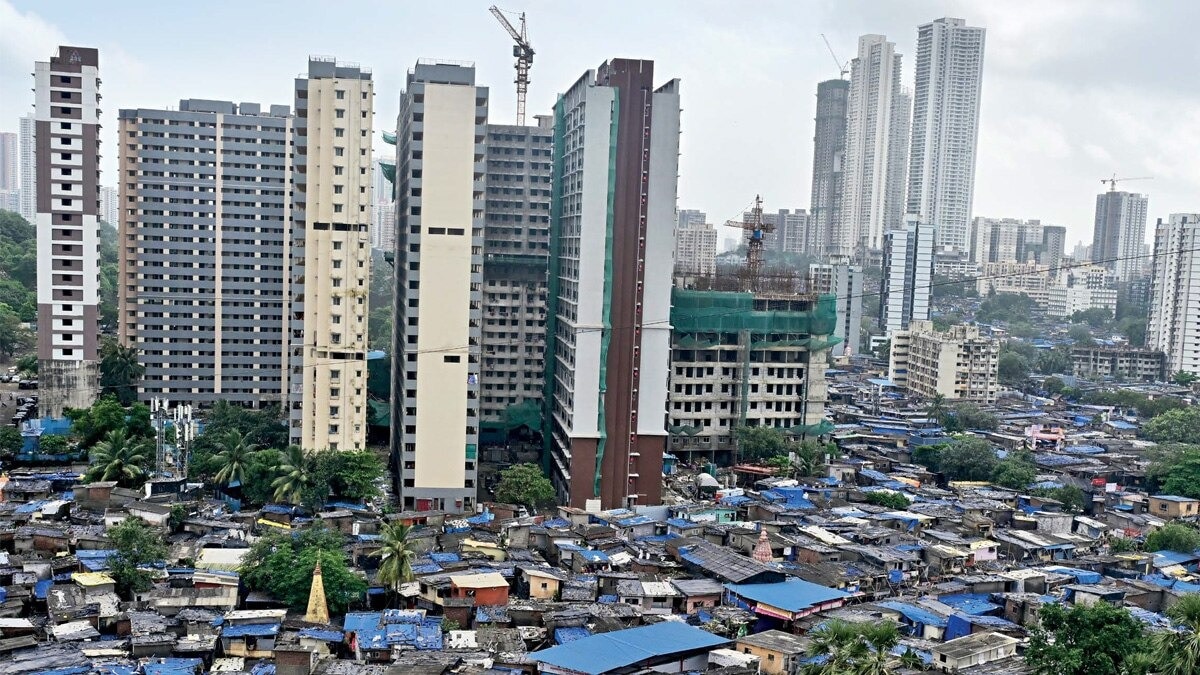
Imagine a big neighborhood in Mumbai where many houses are old and run-down, and the government wants to build new, modern homes for everyone living there.
Usually, to do this, the government needs to ask every single person if they agree.
This can take a very long time because some people might say no or be hard to find.
So, the government has made a new rule for very large areas (at least 50 football fields big) where most of the houses are old.
Now, if more than half of the area has old houses, the government can start building new ones without asking every single person for permission.
They will still make sure everyone has a safe place to live, either in the new buildings or nearby.
This new rule should help make the city look better and provide better homes for many people much faster.

Maharashtra government has decided to proceed with slum cluster redevelopment without requiring individual consent from slum dwellers.
The new policy applies to contiguous land parcels of at least 50 acres, with at least 51% occupied by slums.
Central government-owned lands, lands under development cess, and areas within coastal regulation zones are now eligible for redevelopment.
Private developers will be appointed through PPP or open tenders, with priority given to those already holding 40% or more of the cluster land.
A high-level committee chaired by the Minister of Housing and Urban Development will oversee project approvals.
- Who
- Maharashtra government and the Slum Rehabilitation Authority (SRA)
- What
- Announced a new policy for cluster redevelopment of slums, removing the requirement for individual consent from slum dwellers.
- When
- Recently announced (specific date not mentioned)
- Where
- Maharashtra, specifically aimed at Mumbai.
- Why
- To accelerate the transformation of Mumbai into a slum-free city by streamlining and fast-tracking the redevelopment process.
Government Stance
Potential Concerns
Individual Consent Requirement
Government Stance
The new policy eliminates the need for individual consent from slum dwellers, streamlining the process for cluster redevelopment.
Potential Concerns
While not explicitly stated, the removal of individual consent may raise concerns among some residents about their direct participation and rights in the redevelopment process.
Speed of Redevelopment
Government Stance
The primary goal is to accelerate the transformation of Mumbai into a slum-free city by fast-tracking large-scale slum rehabilitation.
Potential Concerns
The effectiveness and fairness of accelerated redevelopment without individual consent will be a key point of scrutiny.
- Minimum Cluster Size
- 50 acres (20.25 hectares)
- Minimum Slum Occupancy
- 51% of the area
- Inclusion of Lands
- Private, government, semi-government, and central government-owned lands
- Applicable Areas
- Old hazardous buildings, chawls, rental tenements, properties under development cess, and coastal regulation zones (CRZ I and II)
- Rehabilitation for CRZ
- In-situ or alternative rehabilitation within a 5-km radius
- Developer Appointment
- Public-private partnerships or open tendering; priority for developers holding 40%+ of cluster site
- Oversight Committee
- High-level committee chaired by Minister of Housing and Urban Development