

Archive · 6 Dec 2025
South Asia's Five Tectonic Partitions Explored
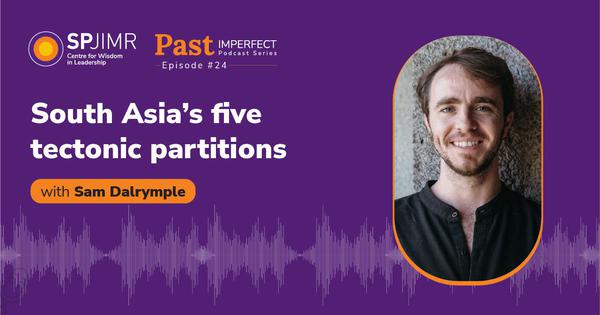
Sam Dalrymple wrote a book called Shattered Lands about how the British Indian Empire split into many countries.
He talks about five big partitions that happened between 1937 and 1971.
At first, India was a huge area with many different places, but over time, it split into 12 different countries.
Dalrymple explains that these splits were not simple and had a lot of arguments and changes in how people felt.
For example, some people in Burma did not want to separate from India, but later, because of problems like the Great Depression, they changed their minds.
The book shows how these partitions created new borders and sometimes caused conflicts.
Dalrymple thinks it's important to understand this history because it can teach us about how nationalism and globalization work today.

Sam Dalrymple's book Shattered Lands explores the five partitions of the British Indian Empire from 1937 to 1971.
The partitions led to the creation of 12 nation states, including India, Pakistan, Burma, and Bangladesh.
Each partition was linked and faced opposition, with changing sentiments and political dynamics.
Burma's separation from India in the 1930s was marked by anti-Indian sentiment and ethnic conflicts.
The 1947 Partition of India and Pakistan was chaotic, with major leaders like Mountbatten, Jinnah, and Nehru facing criticism for their roles.
- Who
- Sam Dalrymple, historians, and political leaders
- What
- The partitions of the British Indian Empire and their impact on modern South Asia
- When
- From 1937 to 1971
- Where
- South Asia, including India, Pakistan, Burma, Arabia, and Bangladesh
- Why
- To explore the historical context and consequences of the partitions
- Author
- Sam Dalrymple
- Book Title
- Shattered Lands: Five Partitions and the Making of Modern Asia
- Time Period
- 1937 to 1971
- Number of Partitions
- Five
- Key Figure
- U Ottama (Mahatma Ottama)
- Impact
- Creation of 12 nation states
- Podcast
- Past Imperfect
- Sponsor
- Centre for Wisdom and Leadership at the SP Jain Institute of Management and Research