

Archive · 15 Jan 2026
China's Artificial Sun Breaks Physics Limit
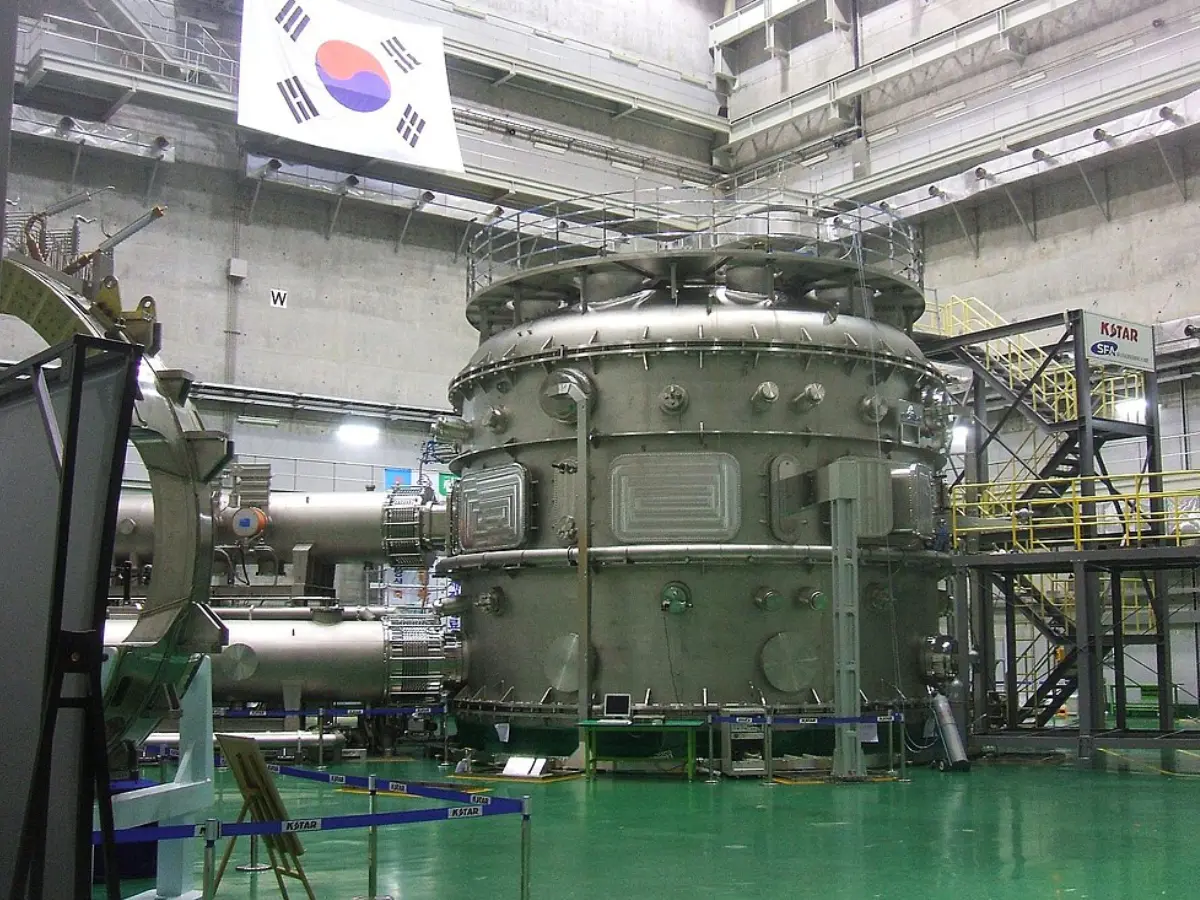
Scientists in China have made a big discovery with their 'artificial sun' project.
They found a way to break a rule in physics called the Greenwald limit.
This rule says how much super-hot gas (plasma) can be safely put into a doughnut-shaped machine to make energy, like the sun does.
Before, if too much plasma was added, the reaction would become unstable and stop.
But now, Chinese scientists have figured out how to add more plasma without causing problems.
They used special heating and cleaning methods to keep the machine's walls cool and clean.
This helps the plasma stay stable and not break apart.
The discovery is important because it could help make nuclear fusion, a clean and powerful energy source, more practical and efficient.
The scientists published their findings in a science journal called Science Advances.

Chinese scientists broke the Greenwald limit, allowing 1.3 to 1.6 times more plasma fuel in fusion reactors.
The breakthrough was achieved using precise microwave heating and a self-cleaning method to maintain stable plasma.
This discovery could lead to more efficient and scalable nuclear fusion energy production.
The research was conducted on the Experimental Advanced Superconducting Tokamak (EAST) and published in Science Advances.
The method creates a 'density-free regime' where plasma stabilizes itself, preventing reaction crashes.
- Who
- Scientists at the Huazhong University of Science and Technology in China
- What
- Broke the Greenwald limit in plasma density for fusion reactors
- When
- January 1, 2024
- Where
- Experimental Advanced Superconducting Tokamak (EAST) in China
- Why
- To enable more efficient and stable nuclear fusion reactions for energy production
- Project
- Experimental Advanced Superconducting Tokamak (EAST)
- Breakthrough
- Overcoming the Greenwald limit in plasma density
- Method
- Precise microwave heating and self-cleaning method
- Achievement
- 1.3 to 1.6 times more plasma fuel than previously possible
- Publication
- Science Advances
- Lead Researcher
- Zhu Ping, Huazhong University of Science and Technology
- Date
- January 1, 2024