

Archive · 31 May 2025
Betel Leaf Gets GI Tag: Health Benefits of Post-Meal Consumption
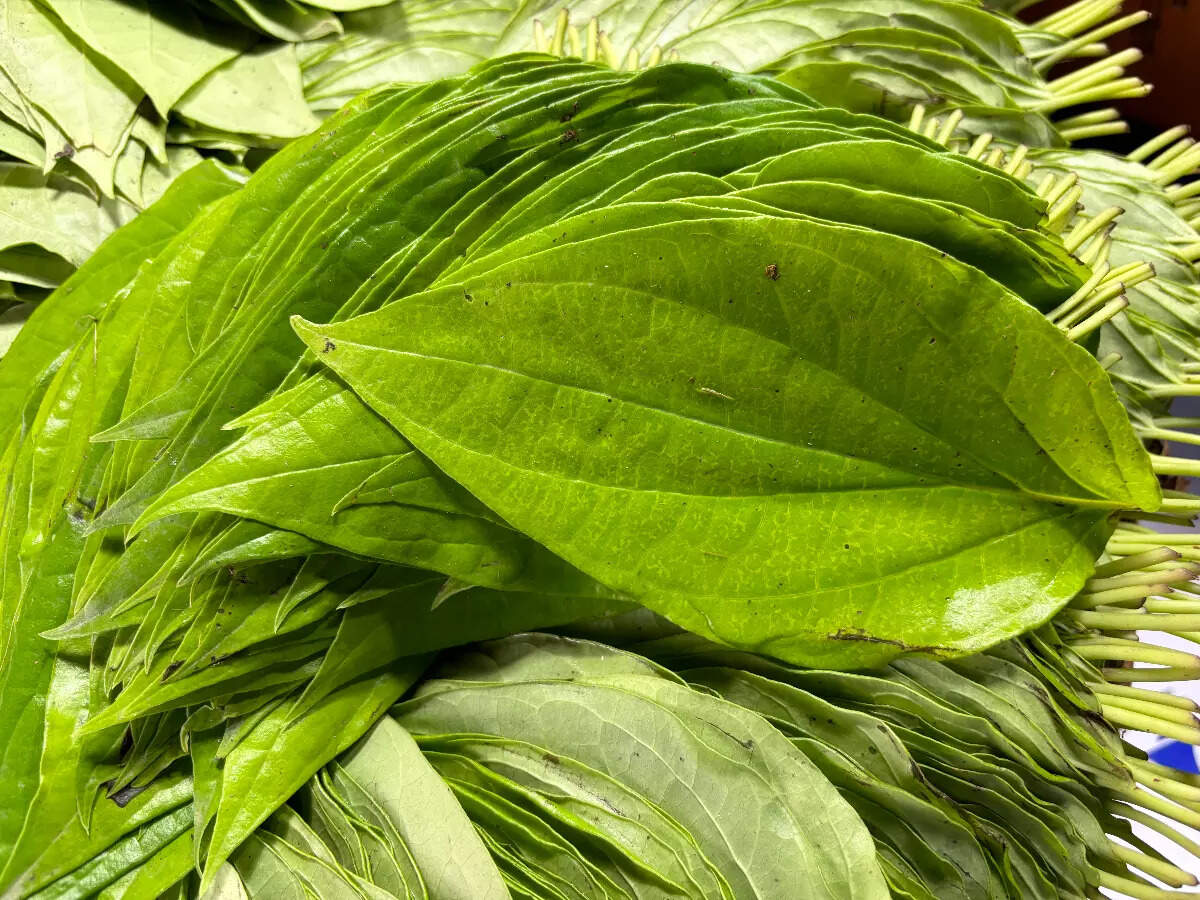
Imagine a special leaf, betel leaf, which got a special tag showing it's from a unique place.
People chew it after eating!
According to old Indian medicine, it helps your tummy work better.
It helps break down food, like tiny helpers in your tummy.
It can also stop you from feeling bloated or gassy, making your tummy feel better.
The leaf is also good for your mouth, keeping it clean and fresh, like a natural mouthwash.
It is also believed to help the body get rid of bad stuff.
So, it's like a natural helper for your tummy and mouth!

Betel leaf, also known as paan patta, has received a Geographical Indication (GI) tag.
Ayurveda suggests chewing betel leaf post-meals to aid digestion and eliminate toxins.
Chewing betel leaves stimulates saliva, assisting in breaking down food and reducing digestive pressure.
Betel leaves can alleviate bloating and gas by relaxing stomach muscles and reducing gas buildup.
Betel leaves have antibacterial properties and are beneficial for maintaining oral hygiene and fresh breath.
- Who
- The article discusses the benefits of chewing betel leaves.
- What
- Betel leaf, also known as Kumbakonam vetrilai, has received a Geographical Indication (GI) tag.
- When
- The use of betel leaf dates back to 400 BC, and the practice of chewing it after meals became common between 75 AD and 300 AD.
- Where
- Grown in Thanjavur’s fertile Cauvery River basin, India.
- Why
- To recognize its regional uniqueness and cultural significance, as well as its health benefits.
- GI Tag
- Granted to Kumbakonam vetrilai
- Origin
- Grown in Thanjavur's Cauvery River basin
- Historical Use
- Used in India since 400 BC
- Ayurvedic Benefits
- Balances Vata, Pitta, and Kapha