1 month ago
Punjab Introduces AI as Mainstream Subject in Schools

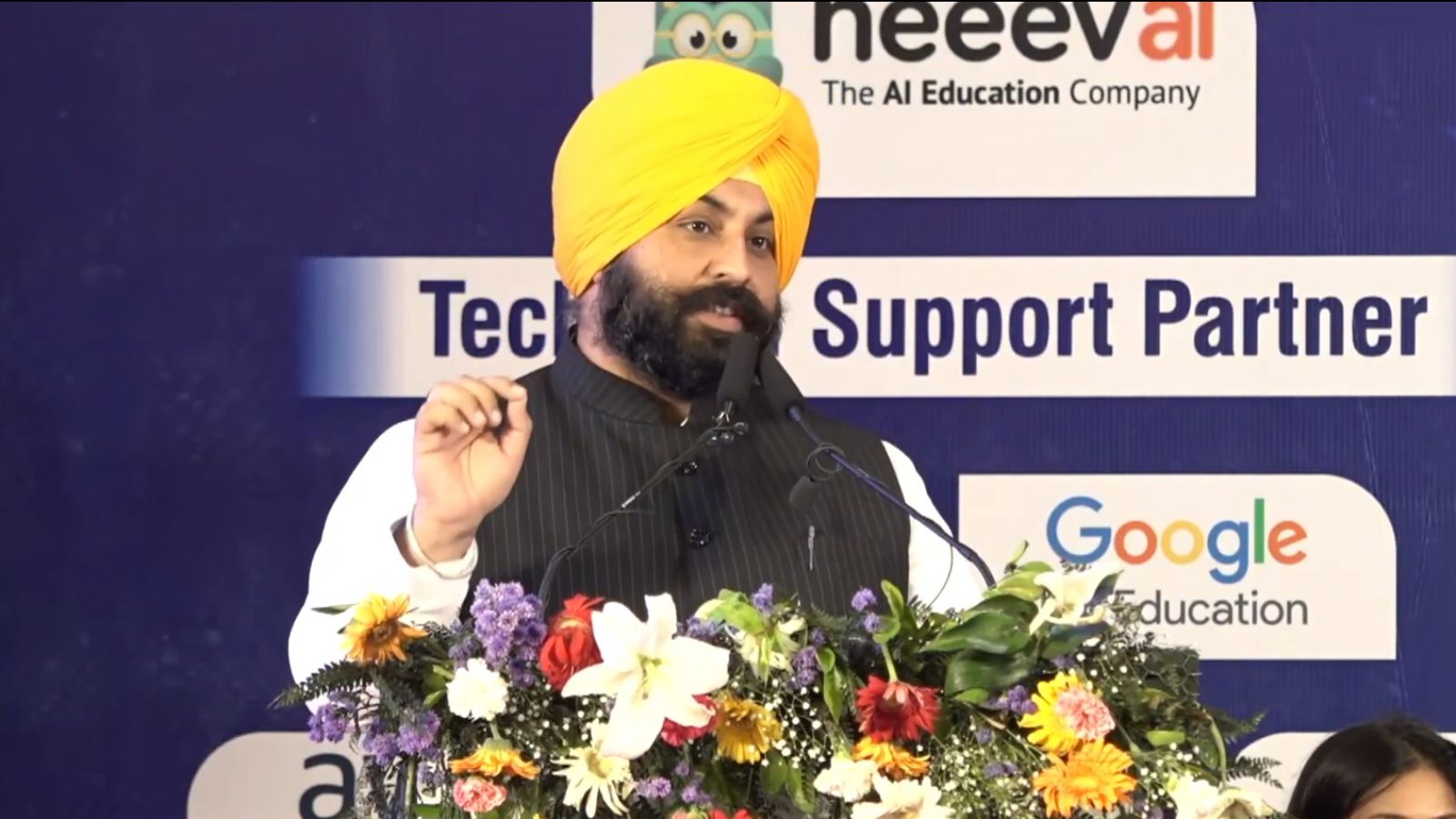
Punjab has started a new program called Sarbat.AI to teach Artificial Intelligence (AI) in schools from Class 1 to Class 12.
This makes Punjab the first state in India to do this.
The program will be introduced in phases, starting with Classes 8 to 12, and will eventually include all students from Classes 1 to 7.
Around 31.5 lakh students will be part of this program.
The government has worked with experts and technology companies like Google and Intel to create the curriculum.
The goal is to help students learn about AI, use it responsibly, and prepare them for the future.
Teachers will also be trained to teach AI.
The curriculum is based on international practices and follows UNESCO's guidelines for ethical AI.

Punjab introduces AI as a mainstream subject in schools from Classes 1 to 12 under the 'Sarbat.AI' initiative.
The program will be rolled out in phases, starting with Classes 8 to 12, and will cover around 31.5 lakh students.
The curriculum is aligned with UNESCO's Ethical AI Framework and international practices from Singapore, Finland, UAE, and the US.
Technical support is provided by Neev AI, Google, Intel, Canva, and FA-AI.
The initiative aims to equip students with future-ready skills, promote innovation, ethical AI, entrepreneurship, and responsible digital citizenship.
- Who
- Punjab government, School Education Minister Harjot Singh Bains, former Delhi Deputy Chief Minister Manish Sisodia, education experts, technology partners
- What
- Introduction of AI as a mainstream subject in schools from Classes 1 to 12
- Where
- Punjab, India
- When
- Launched on Tuesday (specific date not mentioned)
- Why
- To equip students with future-ready skills, promote innovation, ethical AI, entrepreneurship, and responsible digital citizenship
Proponents of AI Education
Critics of AI Education
Benefits of AI Education
Proponents of AI Education
Proponents argue that AI education equips students with future-ready skills, promotes innovation, and fosters ethical AI practices.
Critics of AI Education
Critics contend that AI education may lead to job displacement and ethical concerns, and that it could widen the digital divide.
Implementation Challenges
Proponents of AI Education
Proponents believe that with proper training and resources, AI education can be successfully integrated into the curriculum.
Critics of AI Education
Critics argue that the implementation of AI education may face challenges such as inadequate infrastructure, teacher training, and curriculum development.
Key facts
- Initiative Name
- Sarbat.AI
- Number of Schools
- 25,172
- Number of Students
- 31.5 lakh
- Phased Rollout
- Classes 8 to 12 first, then Classes 1 to 7
- Technical Support
- Neev AI, Google, Intel, Canva, FA-AI
- Curriculum Alignment
- UNESCO's Ethical AI Framework, Singapore, Finland, UAE, US models
- Teacher Training
- 12,424 Computer Science teachers in first phase, over 2 lakh teachers gradually
Quotes

Harjot Singh Bains
Punjab School Education Minister
“the initiative establishes Punjab as a national benchmark in AI education and would help students move beyond simply using AI to innovating with the technology.”
 livemint.com
“Punjab was moving 'from leading the Green Revolution to leading the Artificial Intelligence Revolution.'”
livemint.com
Sources
Related news

Reliance Explores Aluminium Production Through Odisha Bauxite and Coal Gasification

Jindal Steel, IIT Hyderabad Establish Advanced Steel Centre

Regular cardio exercise may lower Alzheimer's and dementia risk

Trump to meet mining CEOs in critical minerals push
Trump Announces U.S. Space Academy Amid Rivalry With China
Punjab Introduces AI as Mainstream Subject

India Startups Merge AI with Tradition, Improving Daily Life