

Archive · 19 May 2025
India's E-Waste Crisis: Management and Recycling Reforms Needed
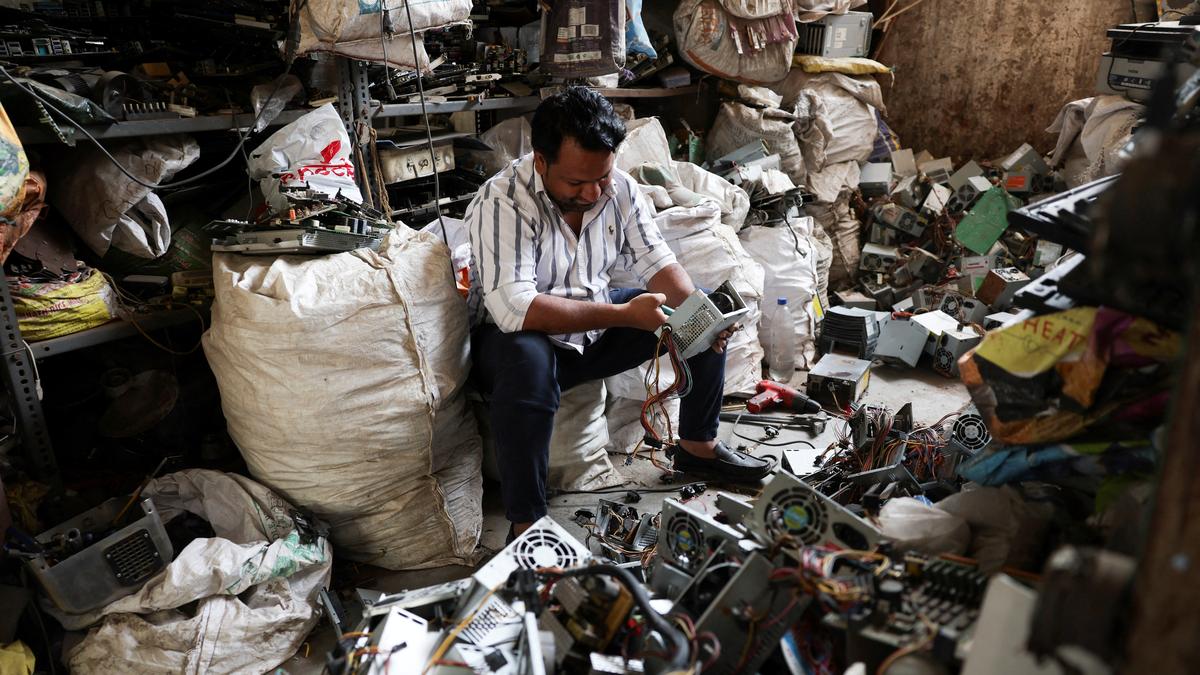
India is making more and more electronic gadgets, like phones and computers, which creates a lot of trash called e-waste.
This waste is harmful for the environment and people's health.
To fix this, India needs to manage its e-waste better.
The government wants companies to take responsibility for the waste from their products and recycle them properly.
They are also setting a minimum price for recycling, which helps to support formal recyclers who use safe methods.
This can turn waste into something useful, protect the environment, and create jobs.

India's e-waste volume soared 151.03% in six years, from 7,08,445 metric tonnes in 2017-18 to 17,78,400 metric tonnes in 2023-24.
Improper e-waste management causes over $10 billion in annual losses due to pollution.
Informal recycling results in the loss of over $20 billion annually in social costs.
India loses over ₹80,000 crore annually in lost critical metal value due to rudimentary extraction methods.
The E-waste (Management) Rules, 2022 introduced a floor price for EPR certificates to incentivize formal recycling.
- Who
- India, producers, importers, brand owners, recyclers and consumers.
- What
- India's rising e-waste and the need to improve its management.
- When
- The e-waste increase was measured from 2017-18 to 2023-24.
- Where
- India.
- Why
- India's growing reliance on electronic devices and the need for sustainable waste management.
- E-waste Increase (2017-2024)
- 151.03%
- E-waste Volume (2023-24)
- 17,78,400 metric tonnes
- Annual loss due to pollution
- $10 billion
- Social loss annually
- $20 billion
- Lost metal value annually
- ₹80,000 crore
- EPR Rules Year
- 2022