

3 days ago
Jernail S Anand’s Ethical Critique of Knowledge and Technology
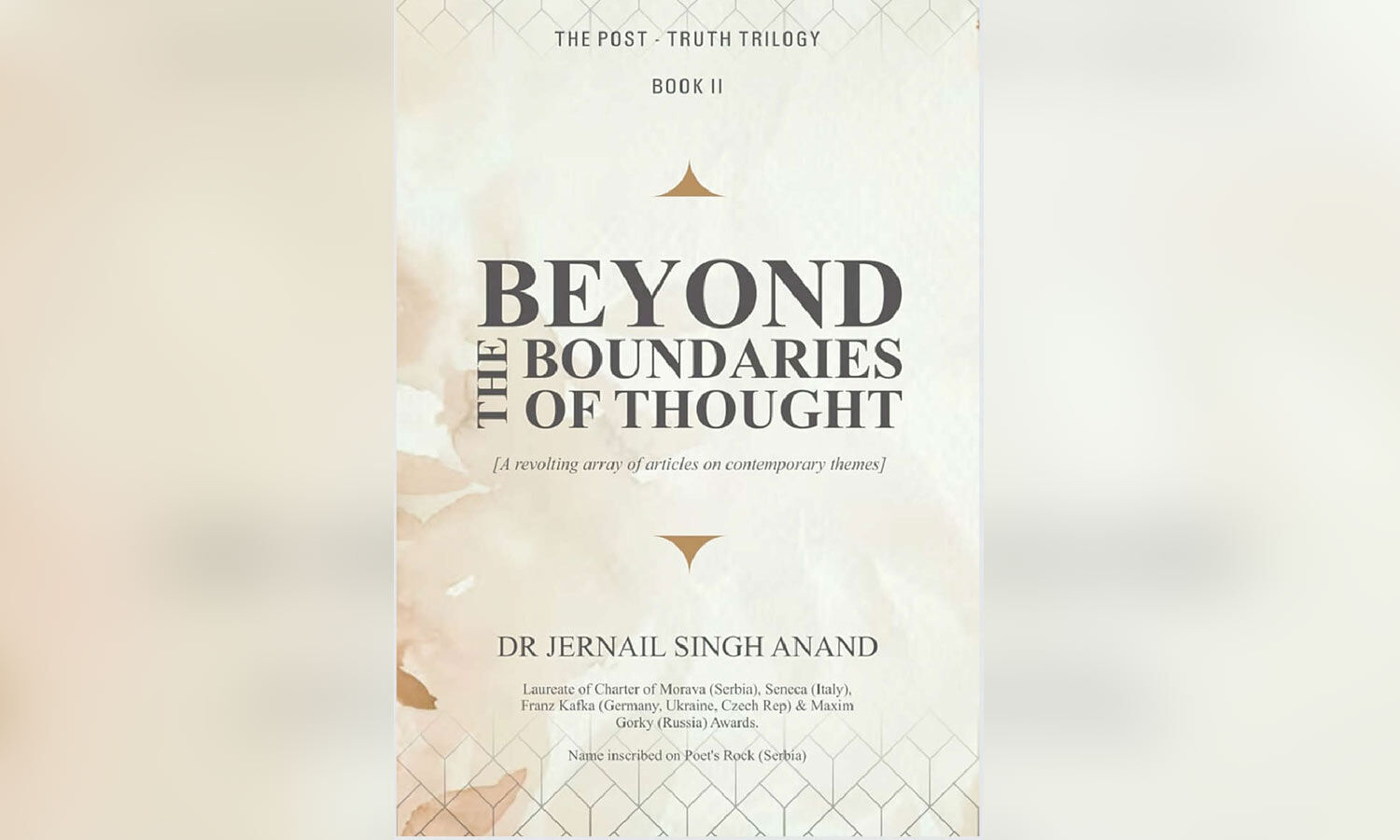
Jernail S Anand’s book asks whether progress always makes life better.
He says people can collect lots of information without becoming wiser or kinder.
The book compares this problem to the biblical story of the tree of knowledge.
Anand worries that technology, artificial intelligence, consumerism, and entertainment can distract people from moral duties.
However, he says technology is not the real enemy.
The real danger is that people may use powerful tools without understanding their limits.
He believes schools should teach students not only what to do, but also what not to do.
The book encourages humility, innocence, and a stronger sense of right and wrong.

Jernail S Anand’s “Beyond the Boundaries of Thought Book II” contains seventeen essays on philosophy, theology, culture, and morality.
The author argues that knowledge without wisdom can lead to arrogance, violence, consumerism, and moral decline.
Anand critiques artificial intelligence, entertainment culture, and technological progress while saying technology itself is not inherently dangerous.
The book calls for restoring innocence, humility, ethical education, and awareness of human limits.
Reviewers describe the work as a prophetic, culturally ambitious lament over postmodern moral relativism.
- Who
- Indian author Jernail S Anand, with comments from Prasenjit Biswas, Mauro Montachhiesi, and Lalit Mohan Sharma.
- What
- A review of Anand’s “Beyond the Boundaries of Thought Book II,” a collection of seventeen essays criticizing moral decline and examining knowledge, technology, spirituality, and culture.
- Where
- The work is associated with Indian authorship and cultural thought, but no specific publication location is stated.
- When
- Why
- The book seeks to challenge moral complacency, postmodern relativism, credentialism, and the belief that technological progress automatically represents human progress.
Anand’s Critique
Qualified Defense
Technology and artificial intelligence
Anand’s Critique
Anand presents artificial intelligence and technological advances as expressions of humanity’s dangerous overreach when separated from wisdom and ethical limits.
Qualified Defense
The review emphasizes that Anand does not reject technology entirely; it says the danger comes from human misuse and failure to live responsibly with powerful tools.
Knowledge versus wisdom
Anand’s Critique
Anand argues that information without wisdom can become destructive, producing arrogance, violence, and disregard for human limits.
Qualified Defense
The work does not oppose knowledge itself, but calls for knowledge to be guided by humility, innocence, and moral understanding.
Education and modern culture
Anand’s Critique
Anand criticizes credentialism, entertainment culture, consumerism, and “neo-moralities” for contributing to spiritual and ethical decline.
Qualified Defense
His proposed corrective is not withdrawal from modern life, but renewed ethical education and a more responsible cultural relationship with technology and progress.
Key facts
- Author
- Jernail S Anand
- Book
- Beyond the Boundaries of Thought Book II
- Structure
- A collection of seventeen articles
- Main subjects
- Philosophy, theology, cultural criticism, morality, technology, and neo-mythology
- Central argument
- Knowledge without wisdom can produce arrogance and moral collapse.
- Technology stance
- Technology is not inherently dangerous; the risk lies in humanity’s failure to use it responsibly.
- Educational proposal
- Students should be taught what not to do as well as what to do.
Quotes
Lalit Mohan Sharma
Commentator quoted praising Anand’s literary stature
“Man is not bad, nor evil intentioned. Only he is crazy, and he forgets his limits”
 thehansindia.com
“large like Whitman, he contains continents”
thehansindia.com
Sources
Related news

Philosopher-poet Jernail Singh Anand releases essays on modernity's 'ethical blank'

Saikat Majumdar on Education, Intelligence, and AI’s Human Future

Maharashtra Governor Warns Technology Without Ethics Can Be Destructive

J.D. Vance’s Communion Argues for Faith, Family, and Less Technology
Meena Kandasamy’s Novel Turns Deepfake Misogyny Into a Social Mirror
Vivaan Karulkar Connects Ancient Knowledge, Science And Modern Innovation

India’s Insolvency Framework Faces New Questions From AI Transactions

AI, Networking Debate Intensifies Over Future of Tech Careers
Bessent Says AI Could Fuel U.S. Startup Boom

Readers Debate AI Content Rights and National Identity

Musk Predicts AI Will Surpass Humans Digitally By 2027
