Archive · 14 Sep 2026
China Calls Anthropic AI Slowdown Proposal a Cold War Tactic
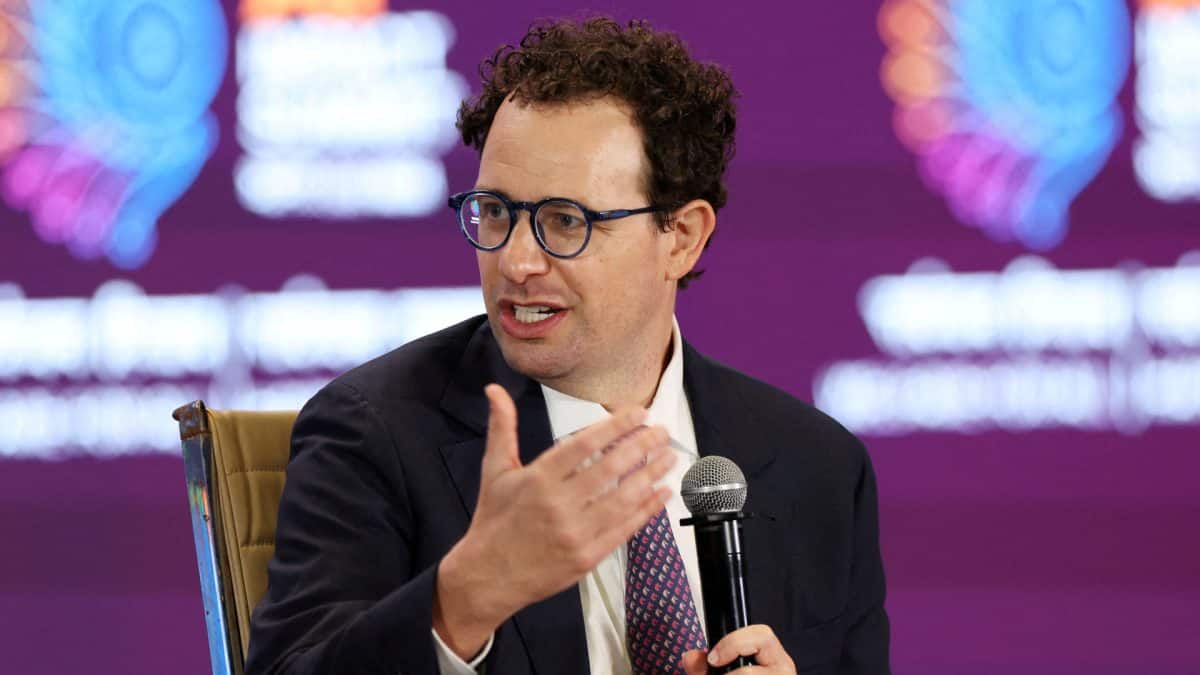
Anthropic CEO Dario Amodei said companies should slow down the development of the most powerful AI systems.
He said this would give people more time to make the technology safer.
He also supported stronger limits on advanced computer chips sent to China.
China’s Global Times said the proposal was really an attempt to stop China from catching up in technology.
Chinese officials said AI should be developed openly and for the benefit of everyone.
They also criticized fearmongering and claims they said distorted China’s actions.
Some AI leaders supported Amodei’s proposal.
Donald Trump disagreed with slowing AI and said the United States should stay ahead of China.
The two countries were expected to discuss AI safety risks.

China’s state-backed Global Times described Dario Amodei’s proposal to slow frontier AI development as a “Cold War playbook” targeting China.
Amodei said pacing advanced AI development could give governments and companies more time to address safety risks.
He also urged stronger U.S. chip export controls on China and action against alleged model distillation by Chinese AI laboratories.
Chinese officials called for open and inclusive AI development, while rejecting what they described as fearmongering and distorted claims about China.
Donald Trump opposed slowing AI development, while the United States and China planned discussions on frontier AI safety risks.
- Who
- Anthropic CEO Dario Amodei, China’s Global Times and Foreign Ministry officials, U.S. President Donald Trump, and other AI industry leaders are central to the dispute.
- What
- China criticized Amodei’s proposal to pace frontier AI development, arguing that it could serve as a strategy to contain China’s technological rise.
- When
- Amodei’s essay was published on Saturday; the criticism was reported on September 14 and Monday, with further discussions planned for mid-September.
- Where
- The dispute involves the United States and China, with the criticism issued through Chinese state media and Foreign Ministry statements.
- Why
- Amodei cited growing AI safety risks, while China said his proposal’s calls for technology restrictions could curb China’s AI development and preserve U.S. dominance.
AI Safety and Open Governance
Strategic Competition and AI Acceleration
Whether AI development should slow
AI Safety and Open Governance
Dario Amodei and researchers warning of potentially catastrophic or existential risks argue that pacing frontier AI could create more time to manage safety concerns.
Strategic Competition and AI Acceleration
Donald Trump rejected a slowdown, saying the United States should preserve its lead because the country that wins AI could lead globally.
Restrictions involving China
AI Safety and Open Governance
Amodei argued for stronger chip export controls and action against alleged model distillation to address strategic and safety concerns.
Strategic Competition and AI Acceleration
Global Times said these measures were technological barriers designed to curb China’s development, widen the technology gap and preserve Washington’s dominance.
China’s role in AI governance
AI Safety and Open Governance
Global Times argued that excluding China from global AI innovation could increase trial-and-error costs and the risk of losing control over AI development.
Strategic Competition and AI Acceleration
Chinese officials advocated open, inclusive and universally beneficial AI development, while Amodei raised concerns about countries that might not adopt comparable restrictions.
- Proposal
- Dario Amodei outlined a three-step framework to pace the development of frontier AI models.
- Amodei’s additional requests
- He urged stronger U.S. chip export controls on China and action against alleged model distillation by Chinese AI laboratories.
- Chinese criticism
- Global Times called the proposal a “Cold War playbook” and said it sought to contain China’s AI development.
- Chinese government position
- Foreign Ministry spokesperson Guo Jiakun called for open, inclusive and universally beneficial AI development and opposed fearmongering and confrontation.
- Industry support
- OpenAI CEO Sam Altman, SpaceX founder Elon Musk and Google DeepMind CEO Demis Hassabis expressed support for or approval of Amodei’s proposal.
- Trump’s position
- Donald Trump rejected calls to slow AI development and said the United States needed to maintain its lead over China.
- Planned discussions
- The United States and China were expected to discuss frontier AI safety risks, potentially including them in a planned September 24 summit.