

Archive · 25 Jul 2025
Rail Merger Could Create Monopoly, Prompt Concerns
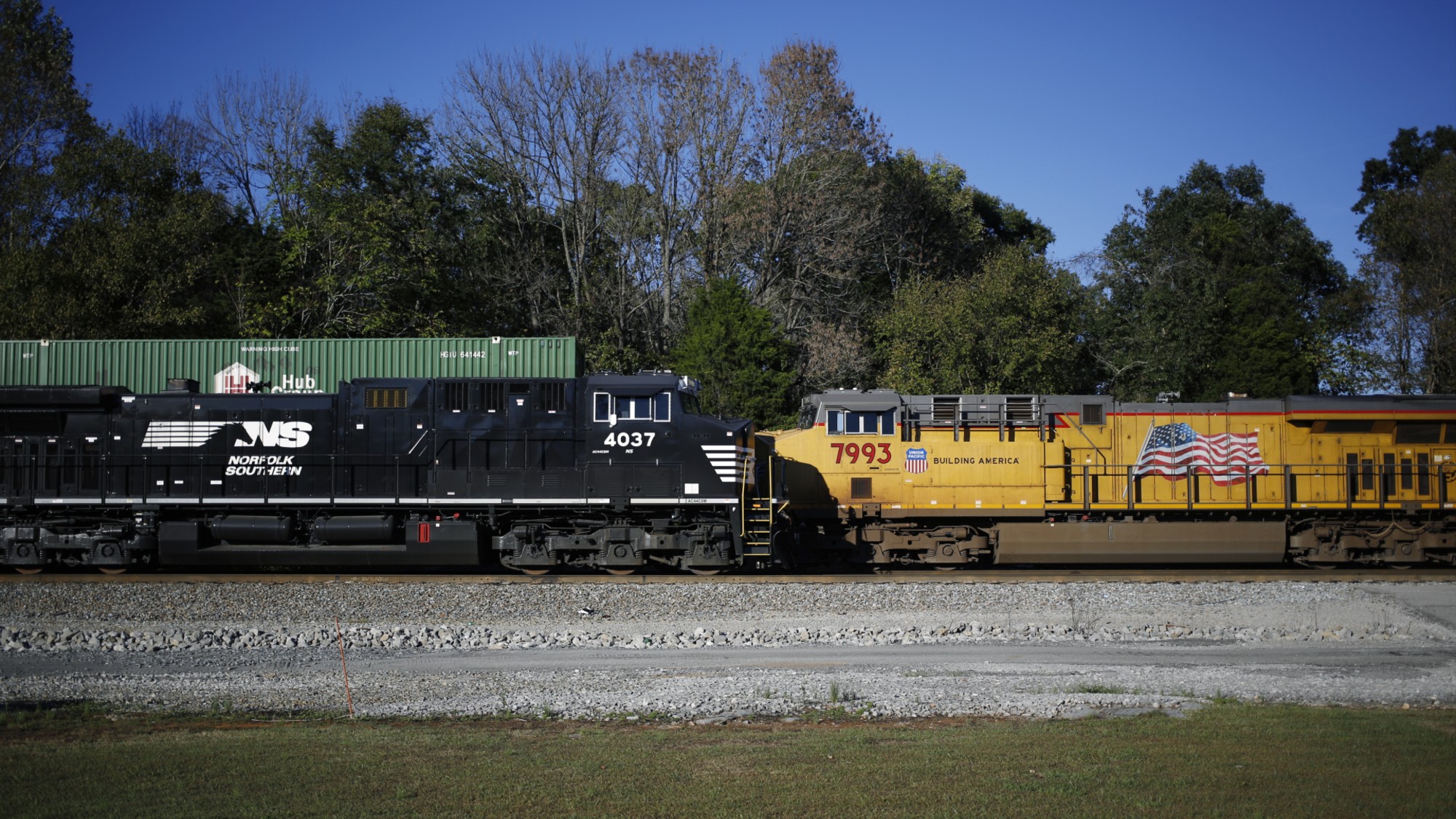
Two big train companies, Union Pacific and Norfolk Southern, are thinking about joining together.
If they do, they'd have trains that could go all over the country, which could make things faster.
However, some people worry that this would reduce competition, as there would be fewer companies controlling the railways.
This could lead to higher prices.
The government will need to decide if this merger is good for everyone or not, as these types of mergers are carefully looked at because of potential monopoly issues.

Union Pacific and Norfolk Southern are in discussions for a potential merger.
The merger could create a transcontinental rail network with nearly 90,000 miles of track.
Industry leaders are concerned about reduced competition in the already concentrated rail industry.
The merger could cut the number of major freight railroads in the United States from six to five.
Regulatory approval for such mergers is difficult due to monopoly concerns.
- Who
- Union Pacific and Norfolk Southern.
- What
- A potential merger between Union Pacific and Norfolk Southern.
- When
- Details not provided in the articles.
- Where
- United States.
- Why
- To create a larger, more efficient rail network and potentially recapture market share from trucking.
Proponents of Merger
Opponents of Merger
Efficiency vs. Competition
Proponents of Merger
Merger would eliminate the need for redundant interchanges and enhance efficiency.
Opponents of Merger
Merger would reduce competition and bargaining power for customers.
- Companies Involved
- Union Pacific, Norfolk Southern
- Union Pacific Value
- $138.2 billion
- Norfolk Southern Value
- $63 billion
- Potential Track Miles
- Nearly 90,000
- Industry Concerns
- Reduced competition