

Archive · 20 May 2025
Genetic Study Traces Coorgi Ancestry to Multiple Origins
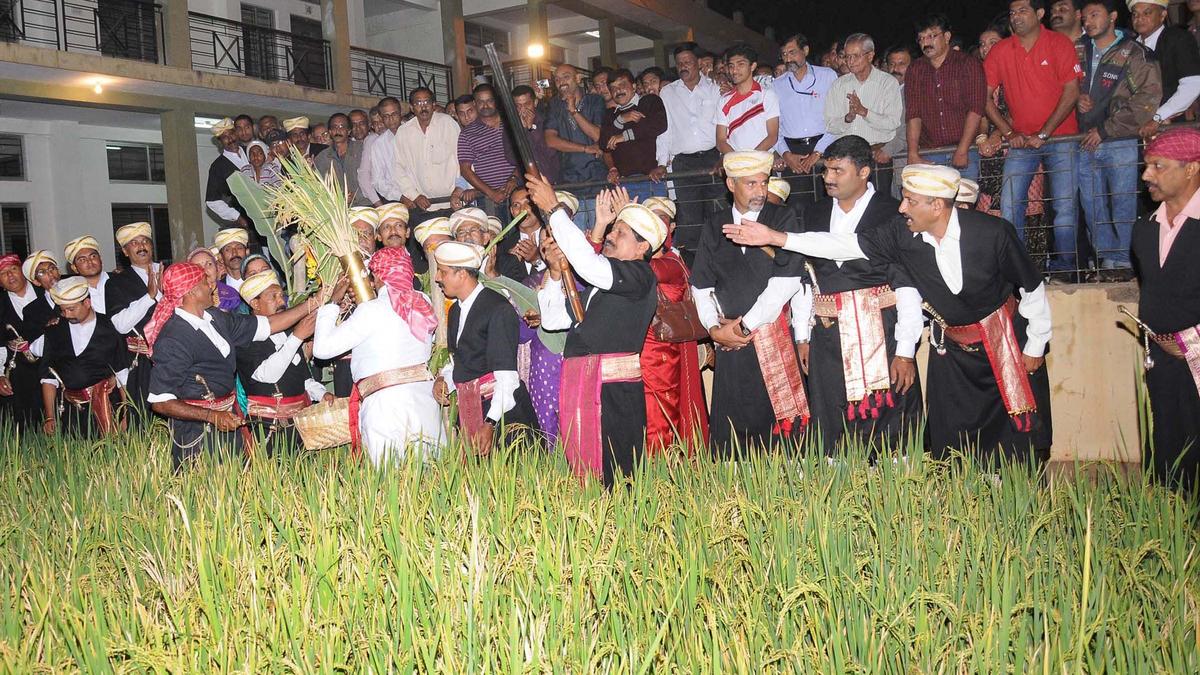
Scientists studied the DNA of people from the Coorgi community in India.
They found that the Coorgis' ancestors came from at least three different groups, with the oldest connection being about 3,000 years ago.
These groups mixed over thousands of years, making the Coorgis a unique mix.
The study helps explain how different groups in India are related.
It also reveals their unique place in India's history.
The Coorgis have their own distinct culture which includes practices unlike those of the Hindus, with cultural origin stories linked to Indus Valley.
This research may inspire further investigation of migrations and demographics in the subcontinent.

A genetic study traced the origins of the Coorgi community to at least three ancestral populations.
The oldest ancestral link dates back roughly 3,000 years ago.
The most recent ancestral link dates back approximately 330 years.
The study compared Coorgi genetic data to that of other groups.
The Coorgi community is socio-culturally homogenous but has diverse ancestry.
- Who
- Researchers from the University of Delhi and the Centre for Cellular and Molecular Biology in Hyderabad studied the Coorgi population.
- What
- A genetic study revealed the Coorgi community has ancestry from multiple groups spanning millennia.
- When
- The study's findings trace ancestry back approximately 3,000 years to the Palliyar population and 330 years to a more recent group.
- Where
- The study focuses on the Coorgi community in Karnataka, India.
- Why
- To understand the origins and demographic history of the Coorgi community.
- Community
- Coorgis (Kodava)
- Population
- Approximately 300,000 individuals
- Study Focus
- Genetic history of the Coorgi people
- Oldest Ancestry
- Approx. 3,000 years ago (shared with Palliyar)
- Most Recent Ancestry
- Approx. 330 years ago (Coorg-2 group)
- Published In
- Communications Biology
- Family Structure
- Family exogamy and caste endogamy