Archive · 20 Jul 2026
Ancient Artifacts Unearthed in Karbi Anglong

In a village in Assam, India, people found old stone carvings and writings near two ponds.
These items are very old, maybe from the 10th to 12th centuries.
Some people think they are even older, from the time of the Mahabharata.
The carvings show gods and dancers.
Experts are trying to save these items and learn more about them.
There are other old places nearby with more carvings and temples.
Some old books written in a different language might also have secrets about the past.

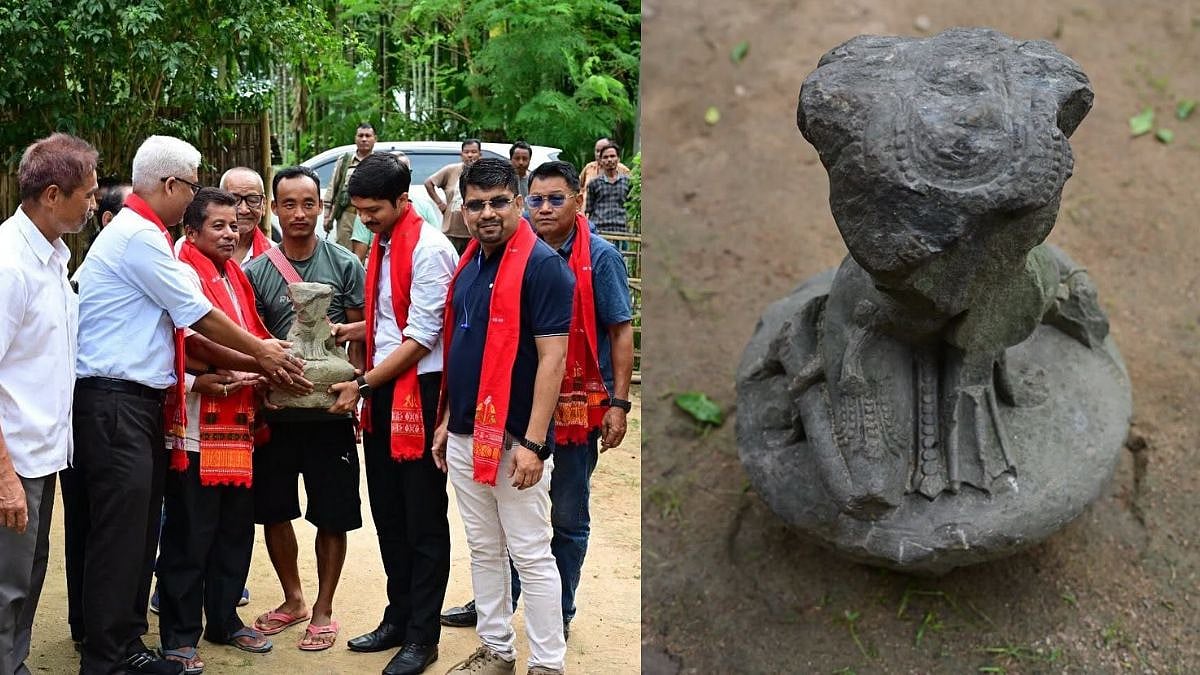
Ancient stone artifacts and inscriptions discovered in Sarthe Rongphar village, Karbi Anglong.
Artifacts include carvings of deities, Shiva lingams, and a depiction of Lord Ganesha.
Locals believe the artifacts date back to the Mahabharata era, while experts suggest the 10th-12th centuries.
Significant sites in the region include Mahamaya Hill, Buragohain Than, and Bargonga.
Efforts are being made to preserve and document these historical treasures.
- Who
- Archaeologists and local villagers
- What
- Unearthed ancient stone artifacts and inscriptions
- When
- Recent excavations, specific dates not mentioned
- Where
- Sarthe Rongphar village, Phuloni area, Karbi Anglong district, Assam
- Why
- To uncover and preserve the region's rich archaeological heritage
Local Traditions
Historical Evidence
Era of Artifacts
Local Traditions
Locals link the artifacts to the period of the Mahabharata and the Ashwamedha Yajna.
Historical Evidence
Experts believe the artifacts date back to the 10th-12th centuries, likely from the Ahom period.
- Location
- Sarthe Rongphar village, Phuloni area, Karbi Anglong district, Assam
- Artifacts Found
- Stone sculptures, inscriptions, dancing figures, deities, Shiva lingams, temple fragments, Lord Ganesha depiction
- Estimated Age
- 10th-12th centuries
- Preservation
- Hojai Archaeological Museum and Diphu district museum
- Significant Sites
- Mahamaya Hill, Buragohain Than, Bargonga
- Historical Dynasties
- Kachari and Dabok dynasties
- Manuscripts
- Rare Tai manuscripts from the medieval period