

Archive · 7 Aug 2026
Author Malini Bhattacharjee: Seeing RSS Only Through Politics Misses Motivations
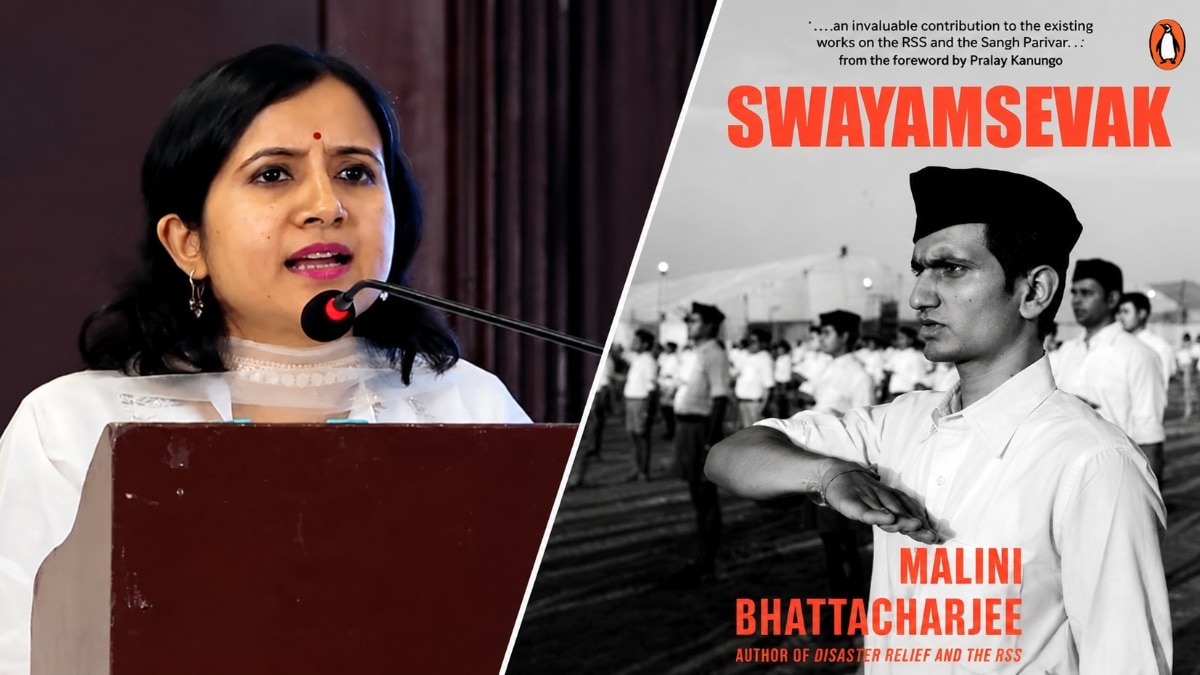
A writer named Malini Bhattacharjee wrote a book about a big group in India called the RSS.
Most books about this group talk about its leaders, but she wanted to talk to the regular helpers, called swayamsevaks.
She interviewed ten helpers from different parts of India who spoke different languages.
Even though their backgrounds were very different, they used very similar words when talking about their work.
Some people think the RSS is only about politics, but she says that way of looking at it makes you miss why people join.
She spoke with a woman named Pankajavalli, who decided not to get married so she could help children in Jammu whose parents were killed.
The helpers Malini met were smart, independent people who did not just follow orders.
She does not believe a group can survive for 100 years just by spreading hate.
Her book wants people to be curious and look more deeply at who these helpers really are.

Author Malini Bhattacharjee's book focuses on ordinary swayamsevaks rather than top RSS leaders.
She interviewed 10 swayamsevaks and one sevika from different regions, languages and backgrounds across India.
Bhattacharjee argues that seeing the RSS only through a political or conspiratorial lens misses members' real motivations.
The book devotes a chapter to Pankajavalli, who chose to remain unmarried and rescued children in Jammu whose parents were killed by militants.
She says an organisation cannot be built on hate alone, and her image of a rigid, top-down structure broke down during research.
- Who
- Author Malini Bhattacharjee, who has researched the RSS since 2005, and the ordinary swayamsevaks and sevika she interviewed for her book
- What
- An exclusive interview about her book on ordinary RSS swayamsevaks and what motivates them to dedicate decades to the organisation
- When
- Not specified in the articles
- Where
- India, including Jharkhand, Karnataka, Mumbai, Bangalore and Jammu; interview published by Business Today
- Why
- To explain what really motivates ordinary swayamsevaks to sacrifice material comfort and remain with the movement for 20 to 50 years
Critics of the RSS
Author Malini Bhattacharjee
RSS and politics
Critics of the RSS
Scholars often write that the RSS, despite presenting itself as cultural, is deeply political and driven by a conspiratorial, top-down agenda.
Author Malini Bhattacharjee
Bhattacharjee says a political dimension is not inherently negative, and the idea of an agenda dictated from the top to every swayamsevak is misleading since members join because the movement offers them something.
Women in the RSS
Critics of the RSS
Left-liberal critics argue the Sangh's understanding of gender is conservative, preserves upper-caste ideals of women as mothers and wives, and does not encourage women to challenge stereotypes.
Author Malini Bhattacharjee
Bhattacharjee found women in Sangh-inspired outfits to be highly educated and independent-minded, and says she found no evidence the Sangh held Pankajavalli back from her brave work in Jammu.
What sustains the movement
Critics of the RSS
A widely told narrative maintains that the RSS movement has thrived on hatred.
Author Malini Bhattacharjee
Bhattacharjee calls this a misnomer, arguing you cannot build an organisation through hate alone and it cannot survive that way for 100 years.
- Book focus
- Ordinary swayamsevaks, not top RSS leadership
- Interview subjects
- 10 swayamsevaks and one sevika from diverse regions, languages and backgrounds
- Swayamsevak age range
- 18 to 55 to 60
- Author's research experience
- Researching and writing on the RSS since 2005
- Women's organisations cited
- Rashtra Sevika Samiti and Durga Vahini
- Organisation bans
- The RSS has been banned three times
- Interview platform
- Exclusive interview with Business Today
- Centenary theme
- What keeps swayamsevaks going after 100 years