

Archive · 25 Jul 2026
Lobsters chew food in their stomachs
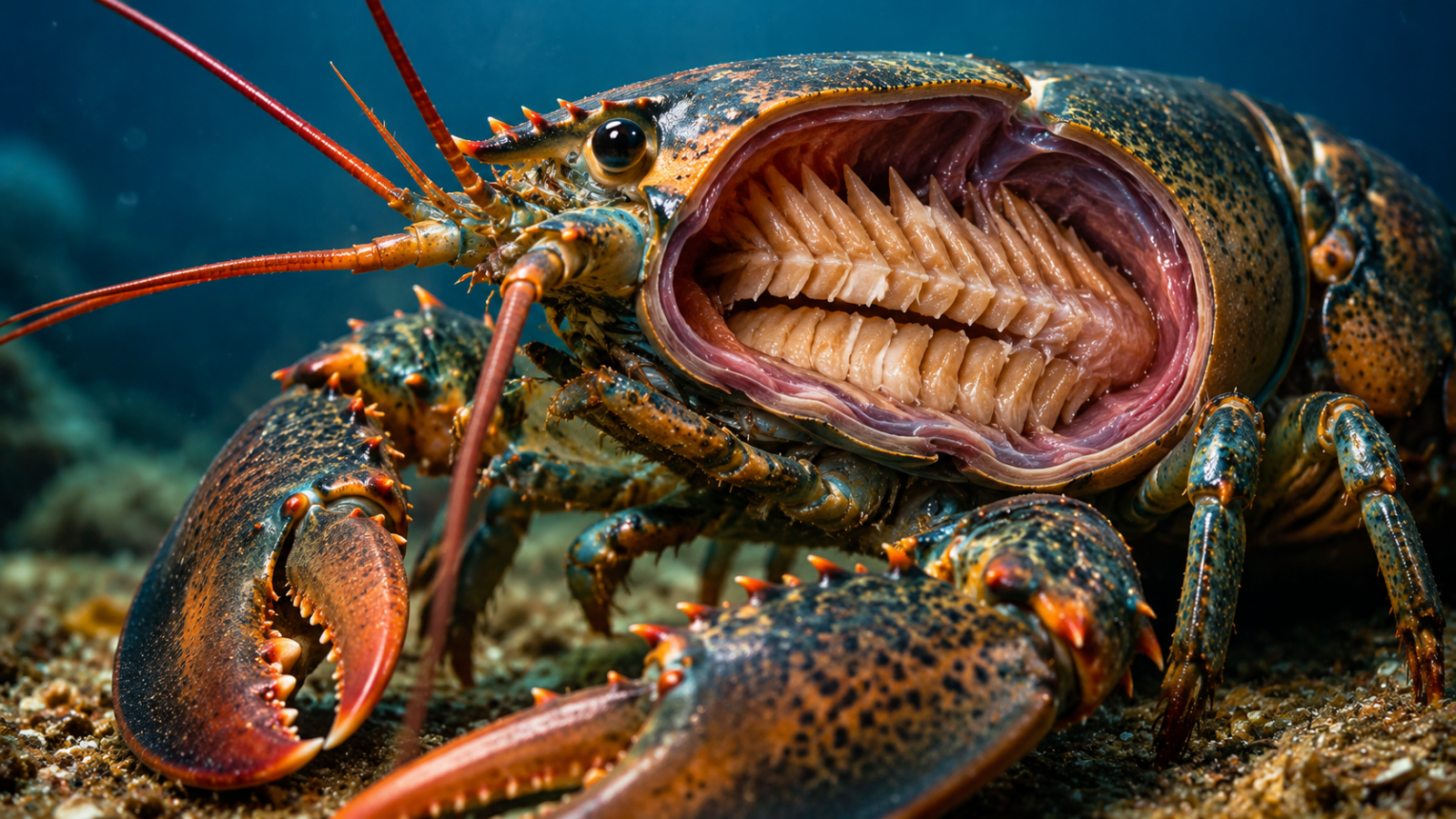
Lobsters have a unique way of eating.
Unlike humans, who chew food in their mouths, lobsters use a special set of teeth in their stomachs.
These teeth are part of something called a gastric mill.
When a lobster eats, its mouthparts help push the food into its stomach.
There, the gastric mill grinds the food into smaller pieces so it can be easily digested.
The gastric mill is made of a tough material called chitin, which is also found in the lobster's shell.
Scientists compare the gastric mill to a tiny food processor inside the lobster's body.
This special way of eating helps lobsters break down their food efficiently.

Lobsters use a gastric mill in their stomachs to grind food.
The gastric mill consists of three hard, tooth-like plates made of chitin.
Food is torn and moved into the digestive system by the lobster's mouthparts.
The gastric mill crushes and grinds food into smaller pieces for digestion.
Scientists compare the gastric mill to a tiny internal food processor.
- Who
- Lobsters
- What
- Lobsters chew food in their stomachs using a gastric mill.
- When
- This is a constant biological process.
- Where
- In the foregut of lobsters.
- Why
- To efficiently grind and digest food.
Biological Adaptation
Human Digestion
Digestion Location
Biological Adaptation
Lobsters use a gastric mill in their stomachs to grind food.
Human Digestion
Humans chew food in their mouths using teeth.
- Gastric Mill
- A set of tooth-like structures in a lobster's stomach that grind food.
- Chitin
- A tough material that forms a lobster's shell and gastric mill.
- Foregut
- The part of a lobster's digestive system where the gastric mill is located.