

Archive · 28 Nov 2025
Asteroid Bennu Contains Tryptophan, Key Life Ingredient
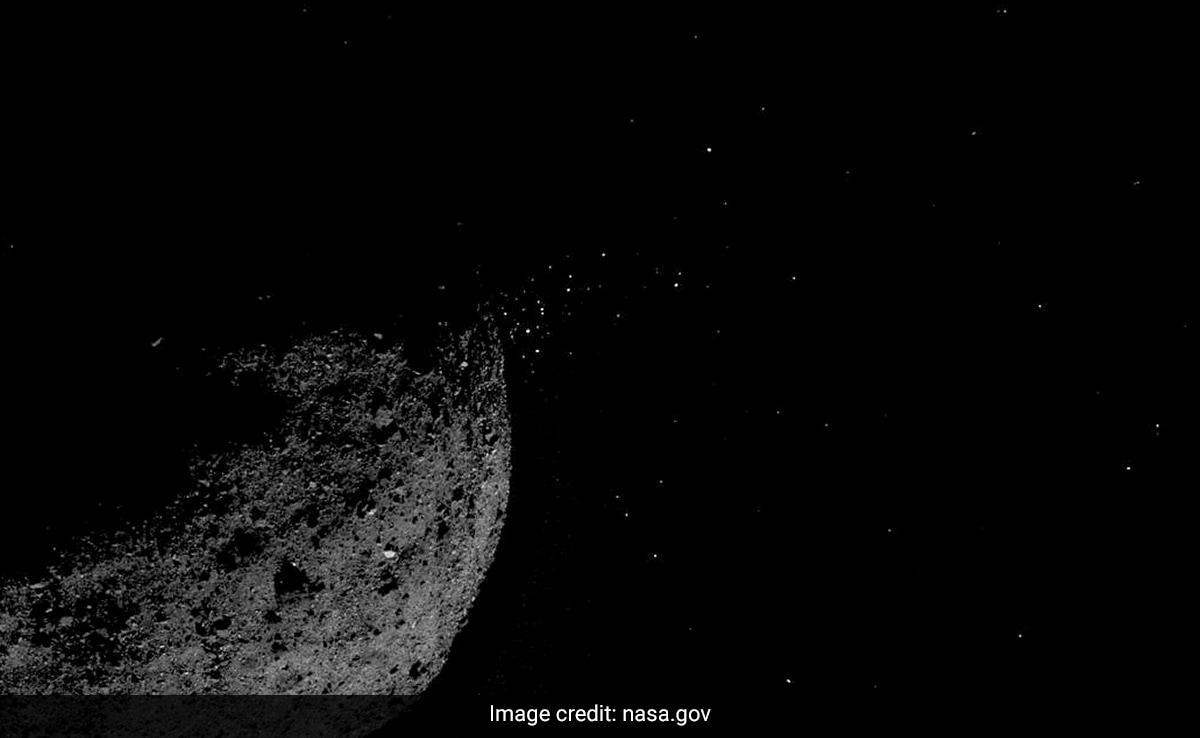
Scientists from NASA found something really cool in a space rock called Bennu.
They sent a spacecraft to collect a tiny piece of Bennu and brought it back to Earth.
Inside that piece, they found special ingredients that living things need, like amino acids and other important chemicals.
One of these ingredients, called tryptophan, is really important because it's one of the building blocks of life.
This shows that the ingredients for life might have come from space rocks like Bennu a long, long time ago.
Bennu is super old, even older than the Earth, and it's made of stuff from dying stars.
Even though Bennu doesn't have life on it now, it gives scientists clues about how life might have started on our planet.

Asteroid Bennu contains tryptophan, a complex amino acid essential for life, along with 13 other amino acids and 5 nucleobases.
NASA's OSIRIS-REx mission collected 4.3 ounces of rocks and dust from Bennu in 2020 and returned it to Earth in 2023.
Bennu is over 4.5 billion years old and contains some of the oldest materials in the solar system, formed in dying stars.
The asteroid's composition includes carbon, nitrogen, organic compounds, and water-soluble phosphates, all important for life.
Bennu's extreme temperatures and lack of atmosphere make it unsuitable for life as we know it, but it may have brought key ingredients to Earth billions of years ago.
- Who
- NASA's OSIRIS-REx mission scientists
- What
- Discovered tryptophan and other organic compounds in asteroid Bennu
- When
- Sample collected in 2020, returned to Earth in 2023
- Where
- Asteroid Bennu, near Earth's orbit
- Why
- To study the early solar system's chemistry and potential ingredients for life
- Asteroid Name
- Bennu
- Mission
- OSIRIS-REx
- Sample Collection
- 2020
- Sample Return
- 2023
- Sample Weight
- 4.3 ounces (122 grams)
- Amino Acids Found
- 14 of 20 essential amino acids, including tryptophan
- Nucleobases Found
- 5 biological nucleobases
- Asteroid Age
- Over 4.5 billion years old