

Archive · 31 Jul 2026
India Launches First Deep-Sea Microbial Repository, Ballast Water Facility
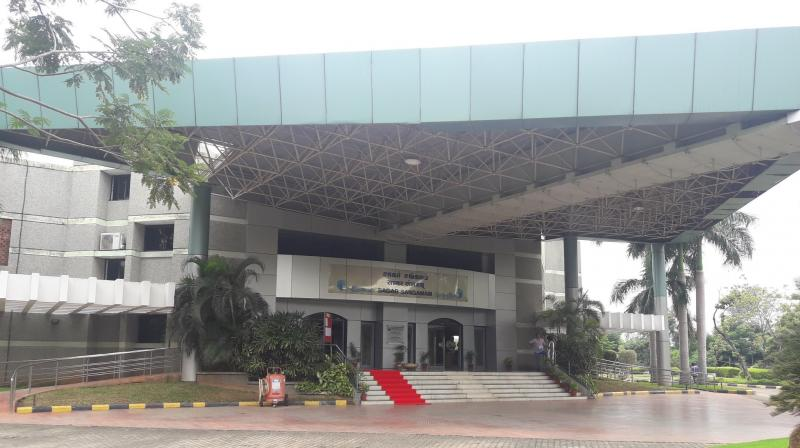
India has built two new science labs that help keep the ocean clean and find useful things in deep water.
One lab tests special machines that clean the water ships carry, so they don’t spread bad plants and animals.
The other lab keeps tiny sea creatures from deep below the surface so scientists can study them.
These labs cost a lot of money but could help make new medicines and protect the ocean.
They are part of India’s plan to become a leader in ocean science.

NIOT opened Asia’s first ballast water treatment test facility in Tirupati district, costing ₹37 crore.
The facility can test and certify ballast water treatment systems under the IMO Ballast Water Management Convention.
NIOT also established India’s first deep‑sea microbial repository (DSMR) at Chittedu campus, investing ₹75 crore and ₹100 crore in equipment.
DSMR will house microbial cultures, eDNA, metagenomic libraries, and high‑pressure fermentation labs for deep‑sea research.
Both facilities aim to boost marine conservation, shipping safety, and India’s blue‑economy biotech start‑ups.
- Who
- Prof Balaji Ramakrishnan, director of the National Institute of Ocean Technology
- What
- Opening of India’s first deep‑sea microbial repository and Asia’s first ballast water treatment test facility
- Where
- Tirupati district and Chittedu campus, Andhra Pradesh, India
- Why
- To strengthen marine conservation, improve shipping safety, and boost the blue‑economy biotechnology sector
- Institution
- National Institute of Ocean Technology
- Facilities
- Ballast Water Treatment Test Facility, Deep Sea Microbial Repository
- Location
- Tirupati district, Andhra Pradesh
- Investment
- ₹37 crore for BWTT‑TF, ₹75 crore for DSMR
- Purpose
- Marine conservation, shipping safety, blue economy