

Archive · 18 Dec 2025
Iran's Hormuz Island Turns Blood-Red After Rain
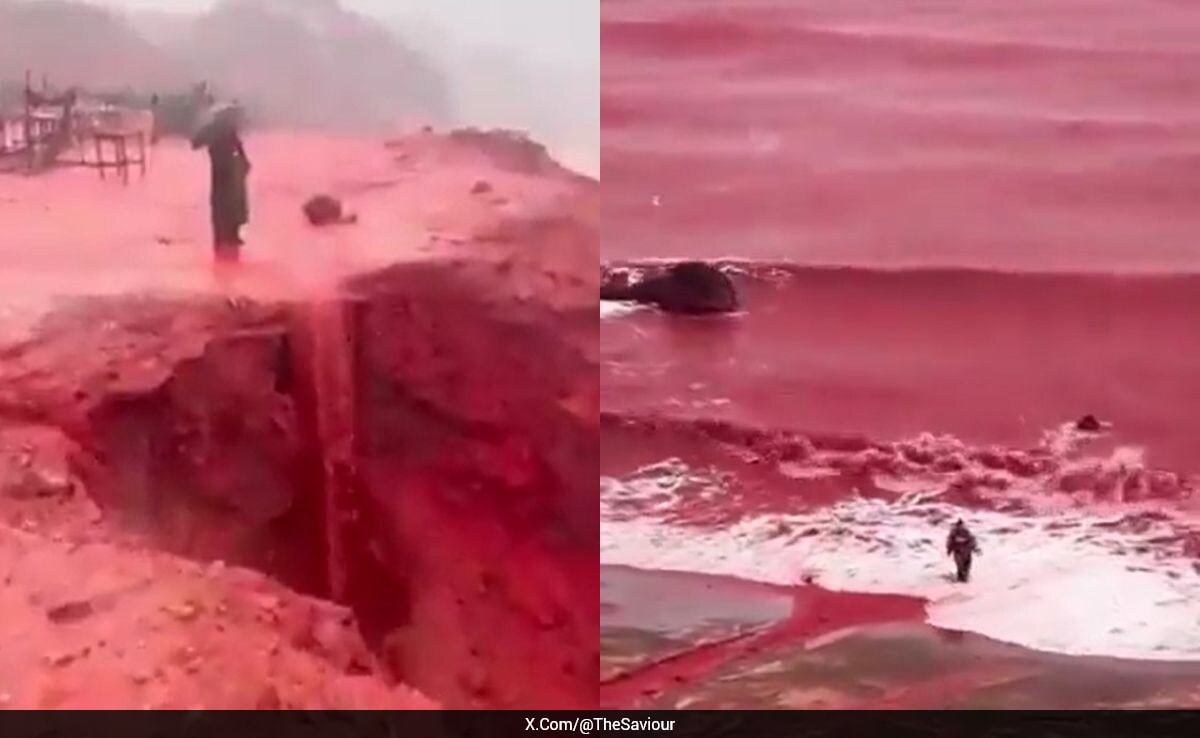
Hormuz Island in Iran turned a deep red color after it rained.
This happens because the island has a lot of a special red rock called hematite.
When the rain falls, it mixes with the rock and turns the sand and water red.
It looks like the island is covered in blood, but it's actually just a natural trick of nature.
The island is known for its colorful rocks and is a popular place for tourists to visit.
Scientists say this red color is harmless and doesn't hurt the environment.
It's just a cool thing that happens because of the special rocks on the island.

Hormuz Island's coastline turned blood-red after recent rainfall due to iron oxide (hematite) in the soil.
The phenomenon is a natural and harmless result of the island's unique geology.
Hormuz Island is known as the 'Rainbow Island' for its colorful mineral composition.
The red staining is more intense in areas with active erosion.
Tourists visit Hormuz Island year-round to see its vivid soil, rugged coastline, and historic landmarks.
- Who
- Residents and tourists of Hormuz Island, Iran
- What
- Natural phenomenon turning the coastline blood-red after rain
- When
- After recent rainfall (specific date not mentioned)
- Where
- Hormuz Island in the Persian Gulf, Iran
- Why
- Due to the presence of iron oxide (hematite) in the soil, which reacts with rainwater to create a red stain
- Location
- Hormuz Island, Persian Gulf, Iran
- Cause
- Iron oxide (hematite) in soil reacting with rainwater
- Mineral Responsible
- Hematite
- Island Nickname
- Rainbow Island of the Persian Gulf
- Phenomenon Safety
- Harmless and natural
- Tourist Attractions
- Vivid soil, rugged coastline, historic landmarks