Archive · 12 Aug 2025
Whale Strandings on Rise Along Southwest Coast of India
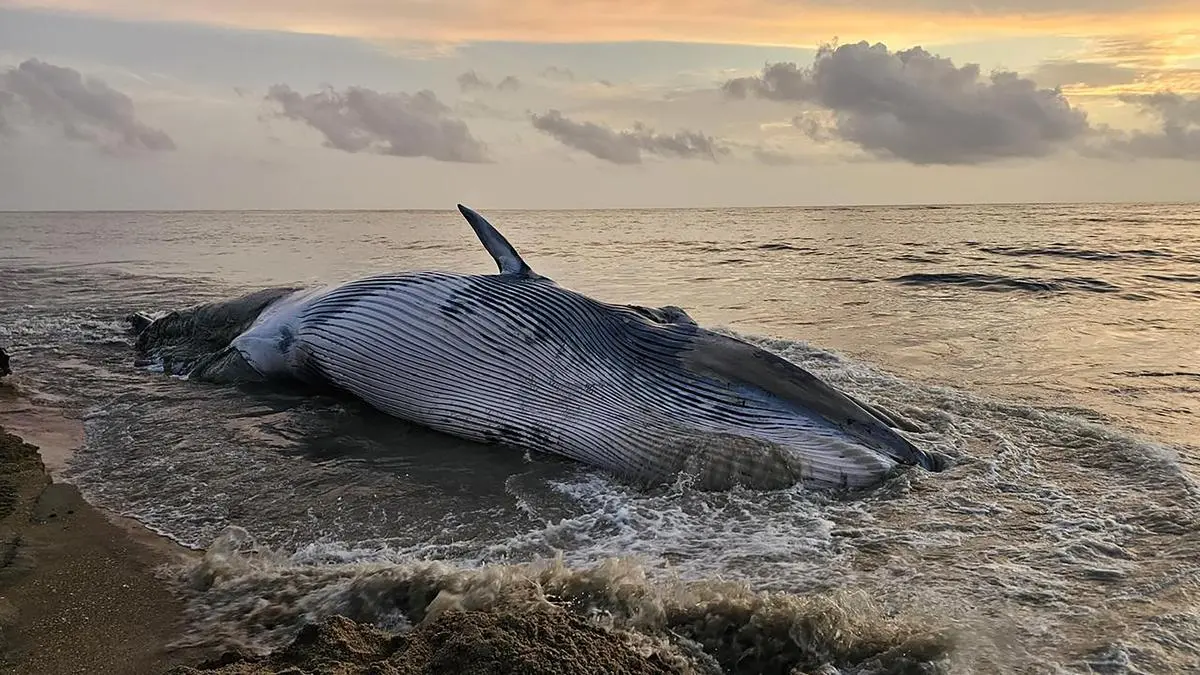
Imagine whales getting stuck on the beach much more often!
Scientists in India found that this is happening a lot more, especially in the last few years.
They looked at data from the last 20 years and saw a big jump in how often whales wash ashore.
This is happening in certain areas along the coast, including Kerala, Karnataka, and Goa.
Warmer oceans and changes in the water, like more food, might be drawing the whales closer to shore, but it is also making them more vulnerable to dangers.
The researchers are looking for ways to predict these events so they can help protect the whales.

Whale strandings increased tenfold along India's southwest coast over a decade.
The study covered data from 2004 to 2023, with a sharp rise post-2014.
Kerala, Karnataka, and Goa are key hotspots for stranding reports.
Bryde's whale is the most commonly stranded species, with blue whales also found.
Increased ocean temperature and chlorophyll-a concentration are linked to strandings.
- Who
- The ICAR-Central Marine Fisheries Research Institute (CMFRI) and whales.
- What
- A tenfold increase in whale strandings has been reported along India's southwest coast.
- When
- The increase occurred over the decade from 2014 to 2023, with data from 2004 to 2023.
- Where
- Southwest coast of India (Kerala, Karnataka, and Goa are key areas).
- Why
- Due to a range of factors including changes in ocean ecosystems and anthropogenic factors. Also SST and ocean temperatures.
Environmental Factors
Human Impact
Ocean Impact
Environmental Factors
Increase in Sea Surface Temperature and rising ocean temperature are causing ecological disruptions that increase the stranding.
Human Impact
Whales are being drawn closer to coastal feeding grounds during the monsoon when nutrient upwelling increases plankton and fish abundance.
- Study Institute
- CMFRI
- Stranding Increase
- Tenfold
- Study Period
- 2004-2023
- Hotspots
- Kerala, Karnataka, Goa
- Most Stranded Species
- Bryde's whale
- Contributing Factors
- High vessel traffic, fishing activity
- Correlation
- Chlorophyll-a concentration to whale strandings