Archive · 1 Oct 2026
Congress Protests Across India, Demands CEC Gyanesh Kumar’s Resignation
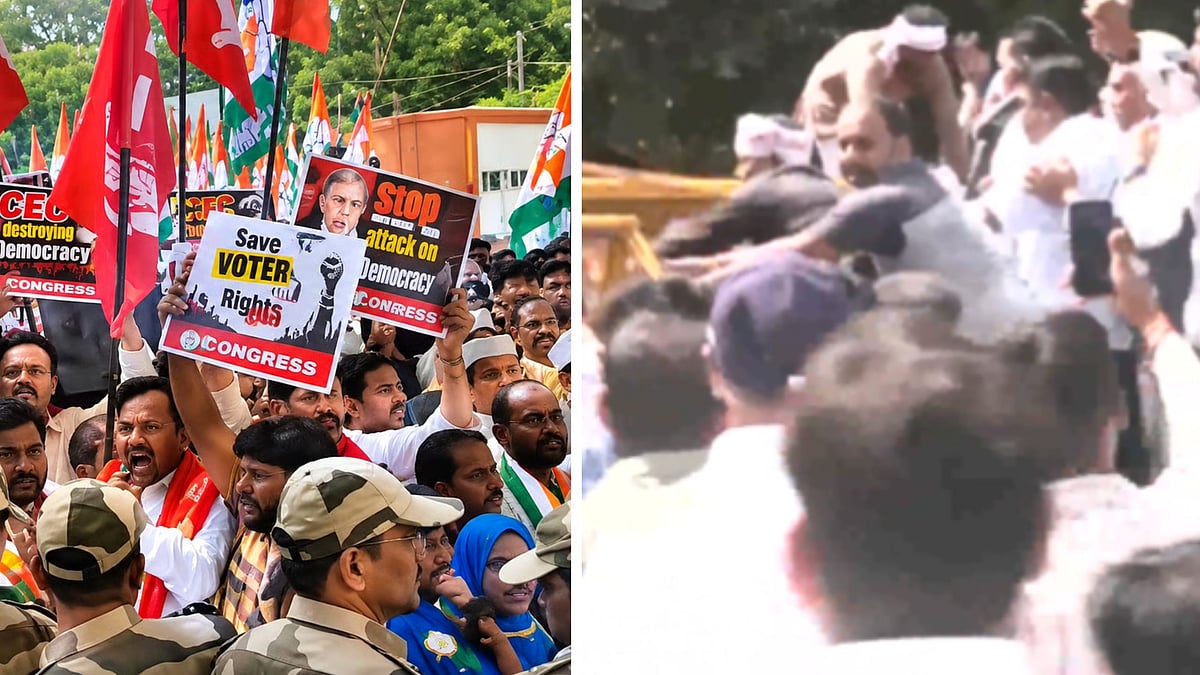
Congress workers protested in several parts of India about changes to voter lists.
The changes are part of a process called the Special Intensive Revision, or SIR.
Protesters said eligible people may have been wrongly removed from the lists.
They demanded that Chief Election Commissioner Gyanesh Kumar resign or face action.
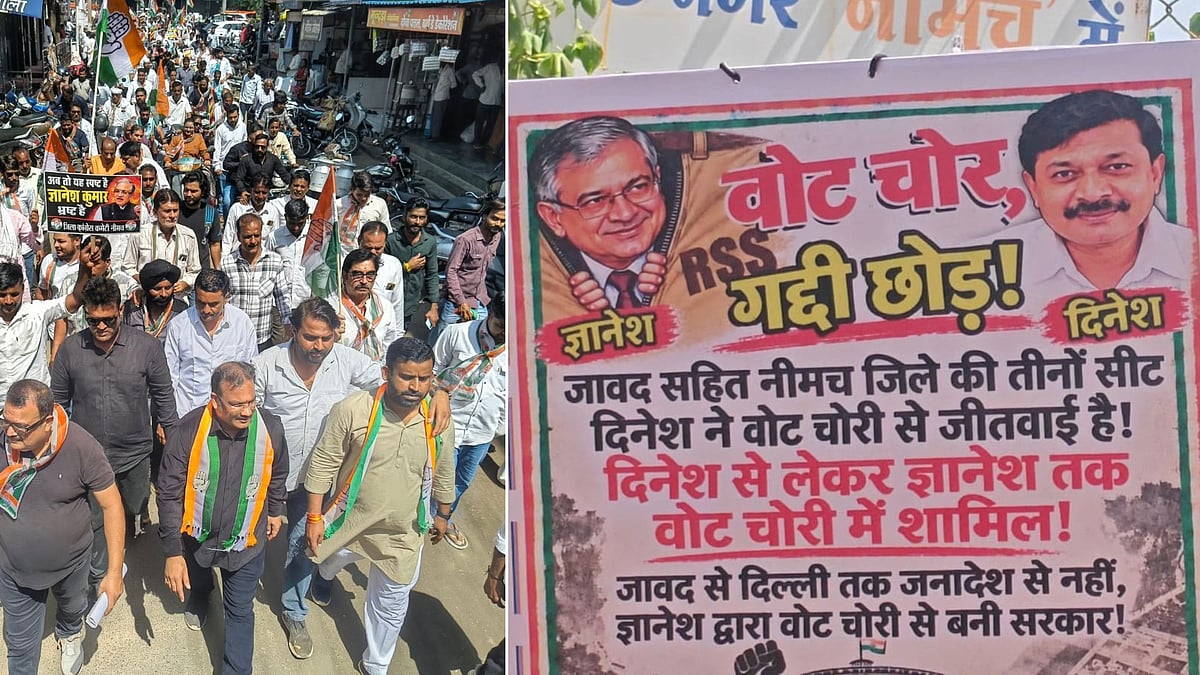
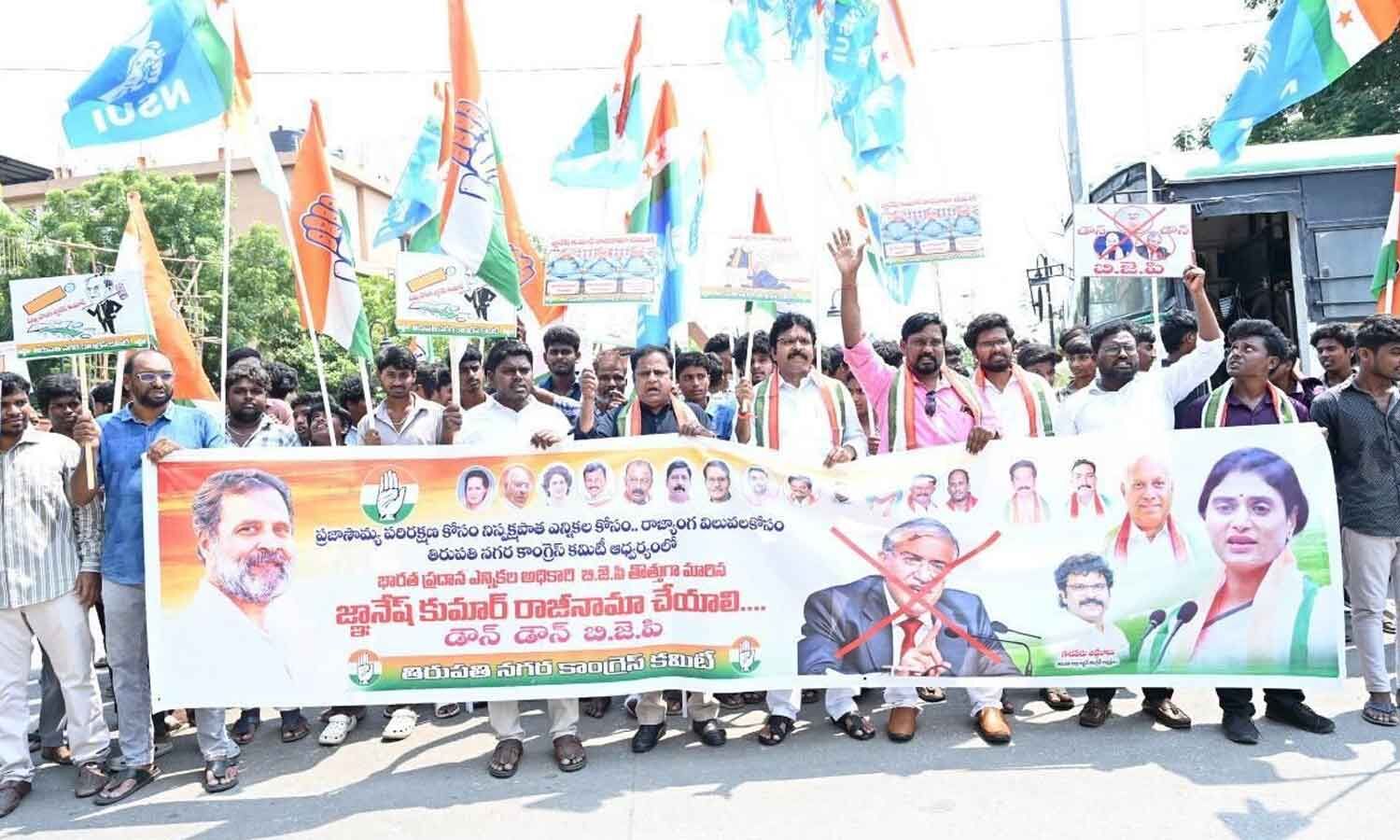
Demonstrations took place in many Madhya Pradesh cities and in Tirupati.
Some protesters marched, held sit-ins, burned effigies or used symbolic handcuffs and masks.
Police blocked some groups with barricades and stopped attempts to burn effigies in Tirupati.
Congress also referred to a report saying two election commissioners had objected to SIR-related decisions 14 times.
The Election Commission said its decisions were unanimous and followed the law.

Congress held demonstrations on September 30, 2026, in Madhya Pradesh and Tirupati over the Special Intensive Revision of electoral rolls.
Protests were reported in Gwalior, Indore, Neemuch, Khargone, Mandsaur, Dhar, Jhabua, Alot and Tirupati.
Congress demanded the resignation, dismissal, arrest or investigation of Chief Election Commissioner Gyanesh Kumar.
The party alleged voter-name deletions, electoral irregularities and insufficient transparency, particularly affecting eligible and vulnerable voters.
Police used barricades, personnel and water cannons at some locations, while the Election Commission said its decisions were unanimous and lawful.
- Who
- The Indian National Congress, its workers and local leaders, Chief Election Commissioner Gyanesh Kumar, and the Election Commission of India.
- What
- Congress organized protests demanding action against Gyanesh Kumar and greater transparency in the Special Intensive Revision of electoral rolls.
- When
- Wednesday, September 30, 2026.
- Where
- Across Madhya Pradesh—including Gwalior, Indore, Neemuch, Khargone, Mandsaur, Dhar, Jhabua and Alot—and in Tirupati.
- Why
- Congress alleges voter deletions, irregularities and a lack of transparency in the revision process; the Election Commission disputes these allegations and says its decisions followed the law.
Congress
Election Commission
Electoral-roll revision
Congress
Congress alleges that the Special Intensive Revision involved irregularities, insufficient transparency and deletion of eligible voters, including vulnerable groups.
Election Commission
The Election Commission disputes the allegations and maintains that its decisions were unanimous and lawful.
Decision-making within the commission
Congress
Congress cited a report saying Sukhbir Singh Sandhu and Vivek Joshi recorded objections 14 times over 10 months to SIR-related decisions.
Election Commission
The Election Commission says its decisions were unanimous; the cited allegations have not been established as official findings against the CEC.
Gyanesh Kumar’s position
Congress
Congress is demanding Kumar’s resignation and, in some locations, his dismissal, arrest or investigation.
Election Commission
The Election Commission has not accepted Congress’s political allegations against Kumar as established findings.
- Main demand
- Congress demanded Gyanesh Kumar’s resignation, dismissal, arrest or investigation.
- Central issue
- The protests concerned the Special Intensive Revision of electoral rolls.
- Protest locations
- Demonstrations were reported across eight Madhya Pradesh locations and in Tirupati.
- Congress allegations
- Congress alleged irregularities, insufficient transparency and wrongful removal of eligible voters’ names.
- Reported internal objections
- An Indian Express report cited objections by Sukhbir Singh Sandhu and Vivek Joshi 14 times over 10 months to SIR-related decisions.
- Police response
- Police used barricades and personnel, and water cannons were deployed in Mandsaur; effigy-burning attempts were stopped in Tirupati.
- Election Commission position
- The Election Commission said its decisions were unanimous and taken in accordance with law.
- Protest methods
- Workers held marches, sit-ins and rallies, submitted memorandums, burned effigies and used symbolic handcuffs or masks.