

Archive · 6 Jun 2025
Bronze Age Humans Ate Millet: Diet and Society Shift
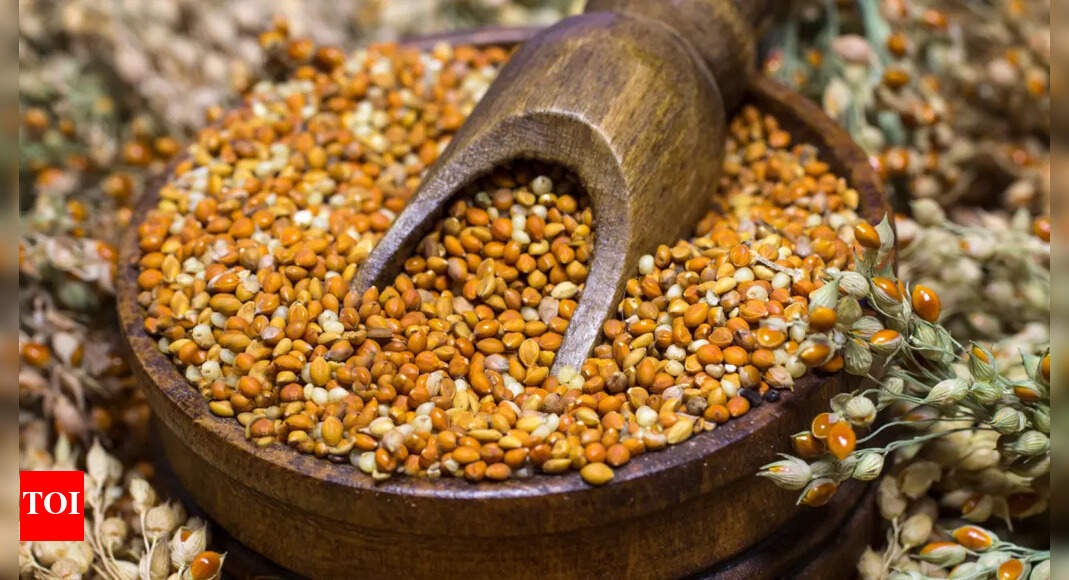
Long ago, during the Bronze Age, people in Europe started eating a grain called millet.
Scientists learned this by studying old bones and teeth.
Millet is healthy, like modern superfoods.
Before millet, people ate differently, with richer foods.
Later, everyone's diet became more similar, but not as healthy.
The way people lived changed too, from big groups to smaller ones.
Millet became popular because it grows quickly and gives lots of energy.
It shows us that millet has been an important part of people's meals for a very long time.

Millet consumption dates back to the Bronze Age in Central Europe.
Scientists studied the Tiszafüred-Majoroshalom cemetery to find evidence.
Diets became more diverse and then more uniform with millet.
Millet is gluten-free, nutritious, and a source of high energy.
Social structures changed during the Late Bronze Age with diet shifts.
- Who
- People of the Tumulus culture and scientists researching the Bronze Age.
- What
- People in the Bronze Age consumed millet, changing their diets and social structures.
- When
- Middle and Late Bronze Age (around 1500 BC).
- Where
- Central Europe (Tiszafüred-Majoroshalom cemetery).
- Why
- Millet's nutritional value and ability to grow quickly made it a popular food source.
- Time Period
- Bronze Age
- Location
- Tiszafüred-Majoroshalom, Central Europe
- Era
- Middle to Late Bronze Age
- Millet Characteristics
- Gluten-free grain, high in protein, fiber, and antioxidants
- Millet Nutritional Info
- 174 grams of cooked millet contain: 207 calories, 41g carbs, 2.2g fiber, 6g protein, 1.7g fat