

Archive · 13 Aug 2025
Whale Strandings Rise Tenfold on Southwest India's Coast
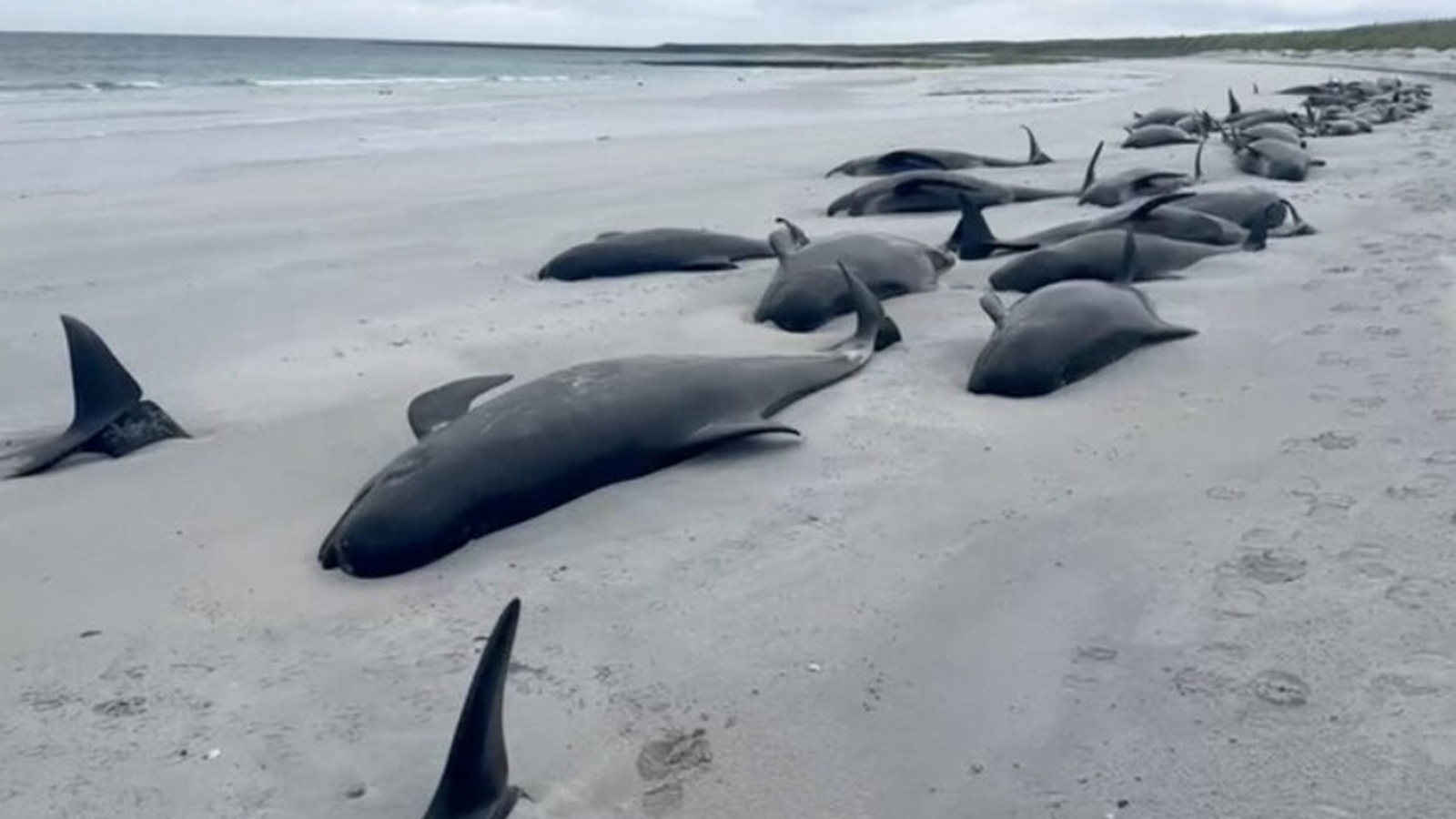
Imagine whales are like big, friendly ocean animals.
Scientists have found that more and more of these whales are ending up stuck on the shores of southwest India.
This has grown a lot in the last ten years!
The scientists think changes in the ocean and things people do, like fishing and boats, are part of the problem.
Also, the whales are drawn to the coast during the monsoon because of increased food availability.
Scientists are now suggesting that we create better systems to help the whales, like networks and alerts to keep them safe.

Whale strandings on India's southwest coast have increased tenfold in the last decade.
The study, led by ICAR-CMFRI, noted a rise from 0.3% (2003-2013) to 3% per year (2014-2023).
Kerala, Karnataka, and Goa are key hotspots, with factors including vessel traffic, fishing, and environmental changes.
Bryde's whales are the most commonly stranded species, with blue whales also occasionally found.
The study calls for conservation efforts like real-time alerts and marine megafauna networks.
- Who
- The ICAR-Central Marine Fisheries Research Institute (CMFRI) conducted the study.
- What
- A tenfold increase in whale strandings on India's southwest coast.
- When
- The increase occurred over the last decade, from 2014-2023.
- Where
- India's southwest coast, particularly Kerala, Karnataka, and Goa.
- Why
- Due to changes in ocean ecosystems, anthropogenic factors, and ecological disruptions.
Environmental Concerns
N/A
Threats to Whale Populations
Environmental Concerns
Increased risk to whales from noise pollution, ship strikes, and habitat degradation.
N/A
N/A
- Study Conducted By
- ICAR-Central Marine Fisheries Research Institute (CMFRI)
- Increase Period
- 2014-2023
- Annual Strandings (2003-2013)
- 0.3%
- Annual Strandings (2014-2023)
- 3%
- Key Hotspots
- Kerala, Karnataka, Goa
- Most Common Species
- Bryde's Whale